





Birds nesting in a dryer vent in Provo, UT

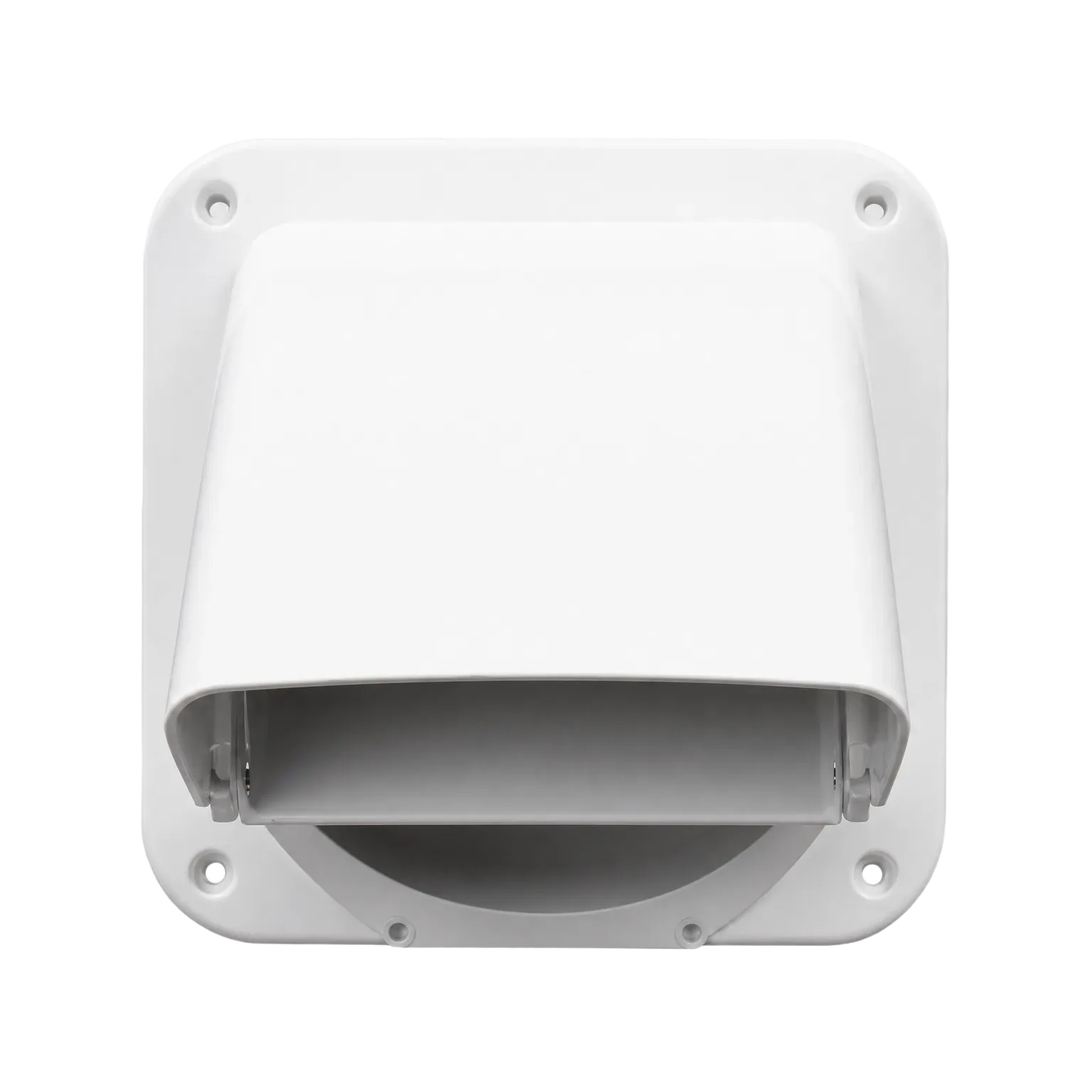
A white plastic wall vent with a square mounting flange, hooded cover, and round duct collar visible beneath, shown against a plain light gray background.
Get matched

A dryer vent with a flap that won't sit flush, or no flap at all, is an open invitation for birds in Provo looking for a sheltered spot, especially in spring when they're building nests. House sparrows and starlings are the usual culprits, and they'll pack a vent with twigs and grass in a day or two. Once that happens, the dryer has nowhere to push its hot, damp air, so it runs longer, gets hotter than it should, and leaves your clothes still damp at the end of a cycle. The bigger problem is lint. A vent that's blocked by a nest traps lint right along with it, and lint is what catches fire. If you've noticed a bird going in or out of the outside vent hood, or your dryer is taking two cycles to do what it used to do in one, the nest is likely already built and the vent needs to be cleared out, not just checked.

Why does nest buildup hit harder in a house like yours?

  • 3.39 people per household on average

    Your household averages 3.39 people, which means more loads through the dryer every week, and a vent packed with nesting material chokes airflow faster than it would in a house running the dryer less.

  • Half the homes here were built by 2001

    Half the homes in Utah County were built in 2001 or earlier, and a vent that's sat through two decades of seasons has more wear on the flap and seams, giving birds an easier way in.

  • Power here costs 12.64 cents per kilowatt-hour

    At 12.64 cents per kilowatt-hour, power here is cheap, but a blocked vent still makes the dryer run longer to dry the same load, and that adds up on the bill regardless of the rate.

ACS 2020-2024 · EIA-861 2025

How Birds Clog a Dryer Vent

  • Birds build nests at the vent hood or several feet back inside the duct, wherever the flap gives way.
  • A nest blocks the duct the dryer needs to push hot, wet air outside, so moisture backs up into the line.
  • Lint mixed with nesting material catches heat from the dryer's exhaust and can ignite inside the duct.
  • A clogged vent makes the dryer run longer per load, and the exhaust thermostat may shut it off early.
  • Birds often return to the same spot each spring, so a vent cleared once can fill again next season.
  • A cap with a bird screen or a one-way flap stops new nests without blocking airflow.

A dryer vent runs straight from the back of the dryer to a hood outside, and the only thing keeping birds out is a flap that's supposed to close when the dryer isn't running. Once that flap sticks open or goes missing, the duct looks like a ready-made cavity to a house sparrow or starling scouting a nest site in spring. They'll carry in twigs, grass, and feathers, sometimes right at the hood, sometimes pushed several feet back where the duct bends. Either way, the dryer is now pushing hot, wet air into a space that's partly or fully blocked. That moisture has nowhere to go, so it sits in the line and works back toward the dryer. Lint already in the duct mixes with the nesting material, and that combination catches heat fast, since both are dry and both burn. The dryer itself feels the blockage before you see any sign of birds. Airflow drops, drying times stretch out, and on some units the exhaust thermostat will cut the cycle short because it's reading more heat than it should. None of this fixes itself. A nest cleared out in April can come back in May if the same pair of birds returns to the same spot, which they often do. Closing off the opening for good means putting a cap on the vent with a screen or a one-way flap built to keep birds out while still letting the dryer's air escape.

A woman with dark shoulder-length hair sits wrapped in a gray fleece blanket on a sofa with an open book on her lap, beside a lit lamp and a dark window.
A smiling older woman with gray shoulder-length hair in a cream cable-knit turtleneck sweater stands behind a wooden board holding a round loaf of bread, in a warmly lit kitchen with a dark window and shelves behind her.

A nest you can reach versus one you can't

Some nests sit right at the hood, where the flap meets the outside wall. Pull the cover off and you can see straw and feathers packed against the louver, and a lot of homeowners get that far on their own with a step stool and a pair of gloves. The duct running from there back to the dryer is a different matter. Utah County homes run anywhere from a few feet of duct to a run that bends through an attic or crawlspace before it reaches outside, and a bird that got past a broken flap can build well inside that run, past where a hand or a shop vac hose will reach. You won't know which one you have until the hood is off and someone looks.

Waiting it out versus clearing it now

Birds don't stay in a dryer vent year round. Sparrows and starlings nest in spring, and once the brood is gone the vent sits there holding a nest nobody is using anymore. It's tempting to leave it, since the birds have moved on and the vent still seems to work. But the material doesn't clear itself out. Every load after that pushes more lint into whatever straw and feathers are still packed in the duct, and the dryer works harder to push air through a passage that's narrower than it was in March. A vent cleared now stays clear through next spring. One left alone just collects more until a load takes noticeably longer to dry.

An older man with gray hair and a beard stands in a dimly lit entryway wearing a dark hooded coat dusted with snow, with a lit table lamp, framed picture, and front door with glass panels behind him.
An older man with gray hair and a beard, wearing a dark snow-dusted jacket and scarf, stands smiling in a dimly lit entry hall with a lamp, wooden front door and staircase behind him.
A gray-haired bearded man in a dark coat with snow flecks on the shoulders stands just inside a dimly lit home entryway, with a lamp, framed pictures, sofa and candle-style lights in the background.
An older man with gray hair and a beard, wearing a dark coat and scarf dusted with snow, stands in a warmly lit home entryway with an arched doorway, lamps, and a living room visible behind him.

Why spring is the worst month for this

House sparrows and starlings start building in March and keep at it into May, right when Provo mornings are still cold enough that a dryer gets heavy use. A vent hood with a loose or missing flap looks like any other cavity to a bird hunting a nest site. Once material is packed into the duct, it stays there through summer unless someone pulls it out, so a nest that starts in April is still blocking airflow in July.


Why a clogged vent runs hotter

A dryer vent is supposed to carry hot, wet air straight outside. When a nest blocks that path, the air has nowhere to go, so it backs up into the duct and the dryer itself. Lint collects faster in that trapped, moist air, and lint sitting against a heating element is how a vent fire starts. A dryer fighting a blocked vent also takes longer to dry a load, since the air it needs to push out keeps circling back.

A metal dryer vent hood mounted on light gray horizontal lap siding, with its opening clogged by gray lint, above a concrete foundation wall.
Before you get your dryer vent cleaning
A white hooded dryer vent cover screwed into beige lap siding above a concrete foundation wall, with a bed of rounded gravel at the base.
After you get your dryer vent cleaning
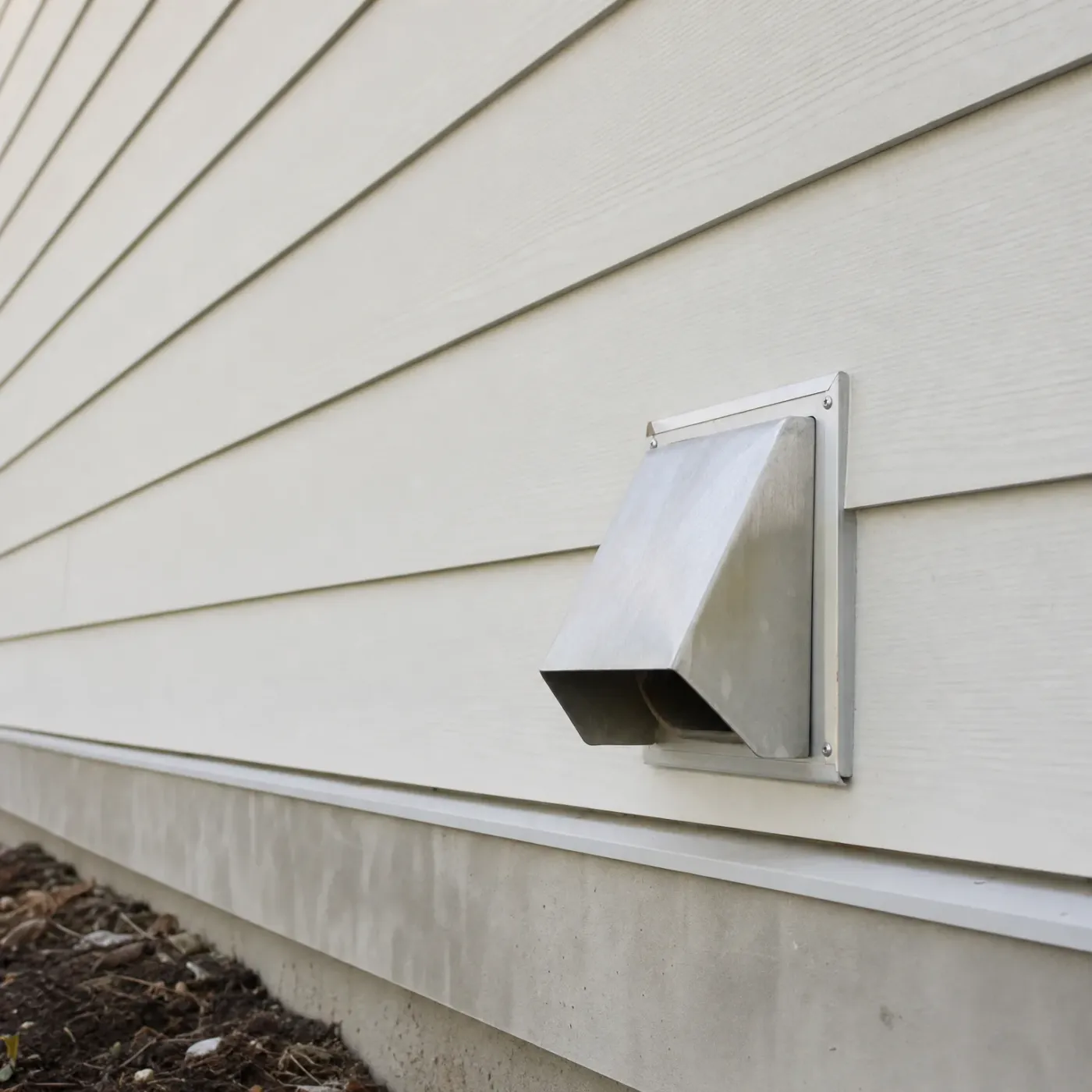
A metal hooded dryer vent mounted on cream-colored horizontal lap siding above a concrete foundation, with bare soil at the lower left.

Get matched with a dryer vent pro in Utah County

After you send the request, you're done searching.

Your request goes to a Utah County pro who takes dryer vent jobs.

Find a dryer vent pro

You're not committing to anything by asking.

Why is the dryer taking two or three cycles now

You load the dryer, run the normal cycle, and pull out clothes that are still damp at the seams. You run it again. Maybe a third time. The top of the dryer feels warmer than it used to, and the room gets muggier than a load of laundry should make it. Sometimes there's a faint burnt-feather smell when it first kicks on, or you hear a scratching sound from the vent line when the blower starts. These are signs the duct is partly blocked, likely by a nest, and the dryer is working harder to push air through a smaller opening. Left alone, that trapped heat against dry nesting material and lint is how dryer vent fires start.

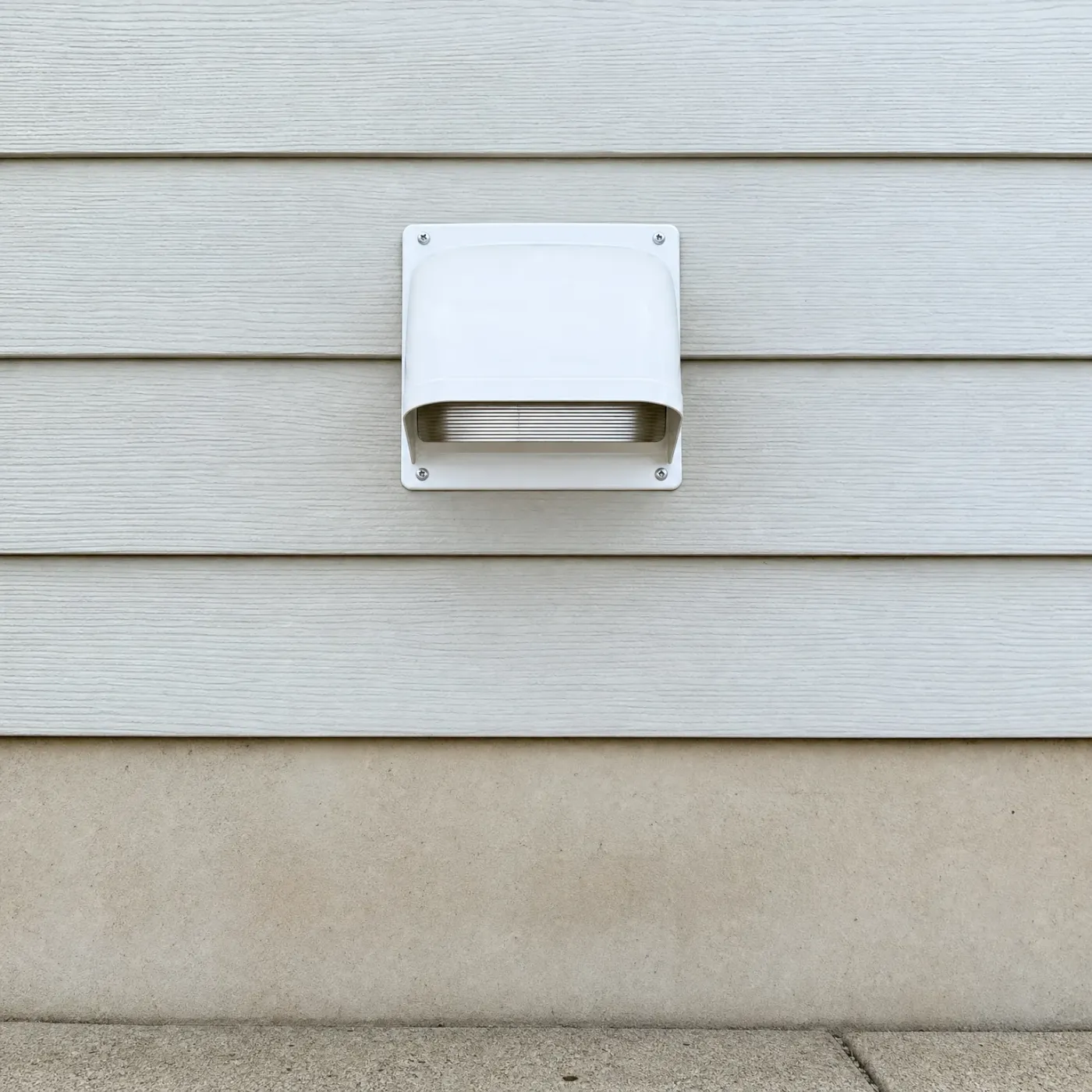
A white hooded dryer vent with a louvered opening mounted on light beige horizontal lap siding above a concrete foundation and sidewalk.

The flap sits flush and the air moves

This is what the hood should look like. The louvers close against each other when the dryer is off, and there's no gap for a sparrow to land on or push into. Air pushes the flap open from the inside and it falls back shut.

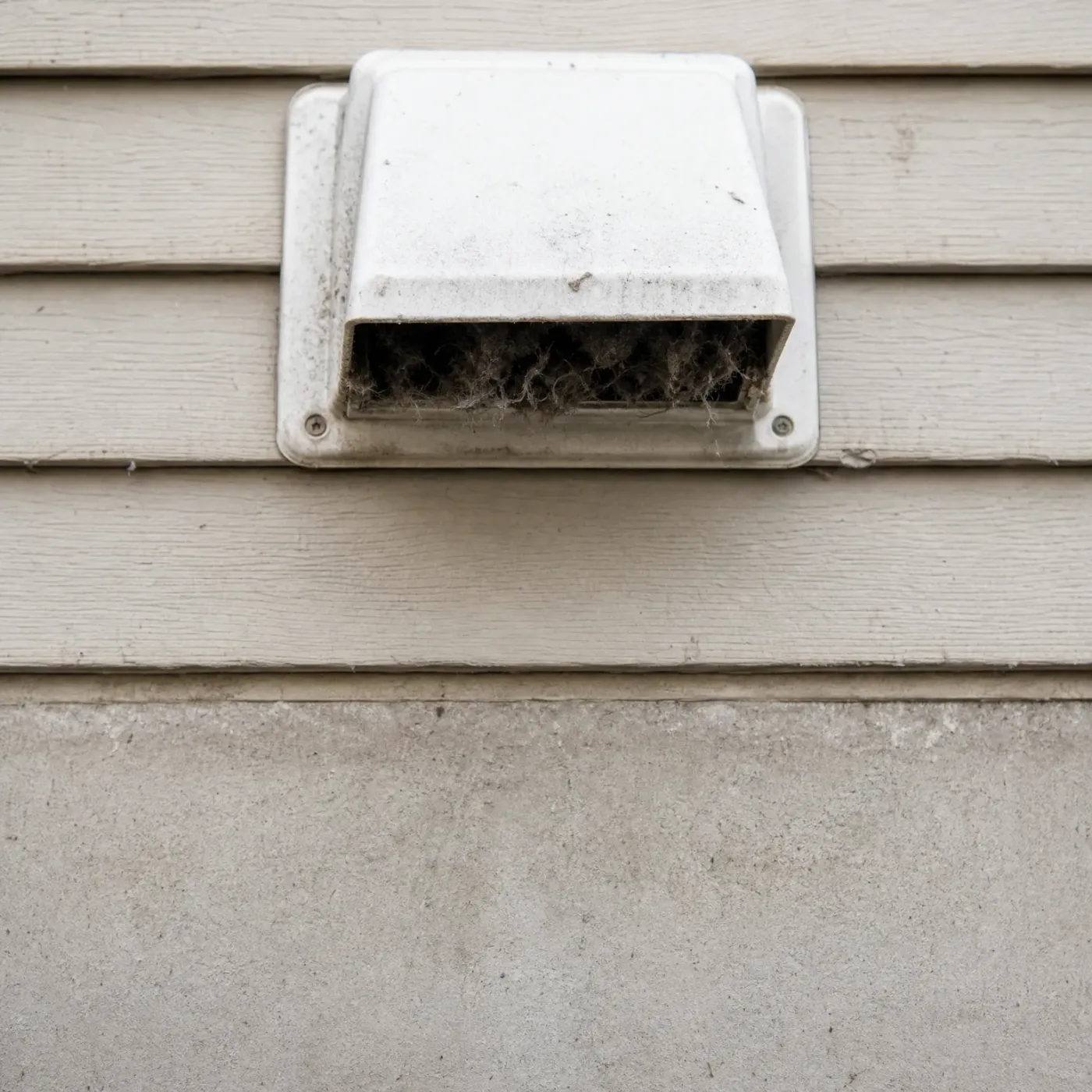
A white plastic dryer vent hood clogged with grey lint, mounted on beige horizontal lap siding above a concrete foundation wall.

Lint packed into the opening

This hood is choked with gray lint pressed right up against the louvers. Once nesting material gets behind it, the lint has nowhere to go and builds up at the opening instead of blowing clear outside.

How do I know if a bird actually built a nest in my vent

You've seen a bird land near the vent hood or heard rustling behind the wall, but you're not sure if it actually got in and built something, or if it just checked the spot out and moved on. Before you pull the cover off or call anyone, you want to know what a real nest looks like from the outside, so you're not tearing into the vent for nothing.

A dryer that used to take one cycle and now takes three is the clearest sign

Look at the flap first. If it hangs open instead of closing flush, or you can see straw and twigs poking through the louvers, something built there. Chirping from inside the wall when the dryer isn't running is another sign, especially in spring when house sparrows and starlings are still working on the nest. Inside the house, watch the dryer itself. Clothes coming out damp after a full cycle, a burning smell, or the top of the machine running hotter than it used to all point to airflow blocked somewhere in the line. None of these alone proves a nest is there, but the flap and the drying time together usually do.

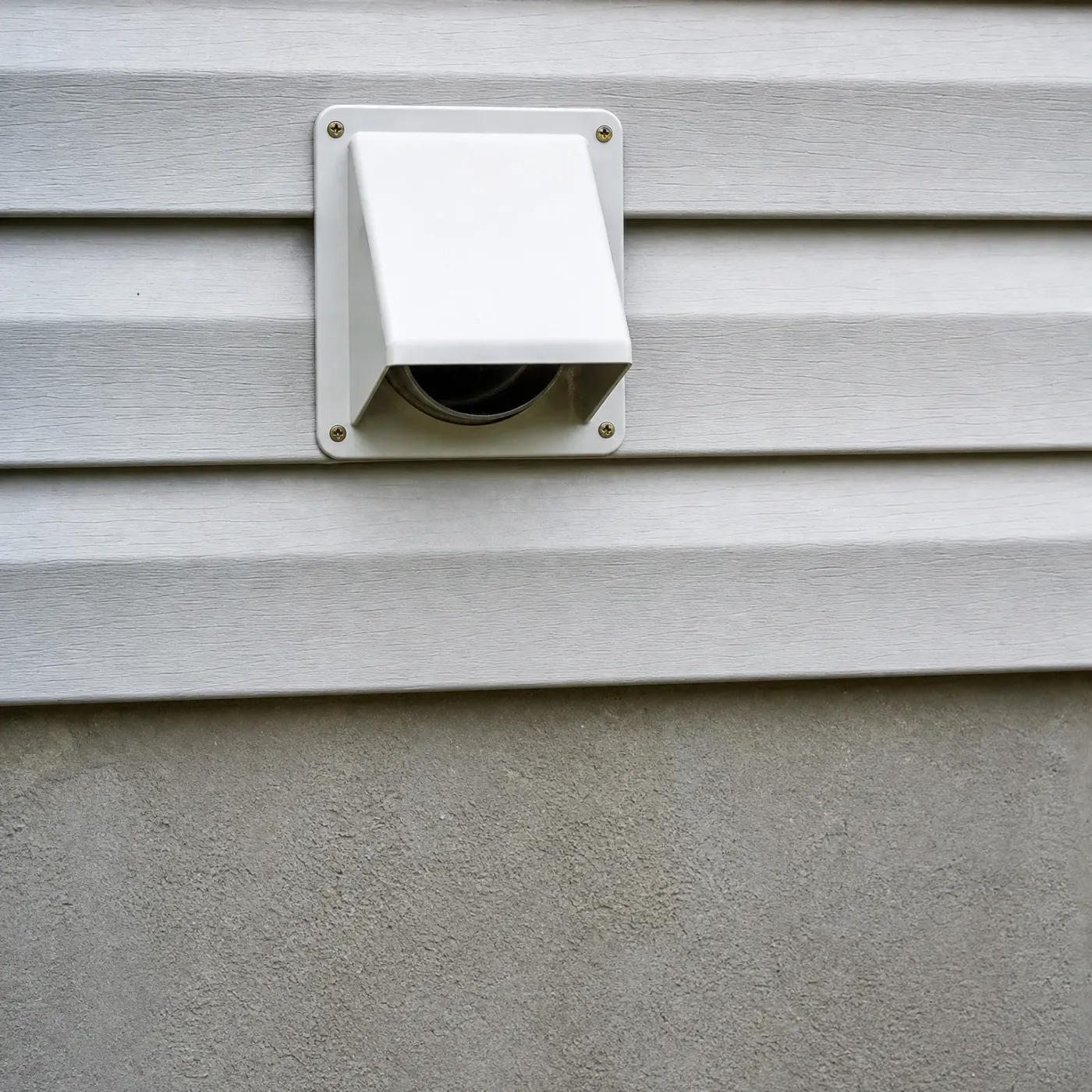
A white hooded dryer vent with a square mounting plate screwed onto light gray horizontal vinyl siding, above a gray stucco-textured lower wall.
The flap closes tight against the hood, so there's no ledge for a bird to land on or push through.
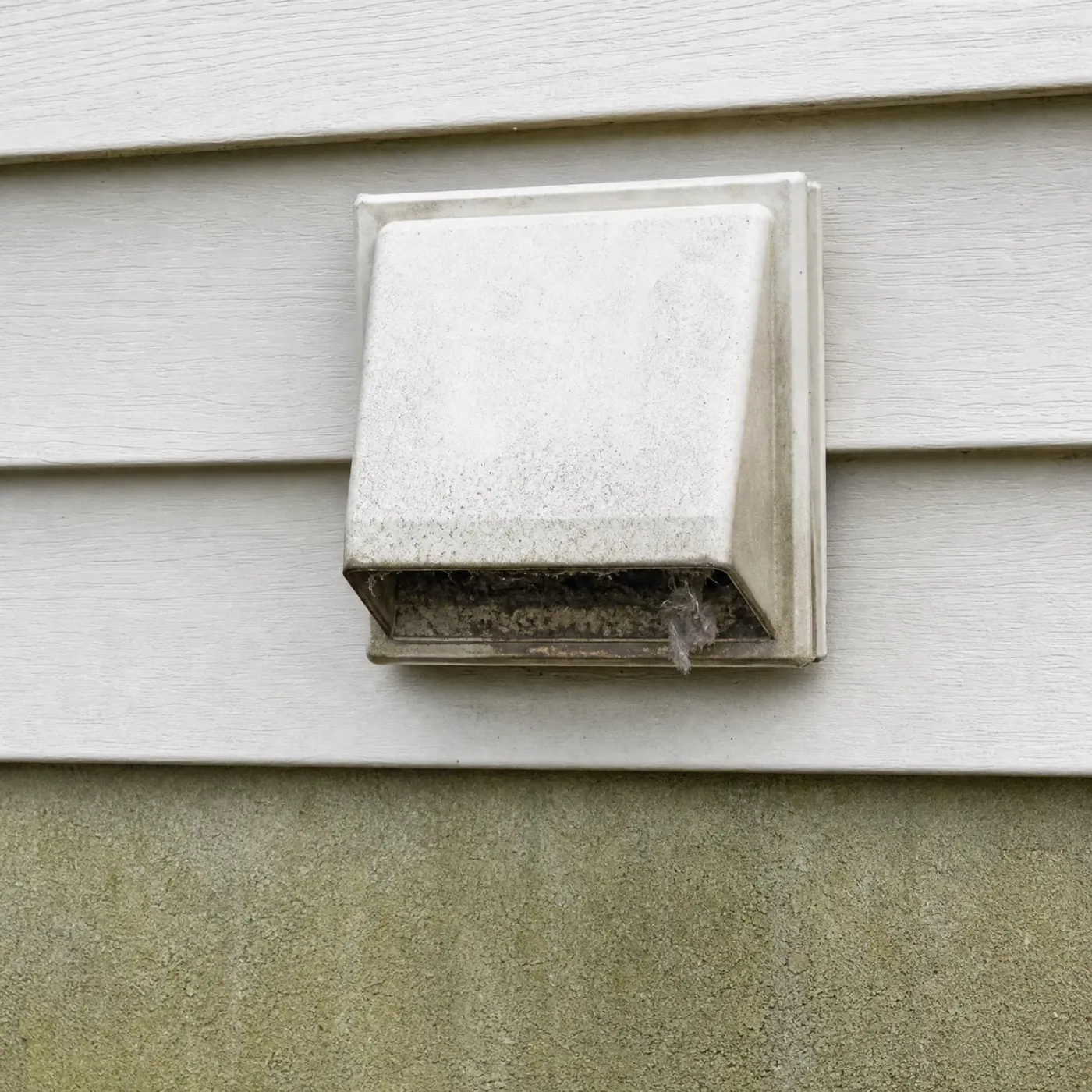
A white plastic dryer vent hood mounted on light-colored horizontal lap siding, with lint caught in its lower opening and a green-stained foundation wall below.
Lint and nesting material have packed the opening shut, and a tuft is already working its way out of the flap.

3.39 people per household on average

At 3.39 people, your household is putting more loads through that dryer than a one or two person home would. More loads means more lint riding out into the duct, and once a nest narrows the path, that lint has less room to clear the vent before it catches.

ACS 2020-2024

A woman stands in the open black front door of a white-sided house with a dark shingled roof while a man in a navy jacket approaches along the walkway, with lantern wall lights, a potted shrub, and flowering garden beds nearby.

A blocked vent doesn't clear itself

A bird got into the vent, built a nest, and now your dryer is pushing hot, wet air against a wall of straw and lint instead of out through the hood. That's the whole problem. It won't loosen with more drying cycles, and it won't blow free on its own. Someone has to open the line and take the nest out, from the hood or further back in the duct, wherever the bird got in.

A contractor who works on vents in Provo has pulled this kind of nest out before and knows where birds tend to build in a flap-and-duct setup like yours. Send in what you're seeing, and you'll be matched with someone who takes it from there, checking the vent and reaching out to sort out the rest. The part that's been sitting on you, tracking down the right person for a bird stuck in a dryer vent, stops being yours to carry once that form goes in.

A large weathered ceramic vase and a shallow wooden bowl sit on a rustic wooden table beside a window with linen curtains, with a blurred sofa with cushions and a hanging fabric panel in the background.
A shingled two-story house with lit windows and stone accents at dusk, with a stone paver walkway and landscape lighting leading past ornamental grasses toward a calm bay under an orange and blue sky.

Dryer Vent Cleaning

Find a dryer vent cleaning pro in Utah County

Duct and vent cleaningUtah County, UT
Step 1 of 3

What kind of equipment?

  • A pale ceramic vase holding dried hydrangea blooms sits on a wooden windowsill in sunlight, with green foliage blurred beyond the window glass.
    • Get matched with a Utah County pro who cleans dryer vents.
    • Your dryer vent cleaning request goes to a local pro who does this work.
  • Sunlit window seat with a cushioned bench and three textured throw pillows beside a dark wooden round side table holding a small stone bowl and a potted green plant.
    • Send the request and finding a pro stops being your problem.
    • After this form, you can stop searching for a dryer vent pro.
  • A potted olive-like tree in a wide beige ceramic planter sits on a pale stone ledge beside a black-framed window with blurred greenery outside.
    • Skip searching for someone who cleans dryer vents in Utah County.
    • Fill out one short form instead of calling around.
  • A wooden bench by a black-framed window holds a beige striped pillow, a fringed knit throw, and a pale ceramic vase with olive branches, with green foliage and a white house visible outside.
    • The pro who gets in touch is licensed in Utah and works in Utah County.
    • A licensed pro who works in Utah County gets your request.