



Utah HVAC Pros

Is a clogged dryer vent a fire risk in Provo, UT

Skip searching for someone who cleans dryer vents in Utah County.

Start one form

Yes, a clogged dryer vent is a fire risk, and it's one of the more common causes of house fires. Lint is what catches. As it builds up inside the vent, it blocks the airflow the dryer needs to push heat back outside, so heat and lint collect together in the same narrow space. The motor runs hotter and longer trying to dry each load, and that heat has nowhere to go. Provo summers are hot and dry, which doesn't cause the clog but does mean the vent and the attic space around it are already running warm for months at a time, leaving less margin before trapped heat turns into a problem. A dryer taking longer than usual to dry clothes, a warm smell near the laundry area, or a vent hood outside that barely moves air when the dryer runs are all signs the path is restricted and worth checking before it gets worse.

Why does lint build up so fast in a house like yours?

  • 3.39 people per household on average

    With 3.39 people per household on average here, more loads run through the dryer each week, and every load leaves lint behind in the vent.

  • Half the homes here were built by 2001

    Half the homes in Utah County were built in 2001 or earlier, and older duct runs tend to have more joints and bends where lint catches and sits.

  • Power here costs 12.64 cents per kilowatt-hour

    Power here runs 12.64 cents per kilowatt-hour, cheap enough that a dryer working harder to push air through a clogged vent doesn't show up on the bill until the risk is already there.

ACS 2020-2024 · EIA-861 2025

How a vent fire actually starts

  • Lint is flammable, and a dryer's heating element sits right next to the airflow carrying it toward the vent.
  • A clogged vent traps heat inside the dryer, so the element or burner runs hotter and longer to finish a cycle.
  • Lint doesn't just sit in the vent hood, it builds along the full length of duct between the dryer and the outside wall.
  • A dryer that takes two or three cycles to dry a load the way it used to is pushing air against a partial blockage.
  • Vent fires usually start at the point furthest from the dryer, near the exterior hood, where lint collects thickest.
  • A flapper on the outside hood that won't open and close freely is often the first sign the duct behind it is restricted.

A dryer works by pushing hot air through wet clothes, then pushing that same air, now loaded with lint, down a duct and out through a hood on the outside wall. The heating element or gas burner only shuts off when a thermostat senses the air around it has reached the right temperature. When the duct is clear, that air moves fast enough to carry the heat out with it. When lint has built up along the duct, the air slows down, and the heat has nowhere to go but back into the dryer. The element or burner keeps firing longer to reach the same temperature, because the sensor is reading air that isn't moving the way it should. That's why a load that used to dry in one cycle starts taking two or three. The lint itself isn't sitting in one spot. It coats the inside of the duct the whole way from the dryer to the wall, and it collects thickest right at the end, near the exterior hood, where the air finally slows down before it exits. That's the point furthest from the dryer and the one nobody checks, and it's where most vent fires start. The flapper on the hood is a plain way to check from outside. If it doesn't swing open easily when the dryer runs, or snap shut when it stops, the duct behind it is restricted enough to matter.

A smiling woman with long brown hair in a cream sweater sits at a stone counter with a glass of red wine, with a dimly lit living room, beamed ceiling and glass doors behind her.
A woman with shoulder-length dark wavy hair in a beige sweater laughs while looking off to the side, seated at a white marble counter with a glass of red wine, in a dimly lit home interior with a kitchen and sofa in the background.
A smiling woman with long dark hair in a black sweater sits at a white marble counter with a glass of red wine, in a dimly lit kitchen and living area with pendant lights, a potted plant, and flowers.
A smiling woman with long brown hair in a light knit sweater sits at a stone-topped counter with a glass of white wine, with a dimly lit living room, sofa, fireplace and round mirror behind her.

A vent that's doing its job

Run a load and walk outside to the vent hood. Air should push out strong enough to move the flap, and you should feel real heat behind it. Clothes come out of the dryer warm but not blazing hot, and a full load finishes in one cycle, maybe a bit more for towels or bedding. The laundry room stays close to room temperature while the dryer runs. No burnt-dust smell, no lint showing up around the vent opening outside. This is a vent moving air the way it was built to, and lint isn't collecting anywhere it can catch.


A vent that's telling you something

The same load now takes two or three cycles to dry, and the dryer itself feels hot to the touch partway through. Air barely moves at the vent hood outside, or you can't feel it at all. The laundry room gets noticeably warm, sometimes with a burnt smell that wasn't there before. You might spot lint gathered around the outside vent cover. Clothes smell faintly of heat even after they've cooled. This is a dryer working harder to push air through a path that's partly blocked, and the heat has nowhere to go but back into the machine.

A white plastic dryer vent hood mounted on beige horizontal vinyl siding, with lint clogging its lower opening and a concrete foundation below.
Before you get your dryer vent cleaning
A white louvered dryer vent hood mounted with four screws on beige horizontal lap siding above a gray stucco foundation and concrete walkway.
After you get your dryer vent cleaning
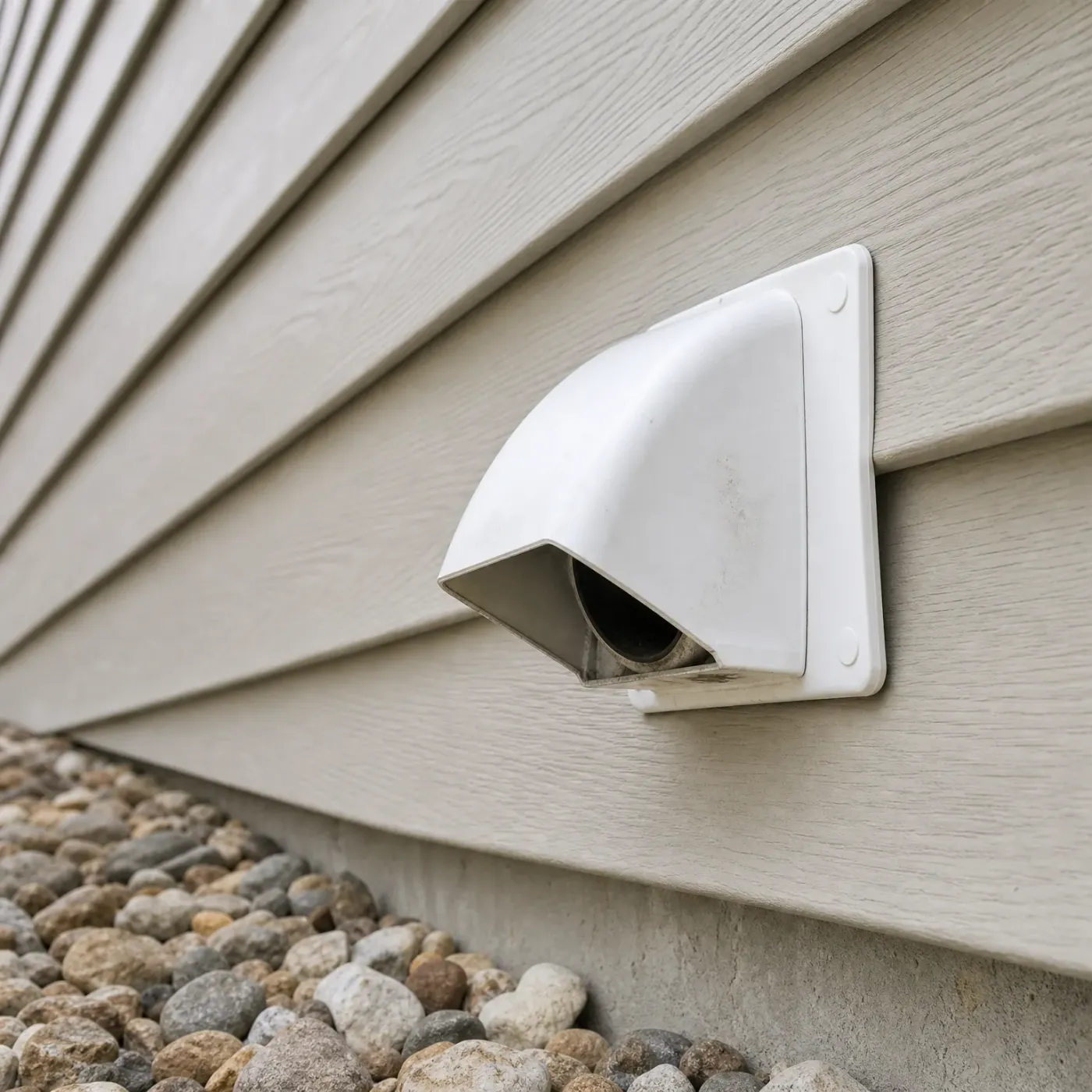
A white plastic hooded dryer vent mounted on beige lap siding above a concrete foundation, with river rock gravel at the base.

Skip calling around

Your dryer vent cleaning request goes to one local pro.

Fill out one short form instead of calling around.

Get one local pro

No charge to send it. You decide if you hire them.

Does your dryer take longer than it used to?

Run a load and pay attention. If it takes two cycles to get clothes dry, or the top of the dryer feels hot to the touch, the vent is likely blocked somewhere between the drum and the outside wall. Check the lint trap after every load, not just when you remember, since a full trap pushes more lint past it and into the vent itself. Pull a load out and smell it. A musty or hot smell that wasn't there before means heat is staying in the dryer instead of venting out. Look at the vent hood outside your house while the dryer runs. If the flap barely moves, air isn't getting through, and the lint building up behind that blockage is what a dryer fire starts with.

A metal hooded exterior vent with a screened opening mounted on gray horizontal lap siding, with a plain white wall at right.

Why gas dryers raise the stakes

Most homes in the Provo area heat with gas, and a lot of those same homes run gas dryers. A blocked vent traps heat and exhaust inside the dryer instead of pushing it outside. The burner has to run longer to finish a load, and that extra run time means more heat sitting in a space already packed with lint. Electric dryers face the same airflow problem, but a gas dryer adds a flame to it.

A white plastic hooded dryer vent cover screwed to light gray horizontal lap siding at an exterior wall corner.

What a cleaning actually removes

A clogged vent isn't just lint sitting loose. It's lint matted against the metal, often damp from the moisture every load carries out of the drum, and it packs tighter the longer it sits. Cleaning clears the full run of the vent, from the back of the dryer to the hood outside, not just what a brush can reach from one end. That's the airflow path a dryer depends on to push hot, moist air out of the house instead of letting it back up.

Can a dryer vent fire actually spread to the rest of the house?

You've seen the warnings about dryer vent fires, but what you really want to know is whether a fire that starts in the vent stays contained there or turns into something that threatens the rest of the house.

Yes, once lint ignites, the fire follows the vent, not just the dryer

A dryer fire doesn't stay put the way a stovetop fire might. The vent is a duct that runs from the dryer through the wall or ceiling to the outside, and lint packed along that path gives a fire a route to travel on. Flames can move through the vent into the wall cavity, and from there into the attic or the next room, especially in a house with wood framing behind the drywall. The dryer itself is usually in a laundry room or closet near living space, not out on its own, so there isn't much distance for a fire to cross before it reaches something else that burns.

A white hooded dryer vent with a louvered grille screwed to beige horizontal lap siding above a lighter foundation wall.
Air pushes the flap open hard and carries real heat straight outside, the way it's supposed to.
A wall-mounted plastic dryer vent hood on light-colored horizontal vinyl siding, clogged with lint and debris hanging from its opening, above a gray painted foundation.
Lint and nesting material have packed the hood shut, leaving the dryer with nowhere to push its heat.
  1. Lint sheds off every load and rides the exhaust air toward the vent

  2. A bend or long run gives the lint somewhere to catch and build up

  3. The buildup narrows the vent until the dryer can barely push air out

  4. Heat that can't escape stays trapped around the drum and the element

A smiling bearded man in a dark sweater sits at a dinner table with lit candles, a glass of red wine, and bowls of food, in a dimly lit room with a lamp and houseplant behind him.
A woman with dark hair in a bun sits on a beige sofa under a knit blanket with her eyes closed and an open book in front of her, with a lit lamp and houseplant in the background.
A white plastic hooded dryer vent with a mesh screen, fastened by four screws to beige horizontal lap siding above a concrete foundation wall.

Venting properly

This is what a clear vent looks like. The hood sits flush against the siding and the flap swings open when the dryer runs. Air moves through the screen in a steady stream, carrying lint and heat out past the foundation and away from the house.

A white plastic hooded dryer vent with a louvered grille mounted on horizontal vinyl siding above a textured concrete foundation wall.

Packed with lint

Lint has filled in around the openings here, and the screen is doing more blocking than venting. Each load adds another layer. Instead of air pushing out freely, it's fighting through buildup, and that same buildup is what feeds a vent fire.

3.39 people per household on average

With close to four people in the average household here, your dryer is probably running most days of the week. More loads means more lint moving through the vent, and more chances for it to catch before it makes it outside.

ACS 2020-2024

A closed laptop and a speckled ceramic mug sit on a wooden table beside a stoneware vase with a leafy branch, with a wooden chair, kitchen counter with cutting board and bowl, and dark upper cabinets in the dim background.

A clogged dryer vent is a fire risk worth taking seriously

A blocked vent traps heat and lint together, and that combination is what starts these fires. That's true whether your dryer is gas or electric, and it's true whether the vent has been clogged for one season or five. The fix is straightforward: clear the path so the dryer can push air outside the way it was built to.

Finding someone to do that work is usually the part that drags on. You'd normally spend an evening looking up companies, calling a few, explaining the same thing about your vent run each time, then waiting on quotes to compare. Here, that search is done for you. You're connected with one licensed contractor working in Utah County, someone who services this kind of vent in homes like yours all year and knows where lint tends to pack in tight. No juggling calls from five different companies, just one person who already knows what to look for.

Interior corner of a room with a dark upholstered sofa and textured cushion, a potted plant, sheer curtains at a multi-pane window showing blurred green and yellow trees, and a dark table holding a wooden tray with stacked coasters and a small ceramic vase.
A single-story white stucco house with dark roof, stone-clad entry tower and three dark garage doors, lit from within at dusk, with a curved concrete driveway and dark mulch beds with boulders and bare young trees in the foreground under an orange and blue sunset sky.

Dryer Vent Cleaning

Describe it once

Duct and vent cleaningUtah County, UT
Step 1 of 3

What kind of equipment?

  • A beige upholstered armchair with a green cushion and a knitted throw sits beside a window with a rain-speckled pane, with a lit table lamp and bookshelf behind and a wooden side table holding a ceramic mug and a book.
    • Get matched with someone who does this kind of work in Utah County.
    • Get matched with a Utah County pro who cleans dryer vents.
  • A ceramic table lamp with a wide linen shade and a dark wooden bowl sit on a round wood side table beside a beige upholstered sofa with a chunky knit throw, in front of a curtained window.
    • Send the form and the dryer vent cleaning stops sitting on your list.
    • Send the request and finding a pro stops being your problem.
  • A living room with a light gray sectional sofa holding brown and cream textured pillows and a knit fringed throw, a rustic wood coffee table with stacked books and a stone vase of olive branches, built-in shelves with pottery, and a tall olive tree beside a curtained window.
    • Skip searching for a dryer vent pro and answer a few questions instead.
    • One form replaces the calls you'd make to find a dryer vent pro.
  • A ceramic urn-shaped table lamp with a mottled gray glaze and beige drum shade sits on a dark wood side table beside a potted green plant, next to a light beige upholstered sofa and a framed artwork on a gray wall.
    • The pro who gets in touch is licensed in Utah and works in Utah County.
    • The pro who reaches out is licensed in Utah.