
Duct Cleaning in Layton, UT
Tell us about your home, and a licensed contractor who covers Davis County will get in touch.
Tell us about the job
It takes about a minute.

Eight months of heating means eight months of dust moving through your ducts
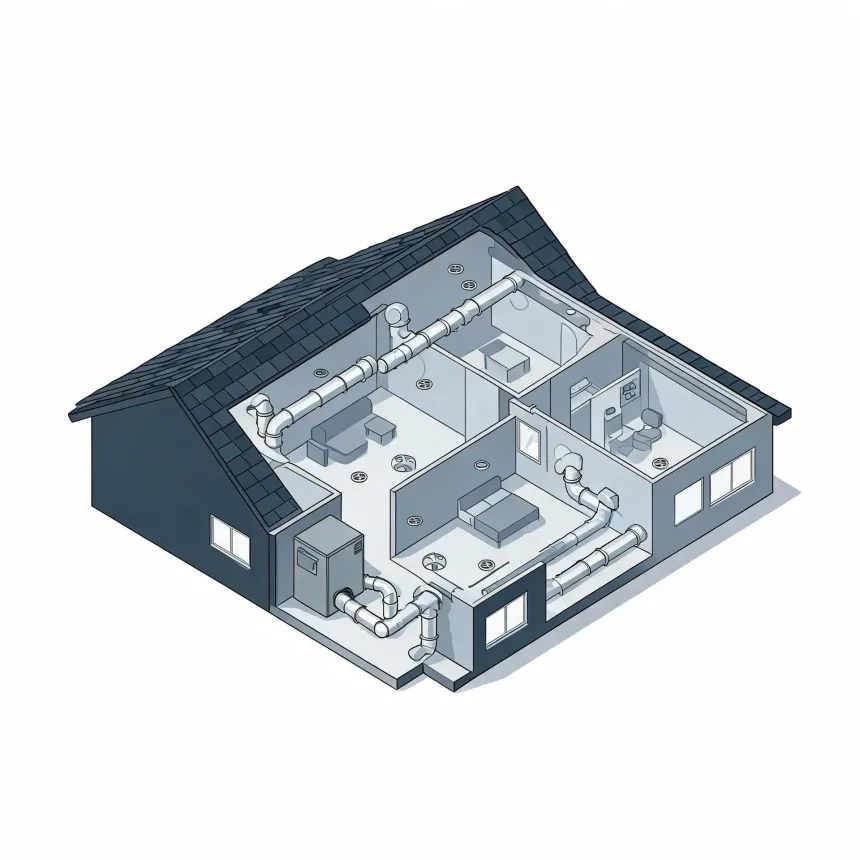
Your furnace runs October through May in Layton, close to eight months of the year. On the cold nights that average 22°F all winter, it cycles on and off again and again, and every cycle pulls air through the same ductwork. Dust, pet hair, and whatever else settles in the return line gets pushed through the house and pulled back in, over and over, for most of the year.
Most homes in Davis County are single-family and owner-occupied, the kind of house where the same ducts serve the same rooms year after year. Wind events and winter storms are common here, and when they knock out power, the furnace stops moving air but the dust already in the ducts stays put, waiting for the system to come back on.
- 8 months
- October through May, your furnace pushes air through your ducts
- 3 months
- June through August, your air conditioner does the same
NOAA nClimDiv, 1991–2020 normals
- How often should air ducts be cleaned?
- There's no fixed schedule that fits every home. A good rule is to check the ducts when you notice dust settling faster than usual, when someone in the house has allergies acting up, or after any remodeling that left drywall dust behind. Homes with pets usually need attention sooner, since fur and dander build up in the vents faster.
- Is air duct cleaning worth it?
- It's worth it if your ducts actually have a problem. Dust blowing out of the vents when the furnace kicks on, a musty smell when the air is running, or visible debris around the vent covers are signs the ducts need attention. If none of that is happening, cleaning won't make the air noticeably different, since ducts that look fine on a camera inspection usually don't need the work.
- What does air duct cleaning involve?
- A contractor connects a vacuum system to the ductwork and uses brushes or air tools to knock loose dust and debris, then pulls it out through the vacuum. Each supply and return vent gets cleaned, along with the main trunk lines. The furnace or air handler itself, including the coil, usually gets checked too, since that's where a lot of buildup starts.