Mini Split Installation in St. George, UT
A new system here will heat from October through May and cool from June through September every year. Tell us about the house, and a licensed contractor who covers Washington County will get in touch.
Tell us about the job
It takes about a minute.
St. George runs a mini-split all year
Your mini-split heats eight months here, October through May, and cools four, June through September. That covers all twelve months, so the system gets almost no rest.
Winter nights average 28°F, cold enough that the heat pump side has real work to do. Summer afternoons average 90°F, which keeps the compressor busy the other third of the year. A unit installed on or after January 1, 2023 has to meet 14.3 SEER2 for cooling and 7.5 HSPF2 for heating, and in a place asking for both sides of that rating most months, the one you install is going to earn that rating, not just carry it on a sticker.
- 8 months
- October through May, your system heats
- 4 months
- June through September, it cools
- 28°F
- the average winter night it heats against
- 90°F
- the average summer afternoon it cools against
NOAA nClimDiv, 1991–2020 normals
Utah requires HVAC contractors to hold a state license.
Utah's Division of Professional Licensing tests and records HVAC contractors before they can hold a state license. The license belongs to the contractor, not to any one job, so it covers every installation they do. Work under $7,000 falls outside this rule and does not need a licensed contractor.
Most cities and counties also require a permit for a mini-split installation, with an inspection once the work is done. That inspection is a local check on the job itself, separate from the state's check on the contractor holding the license.
Sources: Utah State Legislature · Utah Department of Commerce
- Is a mini split worth it?
- For the right room or house, yes. A mini split heats and cools without ducts, and it runs on electricity, so it works alongside a gas furnace or on its own. St. George needs heat or cooling all year, winter lows near 28°F and summer highs near 90°F, so a system that handles both jobs earns its place. Whether it makes sense for your house depends on what you already have and what you're trying to fix, and a contractor can walk through that with you.
- How many rooms can a mini split cover?
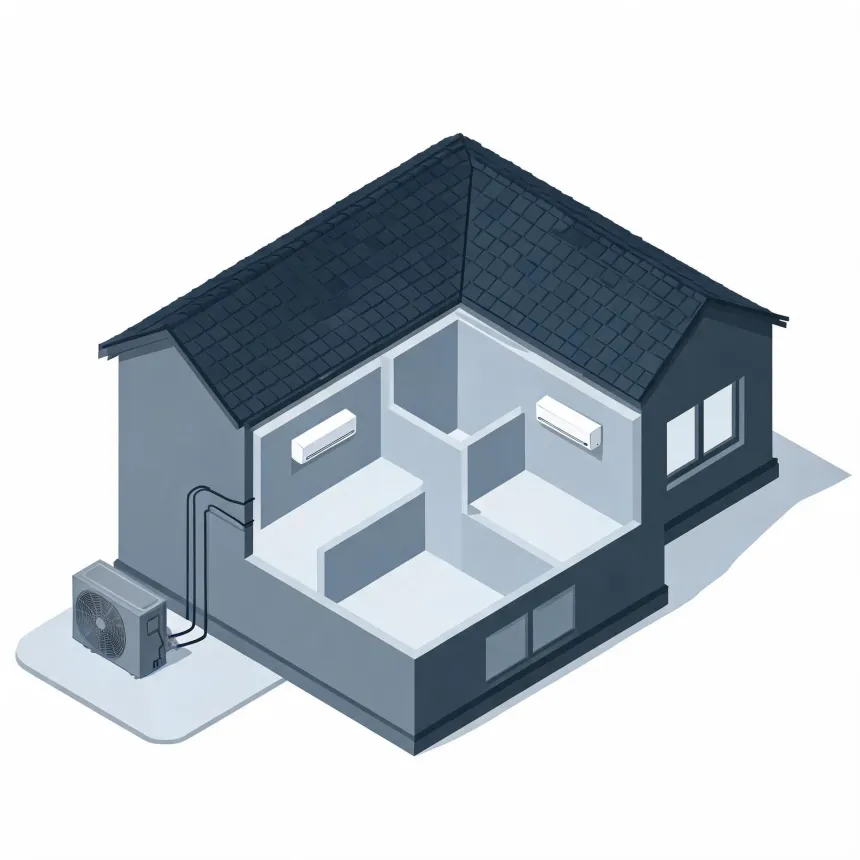
- A single outdoor unit can run one indoor head or several, depending on the system. A single-zone system covers one room or open area well. A multi-zone system splits the same outdoor unit across several indoor heads, each with its own thermostat, so you can heat or cool only the rooms in use. How many zones a given outdoor unit supports depends on its size, and a contractor can size it to your house.
- Can a mini split heat a whole house?
- It can, if it's sized and placed to reach every room. A multi-zone system with enough indoor heads can cover a whole house the same way a central system does, just without ducts. The colder it gets, the harder any heat pump has to work, and St. George winter nights average 28°F from December through February, so the system needs to be sized for that low, not just for a mild day. A contractor can figure out how many zones your house needs and whether a mini split alone will carry it through winter.