Mini Split Installation in Cedar City, UT
A new system here will heat from October through May and cool from July through August every year. Tell us about the house, and a licensed contractor who covers Iron County will get in touch.
Tell us about the job
It takes about a minute.
Cedar City asks a mini-split to run most of the year
Winter nights here average 20°F from December through February, and a mini-split has to keep pulling heat out of air that cold for the full stretch from October through May. That's eight months of heating. Then summer afternoons average 85°F, and the same unit switches over to cooling for July and August. Ten months of the year, homes here need one or the other.
Any mini-split installed new has to meet the federal minimum for a split-system heat pump, 14.3 SEER2 for cooling and 7.5 HSPF2 for heating. With a heating season this much longer than the cooling season, the heating side of that rating carries more of the load in a Cedar City home than the cooling side does.
- 8 months
- October through May, your system heats
- 2 months
- July through August, it cools
- 20°F
- the average winter night it heats against
- 85°F
- the average summer afternoon it cools against
NOAA nClimDiv, 1991–2020 normals
Utah requires HVAC contractors to hold a state license.
Utah licenses HVAC contractors through the Division of Professional Licensing. That license covers the contractor, not each job, so it stays with them from one house to the next. Work under $7,000 is the one carve-out. Below that line, Utah does not require a licensed contractor.
A mini-split installation can fall on either side of that number. Where it does need a licensed contractor, that license is what stands behind the work. Either way, most cities and counties in Utah require a permit for this kind of installation, along with an inspection once the work is finished, which is where someone outside the contractor looks at what was done.
Sources: Utah State Legislature · Utah Department of Commerce
- Is a mini split worth it?
- For most homes here, yes, especially if a room or addition never gets warm or cool enough with the existing system. Winter lows here average 20°F, and a cold-climate mini split can still deliver heat at that temperature, which is worth confirming with the contractor when you pick a unit. In summer the heat pump side handles the 85°F afternoons without trouble. A mini split can also work alongside an existing furnace, covering the rooms that need the most help rather than replacing the whole system.
- How many rooms can a mini split cover?
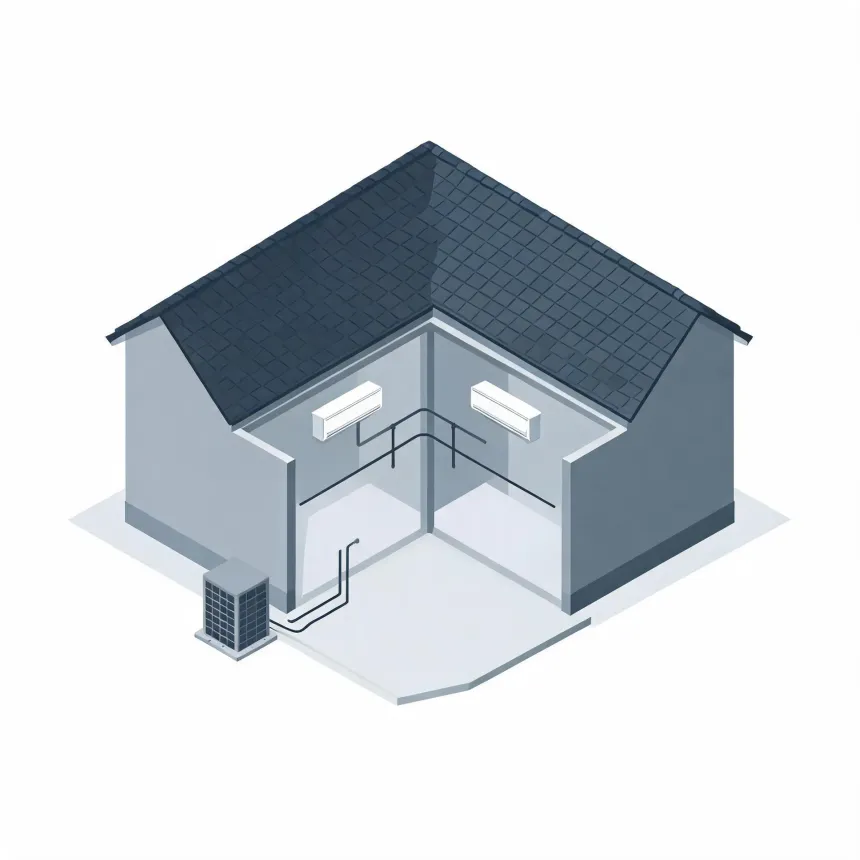
- A single outdoor unit can run one indoor head or several, up to eight on some multi-zone systems. Each indoor head is sized for the room or area it serves, so the number you need depends on how many rooms you want heated and cooled separately. A contractor will size the system room by room rather than guess at a whole-house number.
- Can a mini split heat a whole house?
- It can, if enough indoor heads are placed to reach every room. Homes here need heat from October through May, eight months a year, so whatever system carries that load has to hold up through a long stretch of cold. A contractor can look at the layout and tell you how many heads it would take to cover the whole house, and whether that makes more sense than pairing a mini split with the existing furnace.