Mini Split Installation in Beaver, UT
A new system here will heat from October through May and cool from June through August every year. Tell us about the house, and a licensed contractor who covers Beaver County will get in touch.
Tell us about the job
It takes about a minute.
A mini-split here works most of the year
Beaver County asks a mini-split to run in both directions. Winter nights average 19°F from December through February, and the heat pump has to pull warmth out of air that cold. Summer afternoons average 86°F, and the same system switches over to cooling. Homes here need heat or cooling 11 months a year, with just a short break in between.
A new unit has to meet the federal minimum for a split-system heat pump, 14.3 SEER2 for cooling and 7.5 HSPF2 for heating. Heat is needed eight months here, from October through May, so the heating side of that rating carries as much weight as the cooling side does.
- 8 months
- October through May, your system heats
- 3 months
- June through August, it cools
- 19°F
- the average winter night it heats against
- 86°F
- the average summer afternoon it cools against
NOAA nClimDiv, 1991–2020 normals
Utah requires HVAC contractors to hold a state license.
The Division of Professional Licensing tests and records HVAC contractors before they hold this license. It covers the contractor, not each job they do. Utah sets a line at $7,000. Work under that amount does not need a licensed contractor.
A mini-split installation can fall on either side of that line. Above it, the license is what stands behind the work. Most cities and counties in Utah also require a permit for this kind of installation, with an inspection once the work is done. That inspection checks the work locally, separate from whatever the state license already covers.
Sources: Utah State Legislature · Utah Department of Commerce
- Is a mini split worth it?
- For most homes here, yes, especially if a room or addition has no ductwork reaching it. Winters get down to 19°F on average and a cold-climate mini split is built to keep heating at those temperatures, while the same unit cools through the summer. If your gas furnace already heats the house well, a mini split still makes sense as a way to add air conditioning or to cover a room the furnace does not reach.
- How many rooms can a mini split cover?
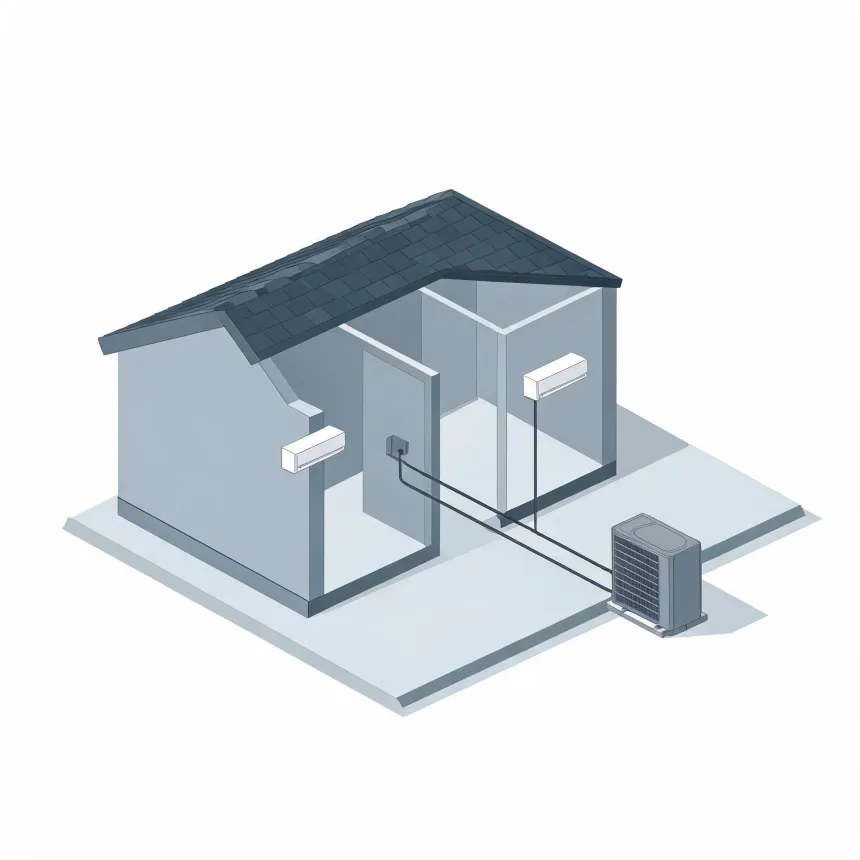
- A single outdoor unit can run one indoor head or several, so it comes down to how many zones your house needs rather than a fixed room count. A room that gets full sun or sits over a garage needs more capacity than one that does not, and that changes how the zones get split up. A contractor will size the system and the number of indoor heads to your square footage and layout.
- Can a mini split heat a whole house?
- It can, if enough indoor heads are placed to reach every room, but most homes here use it alongside the gas furnace rather than replacing it. Homes in this area need heat from October through May, eight months of the year, and winter nights average 19°F, so the system has to be sized for real cold, not just mild days. A contractor can tell you whether a whole-house mini split setup fits your layout or whether pairing it with existing heat is the better choice.