
Mini Split Installation in Richfield, UT
A new system here will heat from September through June and cool from July through July every year. Tell us about the house, and a licensed contractor who covers Sevier County will get in touch.
Tell us about the job
It takes about a minute.
Richfield asks a mini-split to heat far more than it cools
Winter nights here average 17°F from December through February, and homes need heat from September through June. That is ten months of the year leaning on a heat pump, against just July for cooling. A mini-split installed here has to be sized and set up for the cold nights, not the mild afternoons.
Any mini-split installed new has to clear a federal floor either way, 14.3 SEER2 for cooling and 7.5 HSPF2 for heating. But in a place where heating carries most of the load, how it performs on a 17°F night matters more than the rating on the box.
- 10 months
- September through June, your system heats
- 1 months
- July through July, it cools
- 17°F
- the average winter night it heats against
- 78°F
- the average summer afternoon it cools against
NOAA nClimDiv, 1991–2020 normals
Utah requires HVAC contractors to hold a state license.
The Division of Professional Licensing issues that license, and it belongs to the contractor rather than to any one job. Utah sets a line at $7,000. Work under that amount does not need a licensed contractor. A mini-split installation can fall on either side of that line depending on what the job costs.
Most cities and counties in Utah require a permit to install a mini-split, along with an inspection once the work is done. That inspection is a local check, done by the building office, not by the state. It confirms the installed system meets code. Where the job costs $7,000 or more, the state license is what stands behind who did the work. Where it costs less, the permit and inspection are the check this state has in place.
Sources: Utah State Legislature · Utah Department of Commerce
- Is a mini split worth it?
- It depends on what you're heating with now and how the house is laid out. A mini split puts heat right where the air handler is, with no ducts losing heat along the way, and it cools that same room come July. Here winter nights average 17°F and homes need heat from September through June, so a mini split rated for cold climates can carry a room through the season instead of just taking the edge off. If you're adding a room, heating a space the furnace doesn't reach well, or replacing electric baseboard, it tends to make more sense than if you already have even heat throughout the house.
- How many rooms can a mini split cover?
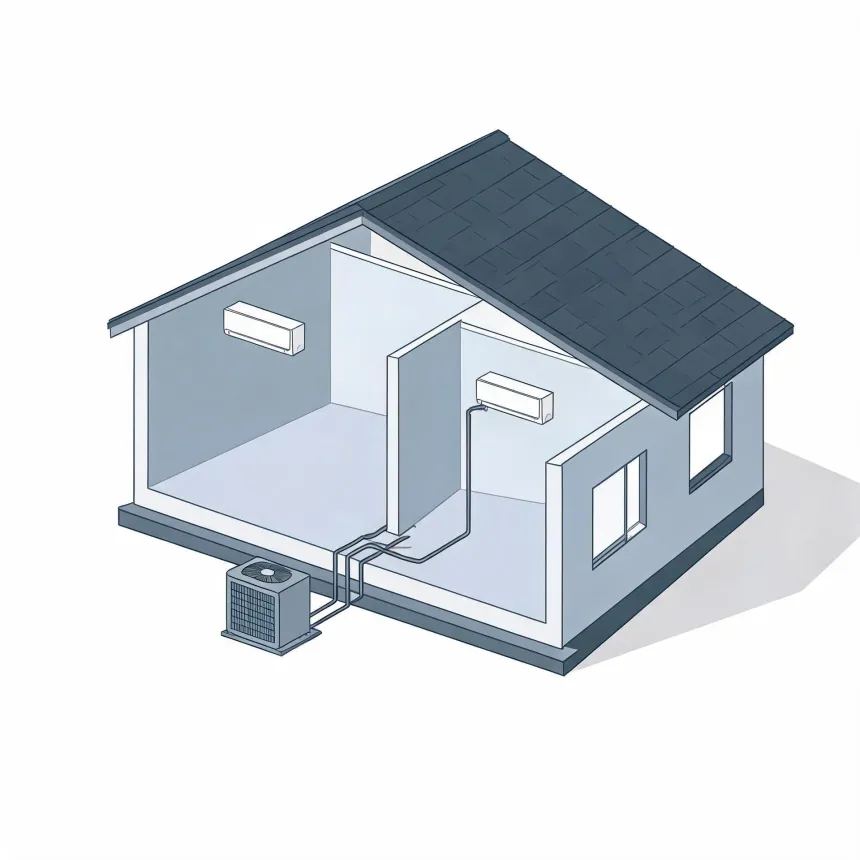
- A single-zone mini split heats and cools one room or one open area. If you need more rooms covered, a multi-zone system runs several indoor units off one outdoor unit, and each indoor unit handles its own room with its own thermostat. How many zones one outdoor unit can run depends on the equipment, so a contractor will size that to the rooms you want covered.
- Can a mini split heat a whole house?
- It can, but it takes the right number of indoor units placed in the right rooms, not just one. A single indoor unit heats the room it's in and whatever space is open to it, not the rooms down the hall with doors closed. Winter nights here average 17°F, so any mini split used as the main heat for the whole house needs to be a cold-climate model rated to keep producing heat at that temperature. A contractor can size a multi-zone system room by room if that's the goal.