



Utah HVAC Pros

Dryer taking too long to dry in Salt Lake City, UT

Skip searching for someone who cleans dryer vents in Salt Lake County.

Skip the search

A dryer that runs two or three cycles to get clothes dry almost always means the vent is clogged, not the machine. Lint builds up inside the duct over time, and once it narrows the path, hot moist air has nowhere to go. The dryer senses the load is still damp and keeps heating, which is why your utility room runs warmer than it used to and the top of the dryer feels hot to the touch. This takes longer to show up in winter, when the air coming in is already cold and dry, so a vent that was borderline in July can fail outright in January. A rigid, fairly short run of duct still clogs eventually; it just takes longer. If the outside vent hood barely moves when the dryer runs, or lint collects around it, that confirms the blockage. Left alone, the motor and heating element work harder every load, and lint sitting inside a hot duct is a fire risk.

Why does my dryer vent clog up faster here?

  • 2.77 people per household on average

    A household of 2.77 people on average here means more loads through the vent every week, so lint has more chances to build up and narrow the duct.

  • Half the homes here were built by 1986

    Half the homes in Salt Lake County were built in 1986 or earlier. Vent runs in older homes tend to be longer or bent through walls added since, and both slow the airflow down.

  • Power here costs 13.41 cents per kilowatt-hour

    Power here runs 13.41 cents per kilowatt-hour, so a dryer working harder to push air through a clogged vent costs more to run every time it's on.

ACS 2020-2024 · EIA-861 2025

A metal hooded dryer vent with a louvered opening mounted on gray horizontal lap siding, next to a plain off-white wall.

Clogged vent, running hot

A dryer fighting a clogged vent runs hotter than it should, every load. Heat that can't escape through the duct stays in the drum and the housing around it. Run that way for months and the heating element or the thermal fuse wears out faster than it would otherwise. You end up paying for a repair that a vent cleaning would have prevented.

A stainless steel hooded dryer vent screwed to light gray horizontal lap siding, with a blank white wall occupying the left side of the frame.

Clear vent, normal wear

A dryer venting properly runs at the temperature it was built to run at. The motor, the belt if it has one, and the heating element all last out their normal life instead of giving out early. Loads take one cycle, not two or three. You notice the difference most in January and February, when every other appliance in the house is working harder too and you want this one to just do its job.

Why does it take two cycles to dry one load now?

You used to run one cycle and pull out dry clothes. Now you are starting the dryer again halfway through the day, sometimes a third time, and the load still feels damp at the seams. Nothing about how you load the machine has changed, so it is reasonable to wonder if the dryer itself is wearing out or if something else is going on that you cannot see from the laundry room.

The vent is restricting airflow, so the dryer can't push moist air out

A dryer dries clothes by moving heated air through the drum and out through the vent, carrying moisture with it. When lint narrows that path, less air moves, so the moisture stays in the drum instead of leaving the house. The dryer's sensor reads the load as still wet and starts another cycle, because that's the only response it has. The machine isn't failing. It's doing the same job with less airflow than it needs. Each extra cycle adds more heat and more lint to a duct that's already restricted, so the second cycle usually takes as long as the first, and a third isn't unusual once the duct is far enough gone.

A pile of beige, blue, and gray towels sits on top of a white dryer beside a window with green foliage outside, against a dark wall.

It's past eight on a Tuesday and the kitchen light is the only one still on. You pull the towels out expecting them warm and done, but they're heavy in your arms, damp through the fold, and the drum still smells hot. You set them on top of the dryer instead of the basket because the basket's still full from last week. This is the second run tonight. Outside the window the Salt Lake valley is dark and dry, the kind of night the heat should carry off in one cycle, not two. You stand there a second deciding if it's worth starting a third, or if it's time to stop guessing and have someone look at the vent itself.

No calling every shop in Salt Lake County

The pro who gets in touch is licensed in Utah and works in Salt Lake County.

No fee to send it, and nothing to sign.

What a clear vent lets through

A dryer vent that's clear carries air out at a good clip, fast enough that a sheet of paper held near the outside hood will flutter and pull toward it when the dryer's running. Hot moist air leaves the drum as fast as the dryer puts it there, so the load dries on one cycle. The duct itself stays close to room temperature along most of its length, since the air is moving through it, not sitting and building heat. That's what the vent is built to do, and it's what yours did when the house was new.


What a clogged one holds back

Lint doesn't clog a vent all at once. It builds in thin layers along the inside of the duct, each load leaving a little more behind than the last one took out. The path narrows gradually, so the dryer doesn't fail outright, it just works harder for longer. Air that used to move out in one pass now backs up, and the drum holds onto heat and moisture it would have shed. You feel the result as a second cycle, not as a single clear sign the vent is the cause.

A smiling bearded man in a dark crewneck sweater sits at a dinner table with a lit candle, glasses of wine and water, and plates of food in the foreground, with a lamp, framed art and a potted plant behind him.
A woman with dark hair in a bun reclines on a gray sofa with her eyes closed and a slight smile, wrapped in a cream knit sweater and blanket, with an open book resting in the foreground and a lit lamp in the dim room behind.

Your dryer doesn't run on a fixed clock. It reads the air in the drum, usually by temperature, and keeps going until that air tells it the load is dry. That reading depends on exhaust actually leaving the duct. Air has to travel from the drum through every elbow and foot of pipe before it reaches the hood outside, and lint settles fastest at those bends, not along the straight runs. The more turns your duct makes getting outside, the more places lint has to grab hold. Once it narrows the path, heat backs up inside the duct instead of leaving the house, and the sensor keeps reading damp air long after the clothes themselves have given up most of their moisture. The hood flapper outside should swing open wide while the dryer runs and drop shut the moment it stops. If it barely moves, or stays cracked open, that's often the first sign the duct behind it is already restricted. A booster fan helps push air through a long run, but it has no effect on a duct that's already packed with lint. Rigid metal duct keeps that path open far better than flexible foil or vinyl, which sags and traps lint at every low point.

How the vent actually dries your clothes

  • The dryer's timer or moisture sensor cuts the cycle based on drum temperature and humidity, not a clock counting minutes.
  • A clogged vent traps heat in the duct, so the sensor reads the air as damp longer than the clothes actually are.
  • Exhaust air has to push past every elbow and foot of duct before it reaches the hood outside, and lint collects most at the bends.
  • The flapper on the outside hood should swing open fully when the dryer runs and fall shut when it stops.
  • A booster fan is sometimes added on long duct runs, but it can't fix a run that's already packed with lint.
  • Rigid metal duct moves air more efficiently than flexible foil or vinyl duct, which sags and catches lint at the low points.
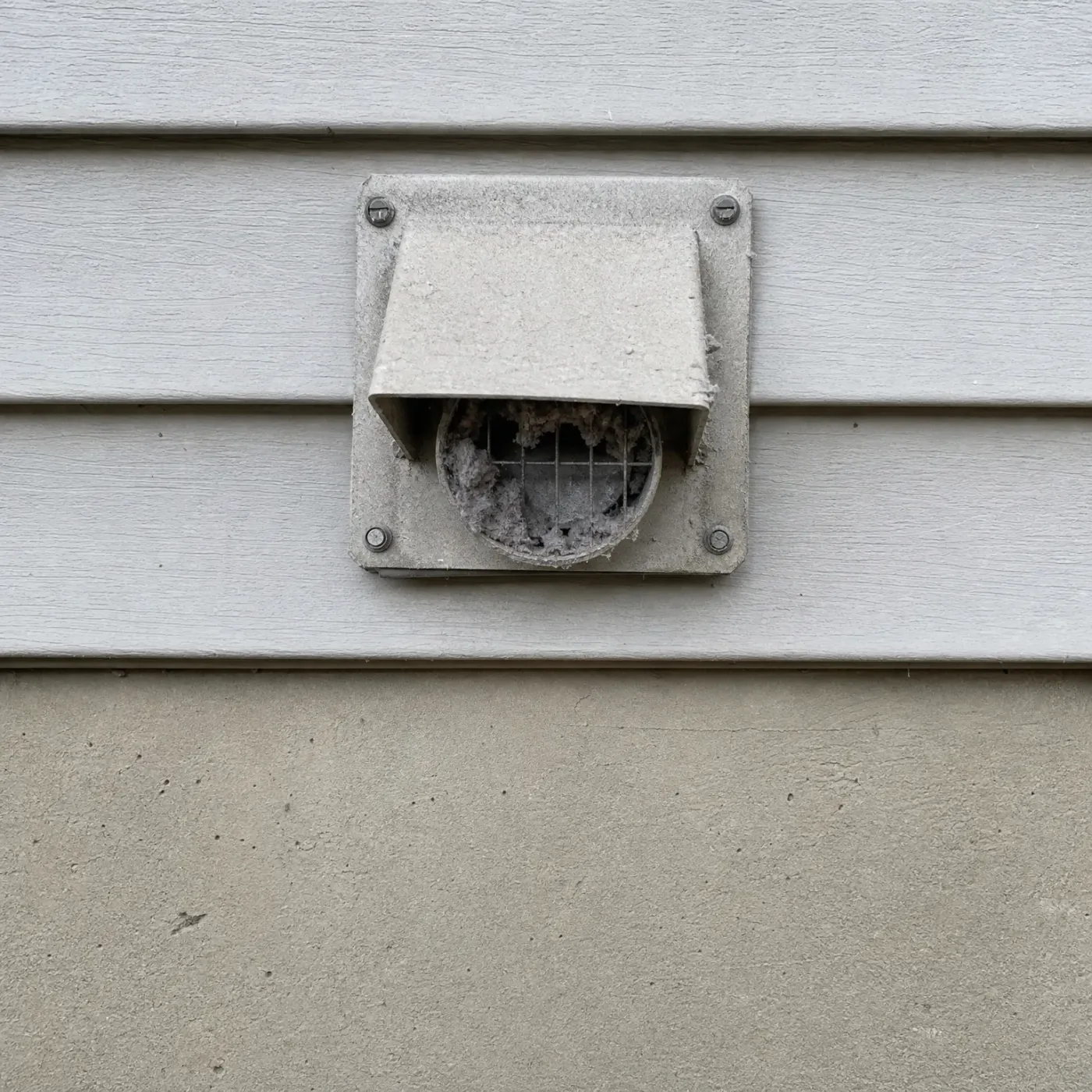
A white plastic hood-style dryer vent mounted on beige horizontal siding, with its opening clogged by thick gray lint.
Before you get your dryer vent cleaning
A white hooded dryer vent with a louvered opening mounted on light gray horizontal lap siding above a concrete foundation.
After you get your dryer vent cleaning

How your duct is laid out

  • The duct run from the dryer to the outside hood should be as short and straight as the house allows, since every elbow slows the air down.
  • Rigid metal duct moves air better than flexible foil or plastic duct, which sags and catches lint at every ridge.
  • The outside hood has a flap or louvers that should swing open freely when the dryer runs and fall shut when it stops.
  • A duct longer than the straight run a dryer can push air through needs a inline booster fan to clear exhaust properly.
  • Lint collects fastest at the elbows and at the hood itself, not evenly along the straight sections of duct.
  • A bird or rodent nest inside the outside hood blocks airflow the same way a lint clog does, just from the other end.

The path your dryer exhaust takes matters as much as whether it's clogged. A straight, short run from the dryer to the outside wall gives air an easy way out. Every turn it has to make, every elbow, slows it down and gives lint a place to settle. Two elbows behave very differently from five, even if the total length of duct is the same.

The material matters too. Rigid metal duct, round and smooth inside, lets air move through at full speed. Flexible foil or plastic duct sags between the points where it's fastened, and lint catches in the ridges every time the air passes over them. A lot of older installs in this area still have that flexible kind in part of the run.

Outside, the hood at the end of the duct has a flap or set of louvers. That flap should push open when the dryer is running and close again when it shuts off, keeping rain and pests out between loads. If it's stuck, bent, or caked with lint, the air backs up right at the exit.

Longer runs lose airflow the farther they go, and a house with the dryer far from an exterior wall may need an inline booster fan partway down the duct to push air the rest of the way. Without one, a long enough run will clog no matter how often it's cleaned.

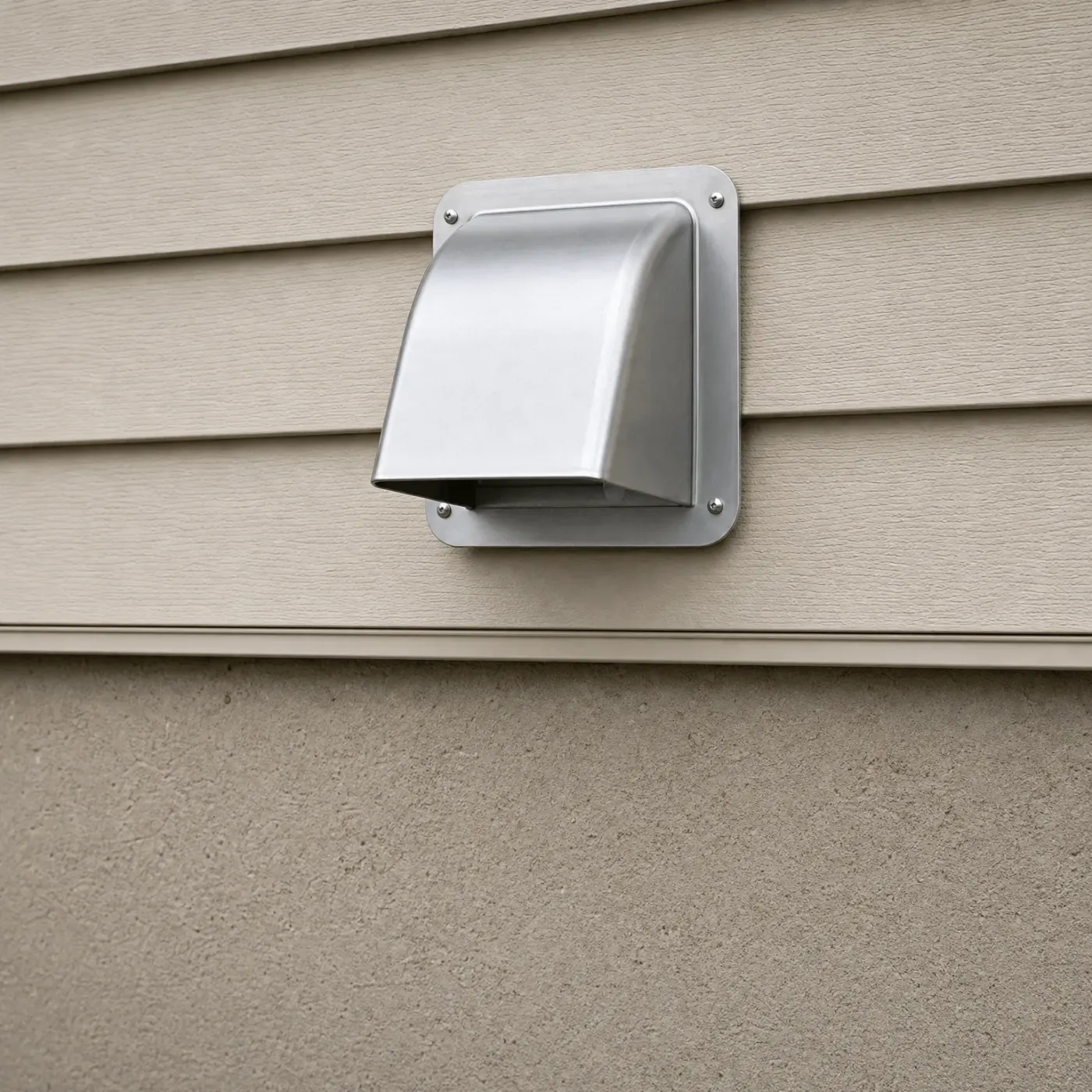
A metal hooded dryer vent cover mounted on beige horizontal lap siding above a textured concrete foundation wall.
A clear hood like this lets exhaust air push straight out, so the dryer shuts off on time.
A metal dryer vent hood screwed to light gray lap siding, with lint clogging the round opening and a lower concrete wall below.
A screen clogged like this blocks the exhaust, forcing the dryer to run load after load.
  1. Lint builds up along the inside walls of the duct

  2. The narrowed duct slows the exhaust air leaving the dryer

  3. Heat and moisture stay trapped in the drum longer

  4. The sensor reads the load as damp and restarts the cycle

2.77 people per household on average

At 2.77 people, most houses here are running a load most days, not once a week. That's more lint moving through the duct, week after week, and more chances for it to catch on a seam or a joint before it ever reaches the hood outside.

ACS 2020-2024

A smiling woman with long dark hair in a gray sweater sits at a white stone counter with a glass of white wine, with a kitchen, fireplace and sofa visible behind her.
A smiling woman with dark hair in a cream sweater sits at a marble table with a glass of red wine, with a lit lamp, sofa, fireplace and kitchen counter behind her.
A woman in a cream sweater laughs while seated at a marble countertop with a glass of red wine, with a dimly lit living room and sofa behind her.
A woman in a beige turtleneck sweater with her hair up sits laughing and looking to the side at a white marble table with a glass of red wine, in a dimly lit interior with a lamp and seating area behind her.
A closed laptop and a ceramic mug of dark coffee sit on a wooden table, with a blurred kitchen counter, potted plant, wooden utensils and cutting boards, and a large window in the background.

A dryer that runs once and shuts off

A dryer taking too long to dry almost always comes back to the vent. Clear the duct and the hot moist air has a straight path out again, so the sensor reads the load correctly and shuts the dryer off after one cycle, the way it used to.

Finding someone for this usually means calling around, explaining the same problem to each one, then sitting with a few quotes trying to guess who actually knows vents and not just machines. This page connects you with one licensed Salt Lake County contractor instead, someone who clears these ducts all year in homes like yours and already knows what a clogged run looks like before the brush goes in.

A speckled beige ceramic vase holding thin dried branches sits on a round wooden table near a window with sheer curtains, with a dark upholstered chair and draped blanket blurred in the background.
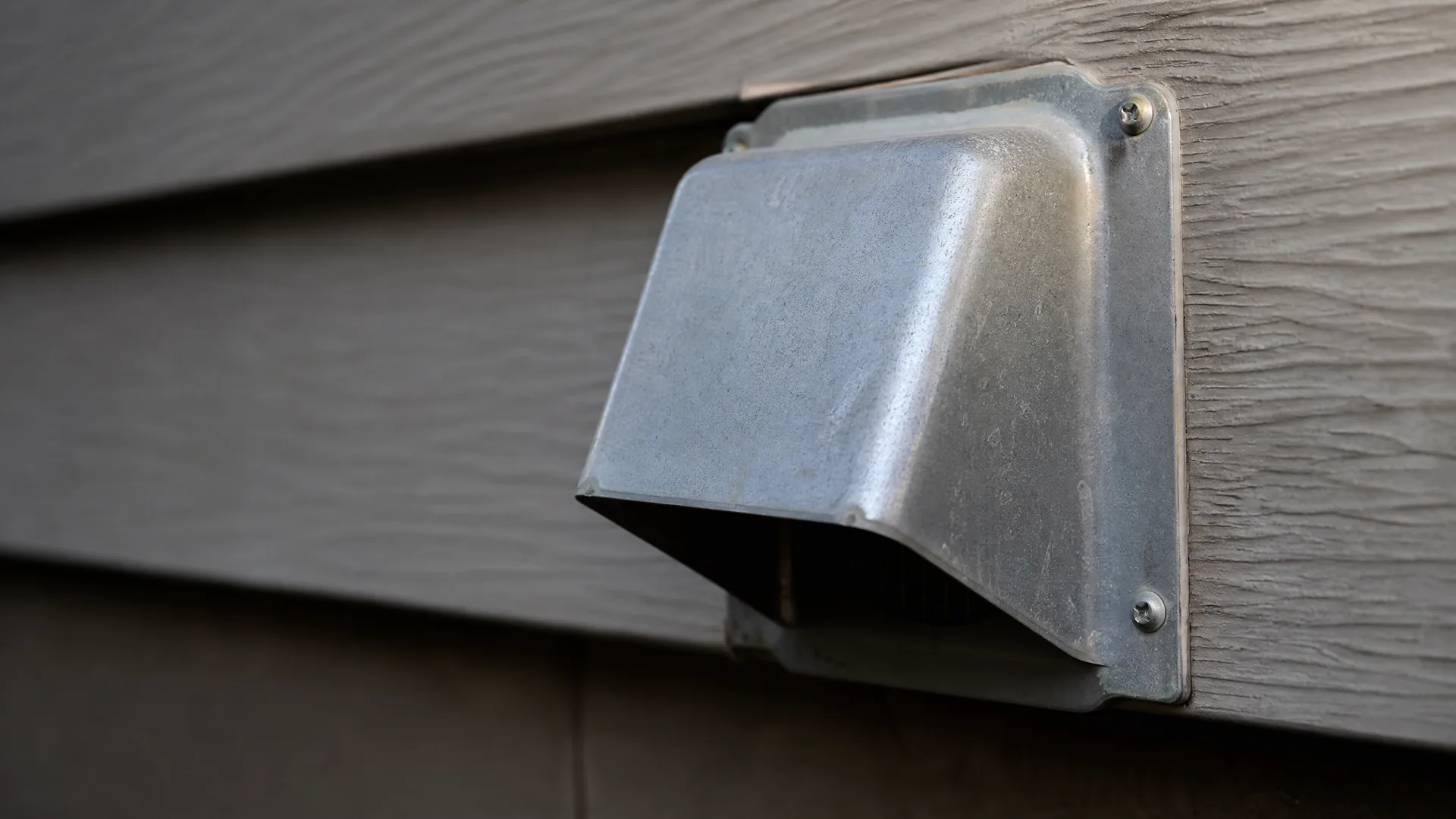
A galvanized metal hooded dryer vent screwed to gray lap siding on an exterior wall.

Skip the search

Duct and vent cleaningSalt Lake County, UT
Step 1 of 3

What kind of equipment?