Utah HVAC Pros
A dark gray furnace with two access panels stands in a basement, connected to galvanized sheet-metal ductwork and PVC pipes, with exposed wood framing and a bare bulb light in the background.

Skip calling around

What to do when the heat goes out in Utah

Your furnace quit and you need it fixed, not a list of reasons it might have happened. Below is what to check before anyone comes out, and what a gas furnace repair in Utah usually involves. Skip the part where you search around, call a few places, and explain the problem over and over. Tell us once and a local furnace contractor takes it from there.

Skip the calls

First check the thermostat battery and the breaker for your furnace, because both are common and both are free to fix. If those are fine, look at the furnace itself. Most gas furnaces in Utah have a small window showing the igniter or pilot light. No flame there usually means a dead igniter, a flame sensor coated with residue, or the gas valve not opening. A furnace that runs but blows cold air often has a clogged filter choking it or a blower motor that's failed. If you hear the blower kick on and off every few minutes, the limit switch may be tripping from restricted airflow. None of this is something to force past with a thermostat reset. With gas and a heat exchanger involved, a furnace that won't stay lit needs someone who can test the actual part, not guess at it.

A gray high-efficiency furnace stands on a concrete basement floor beside galvanized sheet-metal ductwork, with white PVC vent pipes, gas and water lines, and unfinished wood framing behind it.

Furnace running right

Flame steady through the window, air moving from every vent, and the house holds its temperature room to room. The blower cycles on and off on its own schedule, not constantly, and you don't notice it unless you're listening for it.

A beige furnace with two louvered front panels stands on a concrete basement floor beside galvanized ductwork, metal pipes, and a wooden post.

Furnace in trouble

Vents blow cold, or nothing moves at all. The flame window is dark, or it lights and drops out again. You might hear clicking from the furnace as it tries to start, or notice one room staying cold while the rest of the house is fine.

Call Now or Wait It Out

Call now

  • A no-heat call in the middle of winter gets treated as urgent by most furnace contractors, and many will come out the same day.
  • You explain the problem once, to the person who's actually going to look at the furnace.
  • A local contractor who works on furnaces all winter has usually seen your igniter or blower problem before and knows what to check first.
  • You're matched with one contractor, not a handful calling you back at once to pitch the job.
  • If the house is getting cold fast, waiting to shop around costs you comfort you don't get back.

Wait and watch

  • If the furnace is still producing some heat, just not enough, you have time to check the thermostat and breaker yourself first.
  • A mild stretch of weather gives you room to call around and compare a few contractors before deciding.
  • Waiting means more calls to make, more explaining the same problem each time, and more quotes to sort through on your own.
  • A furnace that's cutting out intermittently can still fail completely with no further warning.
  • The longer a gas furnace runs with a developing problem, like a cracked heat exchanger or a failing igniter, the more it can affect the rest of the system.
A gray residential furnace with two panel doors stands against a plain light wall in a concrete-floored room, connected to metal ductwork and white and copper pipes.

Why the igniter fails first

Most gas furnaces built in the last couple decades use a hot surface igniter instead of a standing pilot. It's a small ceramic strip that glows to light the burners every time the furnace calls for heat. That strip cycles hot and cold hundreds of times a winter, and ceramic wears out from that cycling the same way a light bulb filament does. When it cracks, the furnace won't light at all, and you'll usually see no glow through the window where the flame should start.

A gray high-efficiency furnace with white PVC venting pipes stands against a plain wall in a basement, connected to sheet-metal ductwork on a concrete floor.

What the blower motor tells you

If the blower runs but no warm air comes out, or it runs nonstop without cycling off, that points away from the igniter and toward the blower motor or its control board. Gas furnaces are direct drive, no belt involved, so a squeal or grinding is usually the motor bearing itself. A contractor can test the motor's amp draw in a few minutes and tell you whether it's the motor, the control board, or a duct blocked somewhere in the house.

Is your house getting colder room by room

You probably noticed it at the vents first. Air that used to come out warm is coming out cold, or not coming out at all. Maybe the thermostat shows the temperature you set, but the room doesn't match it, or one room is fine while another has gone cold. You might hear the furnace trying, a click or a hum, then nothing. Or you hear nothing at all. If there's a gas smell near the furnace, that's not a wait-and-see sign, leave the house and call your gas utility before anyone else. Short of that, a furnace that won't fire means the house will keep losing ground against the cold outside, and with kids or anyone older at home, that matters sooner than you'd think.

A dim unfinished basement with concrete walls, exposed floor joists, a small window, and a furnace connected to metal ductwork and PVC venting.

It's gone seven by the time you're down there, and the light over the workbench is the only one on. The air near the furnace has that faint dusty smell it gets when the burners haven't fired in a while. You tap the thermostat up five degrees, wait, and nothing answers back, no click, no low roar starting up through the ducts. Upstairs someone's asking if it's warming up yet. You already called around to a couple of places earlier and left your number, and now you're standing here in a coat, in your own basement, waiting on a callback and a furnace that isn't going to fix itself before the house drops any further.


Describe it once

Only one pro gets your request, so you hear from one company.

There's no charge for the request.

If it's just blowing cold air

If the blower is running but no warm air is coming out, the furnace is drawing power and trying to start a heat cycle without lighting the burners. That points to a gas supply problem, a bad igniter, or a safety switch that's stopping ignition on purpose. It's not a duct or vent issue at that point, since the blower moving air at all tells you the fan side is fine. Leave the system on and call it in rather than resetting the breaker over and over, since repeated reset attempts on a furnace that won't ignite usually just trip the same limit switch again.

If nothing happens at all

No blower, no sound, no light in the igniter window, nothing. Check the breaker and the furnace's own switch first, the one that looks like a light switch mounted on or near the unit, since it gets bumped or shut off more often than people expect. If power is confirmed at both and the furnace still shows no sign of life, the problem is likely in the control board or the transformer that steps down power to run the thermostat and ignition system. That's not something to keep testing on your own. A furnace with no response at all needs a contractor who can open the panel and check voltage at each stage.

A woman in a knitted shawl sits in a living room with a fireplace, shelves, a sofa with cushions, and a lamp by a bright window, looking off to the side.
A woman with long brown wavy hair in a green shirt over a white top stands in a living room with built-in white shelves, a ceiling fan, a potted plant and a sliding glass door.
A woman with shoulder-length gray-streaked hair in a light gray knit sweater stands smiling and looking off to the side in a living room with a sofa, houseplant, framed picture, and sunlit sliding glass door.
A woman with shoulder-length curly gray hair wearing a gray knit sweater stands near a window with a sheer curtain, looking to the side, with a blurred interior room behind her.

Repair the furnace you have

A gas furnace that's otherwise sound usually just needs the failed part found and swapped, and you're back to heat the same day without buying anything new.

Describe it once

Replace it

Worth asking about if the furnace is old or this isn't its first repair call. A contractor who's already looking at it can tell you honestly which makes more sense.

Describe it once
A closed laptop and a cream mug of coffee on a coaster sit on a dark wooden table, with a potted plant at left and a kitchen counter, tiled backsplash and shelf of ceramics in the background.

What actually happens when you turn the thermostat up

The thermostat sends a call for heat to the control board, and the board runs through a sequence. The inducer motor starts first, pulling air through the heat exchanger to clear it out before any flame starts. A pressure switch has to confirm that's happening, or the board stops right there and won't move to the next step. Only after that does the igniter glow and the gas valve open. If a furnace won't light, the failure is almost always somewhere in that sequence, not in the part people assume.

That's useful to know because it means a no-heat call usually isn't a mystery once someone's standing in front of the furnace with the panel off. A contractor who works on these year-round in Utah can watch that sequence happen, see where it stops, and know within a few minutes which part in the chain gave out. You don't need to describe the symptoms to three different companies to get to that answer. One visit from someone who already knows this sequence cold gets you there once.

A living room corner with a beige upholstered armchair holding navy and striped cushions, a small round wooden side table with a carved bowl and a potted green plant, a framed landscape picture on a pale wall, built-in shelving, and a curtained window.
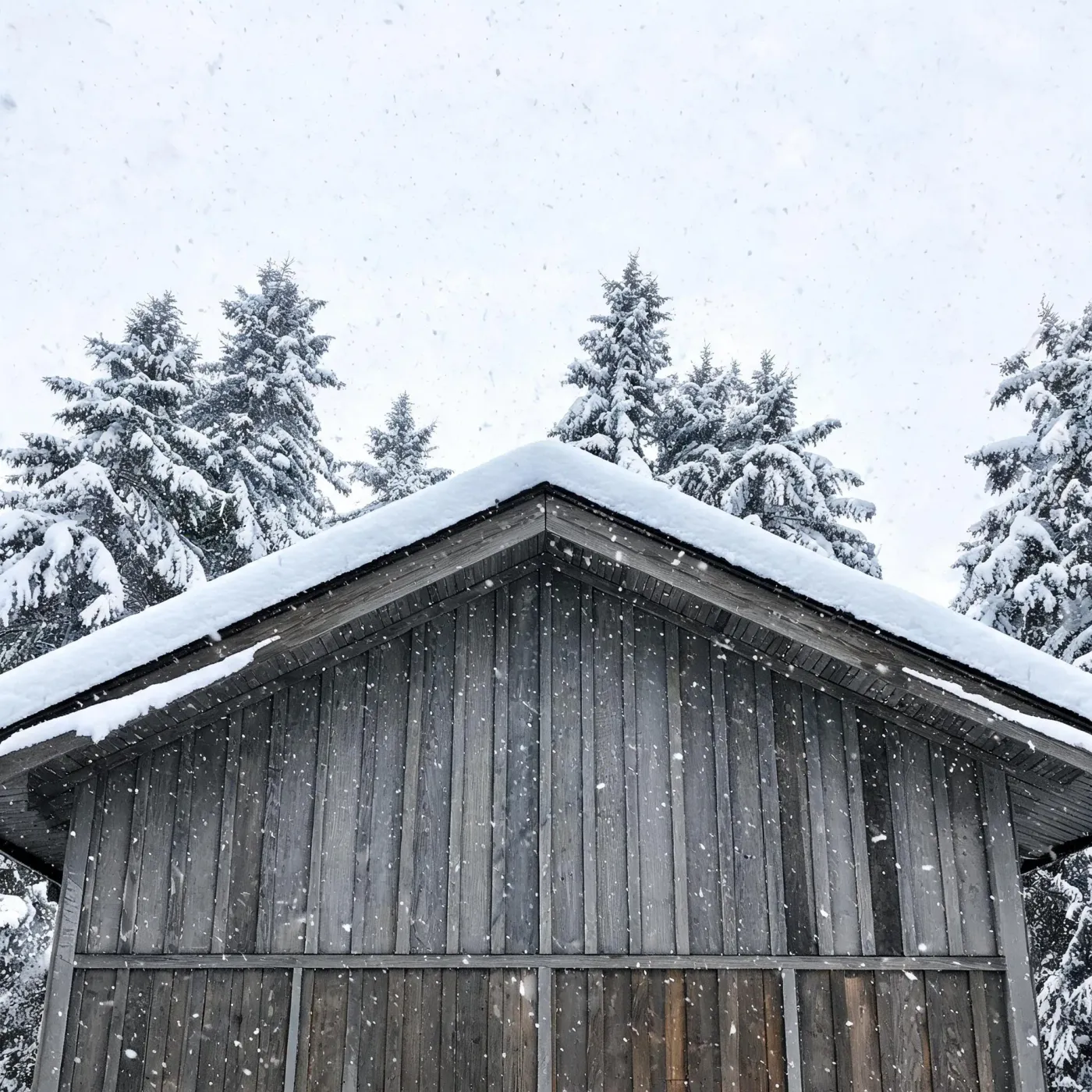
The gable end of a weathered vertical-board wooden building with a snow-covered roof, framed against snow-laden conifers and a pale sky with falling snowflakes.

Winter nights average 21°F across Utah, according to NOAA climate data. That's cold enough that a furnace isn't cycling on and off anymore, it's running long stretches just to hold the house steady. A furnace already weak from a cracked heat exchanger or a tired igniter gets pushed harder on nights like that, and it tends to show. You might hear it run longer than usual, or notice the air at the vents isn't as warm as it was a month ago. If the furnace is going to quit, cold nights are when it happens, because that's when it's working the hardest to keep up.

NOAA nClimDiv 1991-2020 county normals weighted by homes

A beige residential furnace stands on a concrete basement floor beside galvanized sheet-metal ductwork, a round flue pipe, copper gas piping, and a PVC condensate line, with a wood-paneled wall at right.
Before you get your furnace repair
A gray high-efficiency furnace in a basement with white PVC vent pipes, sheet-metal ductwork, copper and black piping, a condensate pump, and insulated walls above a concrete floor.
After you get your furnace repair

Winter nights average 21°F statewide

At 21 below freezing, your furnace is lighting the burners for most of the night, not just a few minutes an hour. A part that's been limping along, a weak igniter or a clogged flame sensor, tends to give out right in that long stretch, usually well before morning.

NOAA nClimDiv 1991-2020 county normals weighted by homes

A woman with her hair in a bun holds a sleeping young child against her chest, both wrapped in a textured beige knit blanket on a sofa in a dimly lit room with a lamp, framed picture, and bookshelf behind them.
A gray-haired woman in a cream knit sweater stands in a dimly lit kitchen at night, looking to her right, with a round loaf of bread in the foreground and a dark window and potted plant behind her.

Where you stand right now

  • A no-heat furnace in Utah almost always comes down to one part: the igniter, the flame sensor, or a gas valve that's lost its signal.
  • A local contractor who services furnaces all winter has usually already seen the exact failure in a house like yours this season.
  • Checking the thermostat battery and the breaker first costs you nothing and rules out the two most common false alarms.
  • Sending the job to one local contractor means one call, one explanation, and no string of callbacks from companies you didn't choose.
  • Most of these repairs end with a single part replaced, not a new furnace, unless the heat exchanger itself is cracked.
  • The same cold snap that's stressing your furnace is stressing every furnace on your street, which is why a tech who works this area knows what to check first.

Your furnace quit, and the cause is almost always small: a failed igniter, a dirty flame sensor, or a gas valve that stopped getting the signal to open. You've already ruled out the free fixes if you checked the thermostat battery and the breaker. What's left is a part a contractor can find by watching the furnace run through its start sequence once.

This isn't a rare problem specific to your house. The same cold is working on every furnace on your street, and a contractor who's out servicing furnaces all winter in this area has likely already replaced the exact part that's failed in yours, maybe more than once this season. That's not a guess about your equipment, it's what the weather does to a furnace that's been running long stretches instead of short cycles.

Sending the job to one contractor instead of several means you explain the problem once, to the person who's going to open up the furnace and look at it. No repeating yourself on three different calls, no juggling quotes, no fielding callbacks from companies you never chose to talk to. Just the one contractor, local to Utah and licensed to do the work, coming out to find the part and replace it.

Most of these calls end the same way: one part swapped, heat back the same day, no new furnace involved. The exception is a cracked heat exchanger, which is a different conversation. Either way, you'll know which one you're dealing with once someone's actually looked.

A gas furnace with attached PVC and metal piping and sheet-metal ductwork stands on a concrete pad in a dim unfinished basement with concrete walls and exposed floor joists.

One form, no calling around

Your request goes to one pro, not a list of companies.

RepairFurnace or heatingUtah
Step 1 of 2

What ZIP code is the job in?