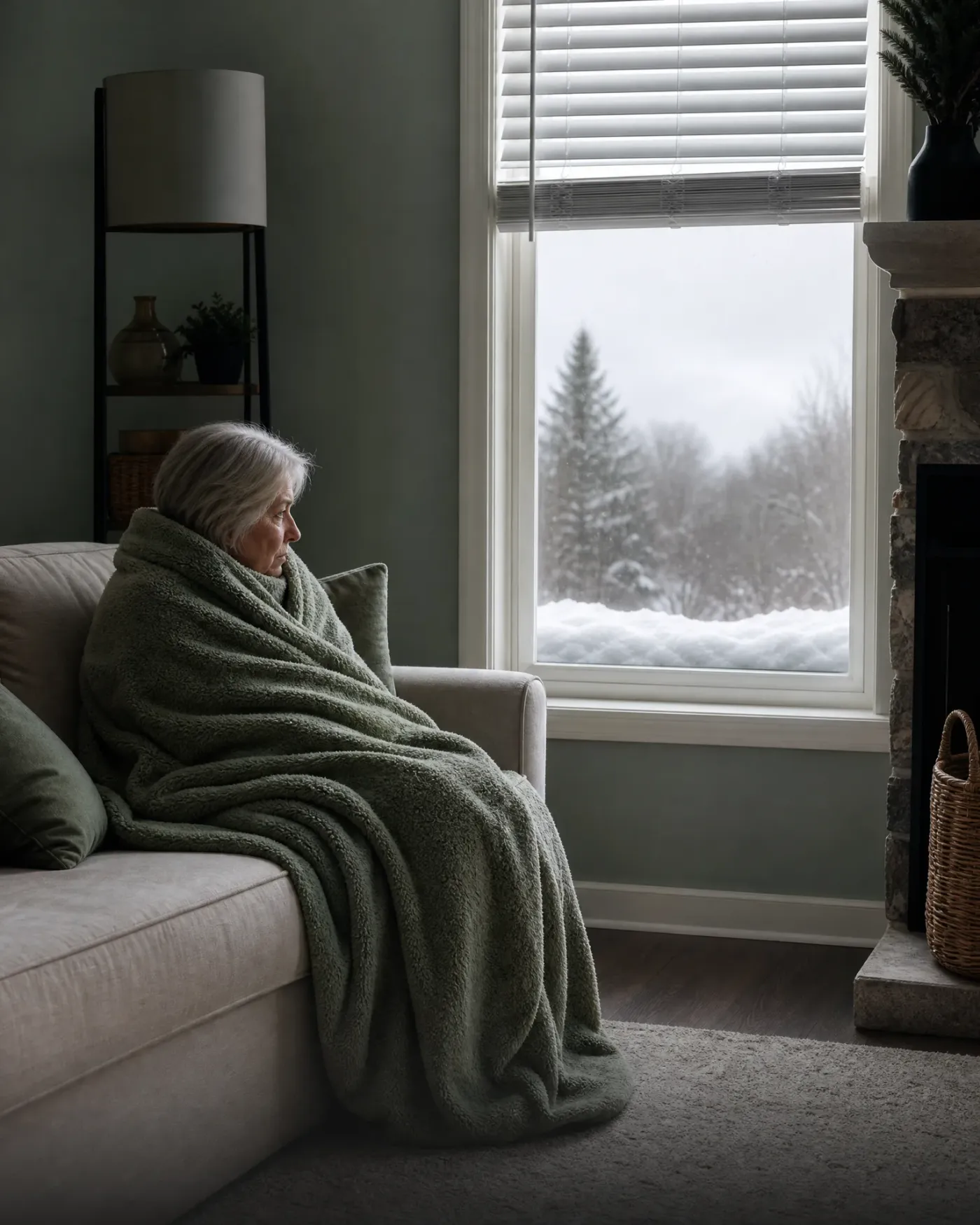
Why your heat won't reach upstairs in Utah
Upstairs stays cold because heat rises, but that's not the whole story. Furnaces push warm air through ducts sized for the whole house, and the branch lines running up to the second floor often lose pressure before the air gets there, especially if a damper is closed, stuck, or was never balanced right. A dirty filter or a blower running weak makes this worse, since there's less air being pushed to begin with, and the upstairs rooms are the farthest from the furnace and the first to lose out. Leaky or disconnected ductwork in the attic or a wall cavity can also dump heated air before it reaches the vents. None of this fixes itself, and running the furnace harder to compensate just drives up your gas bill without solving why the air isn't getting upstairs. A furnace repair technician can check the dampers, the blower, and the duct runs to find where the heat is actually being lost.

Why the duct run matters
Air moving from the furnace to a second-floor register travels through more duct than a first-floor run, often with more turns. Each turn and every extra foot gives the air a chance to cool and lose pressure before it reaches the room. A single pinched or disconnected section in a crawlspace or wall cavity can be enough to starve an upstairs bedroom while the room below it feels fine.

What the thermostat can't see
A single thermostat downstairs reads the temperature where it sits, not upstairs. Once that room hits the set point, the furnace shuts off, even if the second floor is still ten degrees colder. Some systems built with zoning use dampers and a second thermostat to send more air up top on purpose. If your house doesn't have that, the furnace has no way to know the upstairs is still cold.
Fix the Duct Run or Keep Working Around It
Duct and Damper Repair
- A contractor can pressure test each branch line to find exactly where the upstairs run is losing air before it ever reaches the register.
- If your system has zone dampers, a stuck or miswired one can send most of the furnace's output downstairs and starve the upstairs rooms.
- Sealing leaky joints and connections along the upstairs run keeps the warm air in the duct instead of losing it into the attic or wall cavity.
- A tech who works on furnaces all winter in Utah has likely seen this exact complaint on homes with the same duct layout as yours.
- Repair means someone diagnoses the actual run causing the problem, rather than you guessing which vent or register to adjust.
- Going through one licensed local contractor means you explain the problem once and get one visit, not a string of calls to sort through.
Living With It
- Space heaters in the cold rooms add to your power bill, though power is cheap here compared to other costs of running the furnace harder.
- Closing downstairs vents to push more air up can unbalance the system further and make the furnace work harder for the same result.
- A thermostat set higher to compensate heats the rooms near it first, so the upstairs can still lag behind even with the furnace running longer.
- Without a look at the actual duct run, the cold upstairs rooms stay cold through every one of Utah's hard winters.
- Leaving a damper or leak unaddressed means the furnace keeps working against the same restriction every time it cycles on.
- Some homeowners live with closing off the upstairs rooms they use least rather than deal with finding and vetting someone to look at the ducts.

Furnace heats air, then the blower pushes it into the main trunk line.
Air splits off the trunk into branch ducts feeding each room.
The upstairs branch run climbs higher and stretches farther than downstairs runs.
Friction and extra turns in that run slow the air down.


Skip the search

Only one pro gets your request, so you hear from one company.
Sending the form costs nothing.
You keep a space heater running upstairs from November to March while the furnace downstairs barely kicks on, and your gas bill still climbs.
A contractor who checks the branch runs and dampers fixes the reason the heat won't reach the second floor, instead of you paying twice to warm it.




What's Really Restricting Airflow
- A return air problem upstairs can matter as much as supply, since the blower needs a clear path to pull air back in.
- Closing downstairs vents to force air upward usually backfires, since it raises static pressure and can choke the blower.
- A manual damper partway closed on the upstairs trunk restricts flow even when the register itself is wide open.
- Static pressure readings at the furnace tell a contractor whether the duct system is undersized for the blower it's paired with.
- A leaky return in the attic or a crushed flex duct behind a wall wastes heated air before it ever reaches a bedroom.
- Insulation stuffed against a duct boot in the attic can block airflow at the exact point it enters the ceiling.
Most people assume the problem is the supply side, the ducts carrying warm air up to the bedrooms. That's half of it. The blower also needs a clear path to pull air back in through the return, and if the upstairs return is undersized or blocked, the blower can't move the volume of air the furnace is heating. Closing downstairs vents to try to push more heat upstairs makes this worse, not better. It raises static pressure in the whole system, and a blower fighting that pressure moves less air everywhere, including to the second floor. A contractor checks for this with a static pressure reading at the furnace itself, taken against the rating for your blower. That number tells them whether the ductwork is undersized for what's installed, or whether something in the run is restricting flow that shouldn't be. From there it's a matter of tracing the path. A manual damper on the trunk line leading upstairs can be partway closed even when every register in the bedrooms is open all the way, so the restriction never shows up from inside the house. In the attic, a return duct with a loose seam or a flex duct crushed behind a wall leaks or chokes off air before it reaches the room it's meant to heat. Insulation pushed up against a duct boot where it enters the ceiling can block that opening almost entirely, and from below there's no way to see it.


Winter nights average 21°F statewide
With nights averaging 21°F across December, January and February, your furnace is running long cycles most of the winter to keep up. That's exactly when a weak branch run or a stuck damper shows up, because the upstairs is the last stop for air that's already lost pressure getting there.
NOAA nClimDiv 1991-2020 county normals weighted by homes
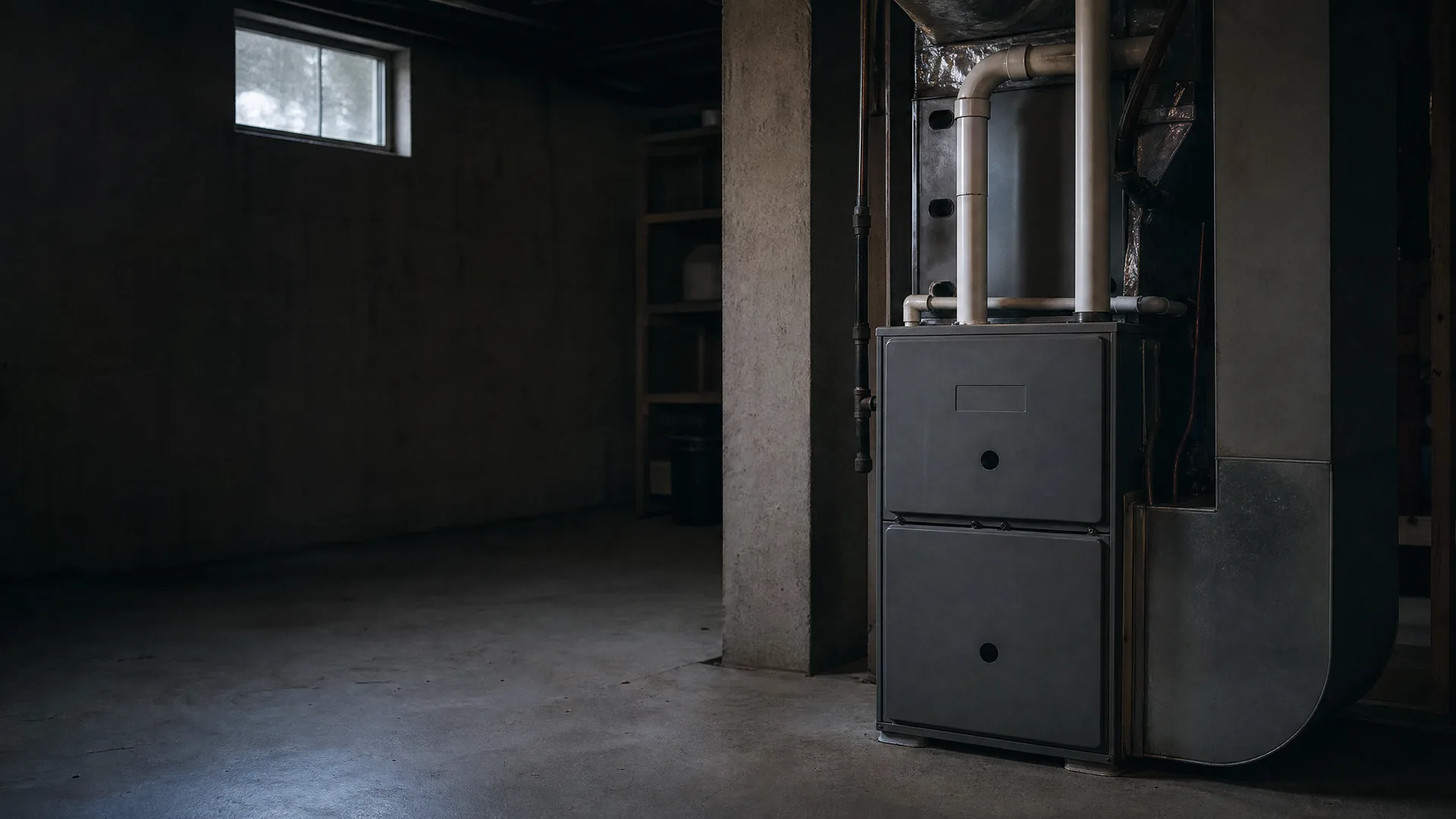
Down in the basement it's past six and already dark outside. The furnace sits quiet against the wall, metal cold to the touch, no hum of the blower, no warm draft from the vents nearby. A thin layer of dust hangs in the air where the cabinet door was last opened, stirred up and not yet settled. Upstairs the thermostat reads lower than you set it. You came down to check the pilot light and found this instead: a furnace that isn't firing, on a November night with the temperature outside already dropping toward freezing. You stand there a moment, listening for a sound that doesn't come.

Your furnace isn't broken. The air just isn't getting upstairs.
The cold furnace, long cycles, and the space heater you run from November to March all point to the same thing. Somewhere between the blower and your upstairs registers, air is losing pressure it needs to make the climb. A pinched branch run, a bad connection, or a damper stuck in the wrong position will do it, and no amount of thermostat adjusting fixes any of them.
A contractor licensed to work in Utah can pressure test the branch lines, check the dampers, and tell you which one is costing you heat upstairs. That's one call instead of several, no repeating the problem to three different companies, no sorting through quotes to guess who actually knows duct work. Someone local who services furnaces through winters like yours has seen this exact pattern before and knows where to look first.

Explain it one time
Your request stays with one local pro.
You're not committing to anything by asking.