
Signs of leaky ductwork in Salt Lake City, UT

One request and the search for a pro is handled.

Let a pro reach out

You'll see higher gas and power bills than the season should bring, rooms that stay hot in summer or cold in winter no matter where you set the thermostat, and ducts running through the attic or crawlspace that feel warm or cold to the touch when they shouldn't. Dust building up fast around vents is another one. All of this points to the same thing: air is escaping through gaps and loose joints in the ductwork before it reaches the room. In Salt Lake City, where summers push the AC hard and winters lean on the gas furnace for months, a leaky duct means the system runs longer to make up for what's lost along the way. That shows up as a bill that doesn't match the weather and a house where some rooms never quite feel right. The fix is sealing the ducts, not replacing the furnace or the AC. Left alone, the leak doesn't heal itself, and the system keeps working harder than it should to cover for it.

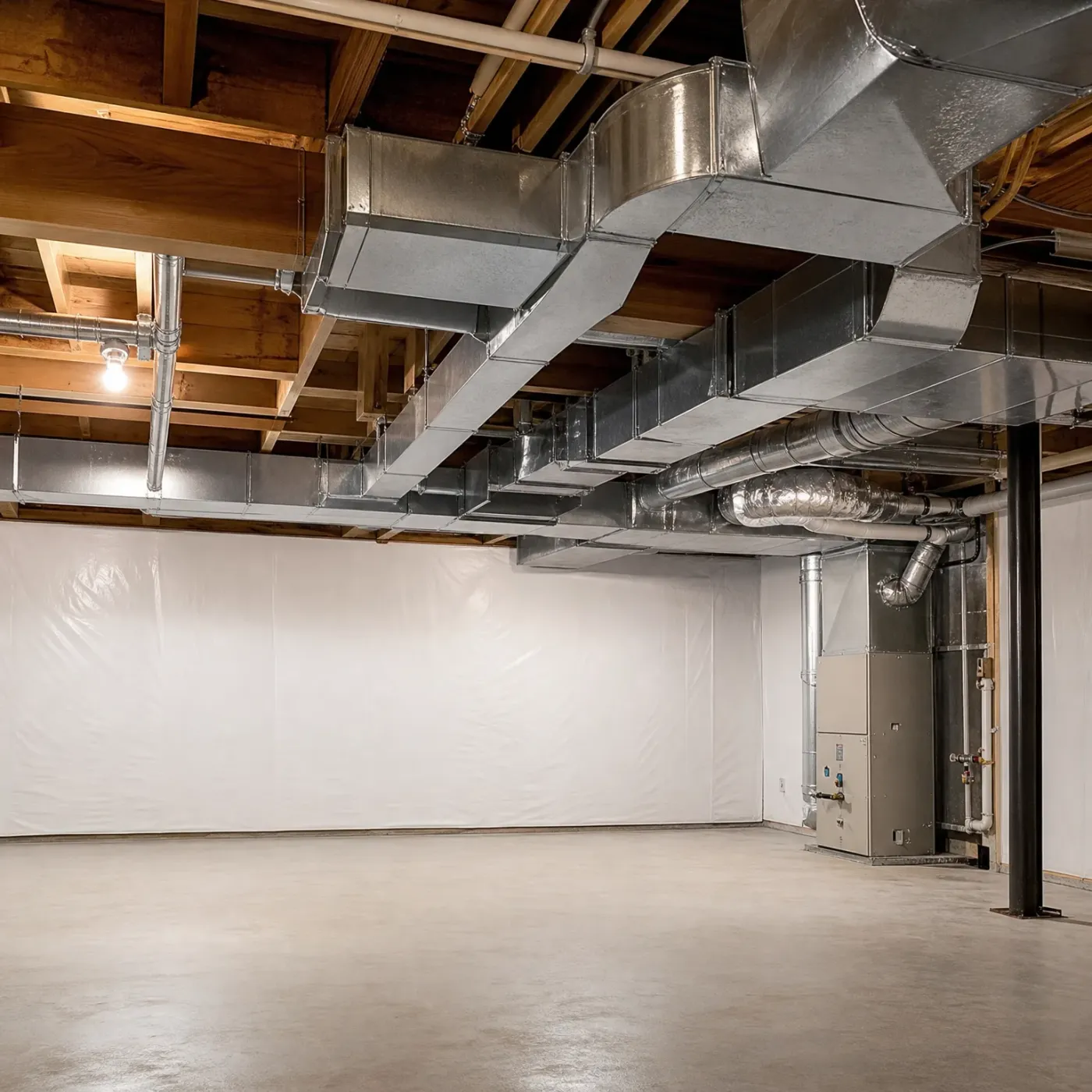
Empty basement with bare concrete floor, white plastic sheeting over one wall, exposed wood joists, galvanized sheet-metal ductwork and pipes overhead, and a furnace unit with a steel support column at right.

Ductwork sealed and sound

This is what a tight system looks like: metal runs leaving the furnace and going straight to the register with no gaps at the joints. Air that leaves the furnace arrives in the room. Every register in the house pulls close to the same, and the thermostat setting holds.
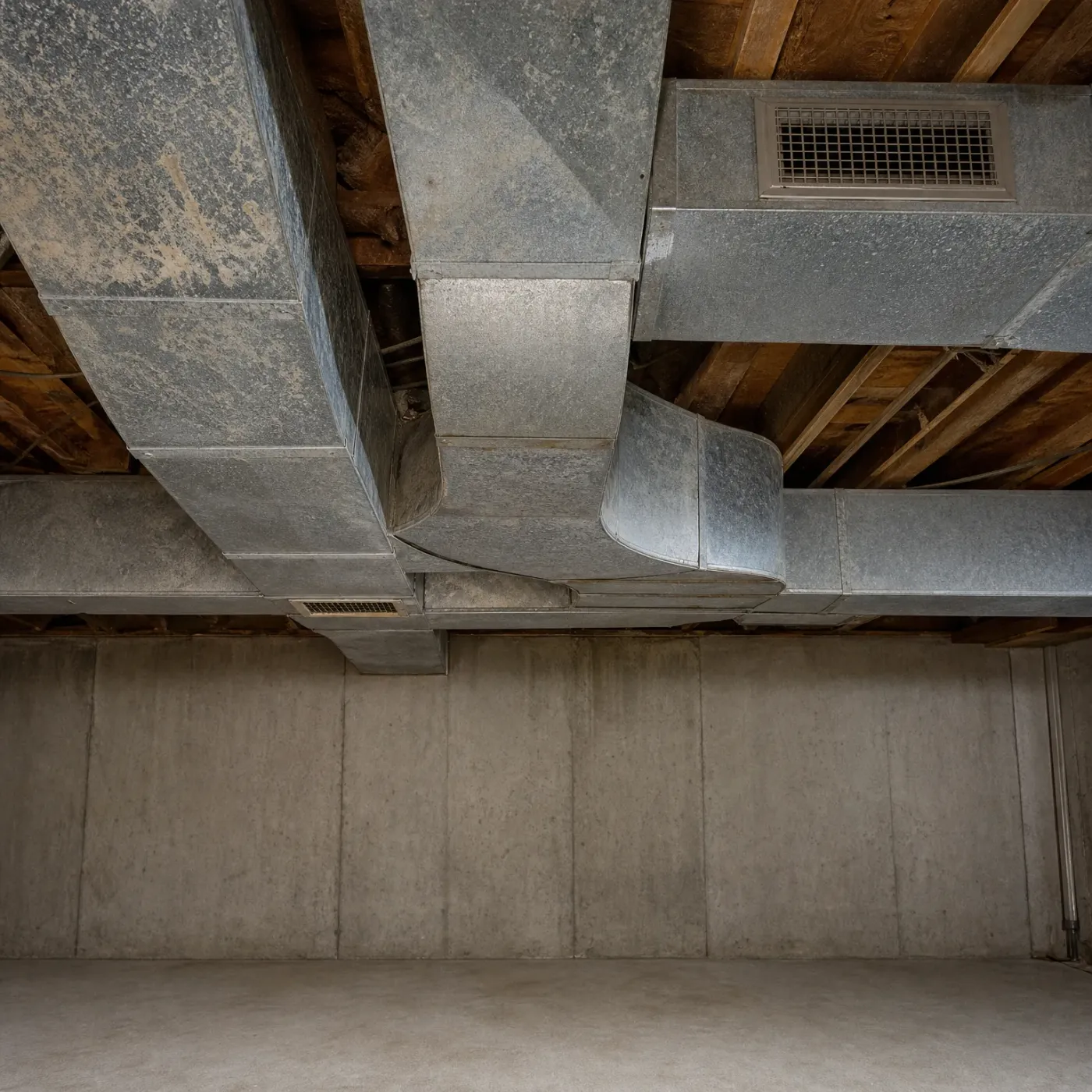

Galvanized sheet metal HVAC ducts with vent grilles run along a wooden floor joist ceiling above bare concrete walls and floor in an unfinished basement.

Ductwork losing air

Follow these same runs along the joists and look at the seams where sections meet. A loose joint or a split seam lets conditioned air spill into the basement before it reaches the register upstairs. The room on the other end runs short, and the furnace runs longer to make up for it.

Does one room never feel right no matter the season?

Walk the house and check each register. A bedroom that stays stuffy in summer and never quite warms up in January is a common sign of a duct that's lost air somewhere between the furnace and the vent. You might hear a faint hiss near a duct joint in the attic or crawlspace, or find dust streaking out around a register that shouldn't be blowing anything but conditioned air. Some homes show a layer of dust building up faster in one room than the rest. Left alone, the furnace and AC work harder to cover what's leaking out, and a system that runs longer than it should wears out sooner.

A smiling man in a dark green sweater sits at a wooden table with a light gray mug in a kitchen with white tile backsplash, pendant lights, and an adjoining living room visible.
A smiling man in a dark gray sweater stands indoors looking to the side, with a kitchen counter holding a ceramic mug and open wooden shelves behind him and a living area in the background.
A smiling man in a dark blue button-up shirt stands at a white kitchen island, with open shelving, a gas range, a potted plant and a window in the background.
A smiling man with dark wavy hair and a beard, wearing a dark green knit sweater, sits in an open-plan living room and kitchen with a brown sofa, large windows, and a counter holding a mug and a wooden bowl.

Where the Leak Is Changes What You Feel

Attic and crawlspace ducts

  • Duct runs through an attic hit summer temperatures well past 100 degrees, and a leak there pulls that heat straight into the air meant for your rooms.
  • A crawlspace duct sits inches from cold winter ground, so a split seam loses warm air to the dirt before it ever reaches a vent.
  • These runs are long, often the farthest from the furnace, so a leak near the far end can starve just the last room or two on that line.
  • You can usually get a hand or a flashlight on the duct itself in an attic or crawlspace, which makes a torn flex line or a disconnected joint easier to spot.
  • Insulation around attic ducts hides small leaks for years, since the loss doesn't show as a draft, only as a bill or a room that's never comfortable.

Ducts inside the house

  • Ducts running through a basement or between floors stay closer to room temperature, so a leak there wastes conditioned air but doesn't fight outdoor heat or cold to do it.
  • A gap in a duct behind a wall or under a floor is harder to see, so these leaks tend to get found by the symptoms, higher bills or a stubborn room, before anyone finds the duct.
  • Joints near the furnace carry the full output of the system, so a leak right at the plenum affects every room downstream rather than just one.
  • Basement duct leaks often show up as warm or cool air you can feel in the basement itself, since that space is easy to walk through and check by hand.
  • A duct inside conditioned space that leaks still loses efficiency, but the air it dumps stays in the house instead of venting into an attic or under the floor.
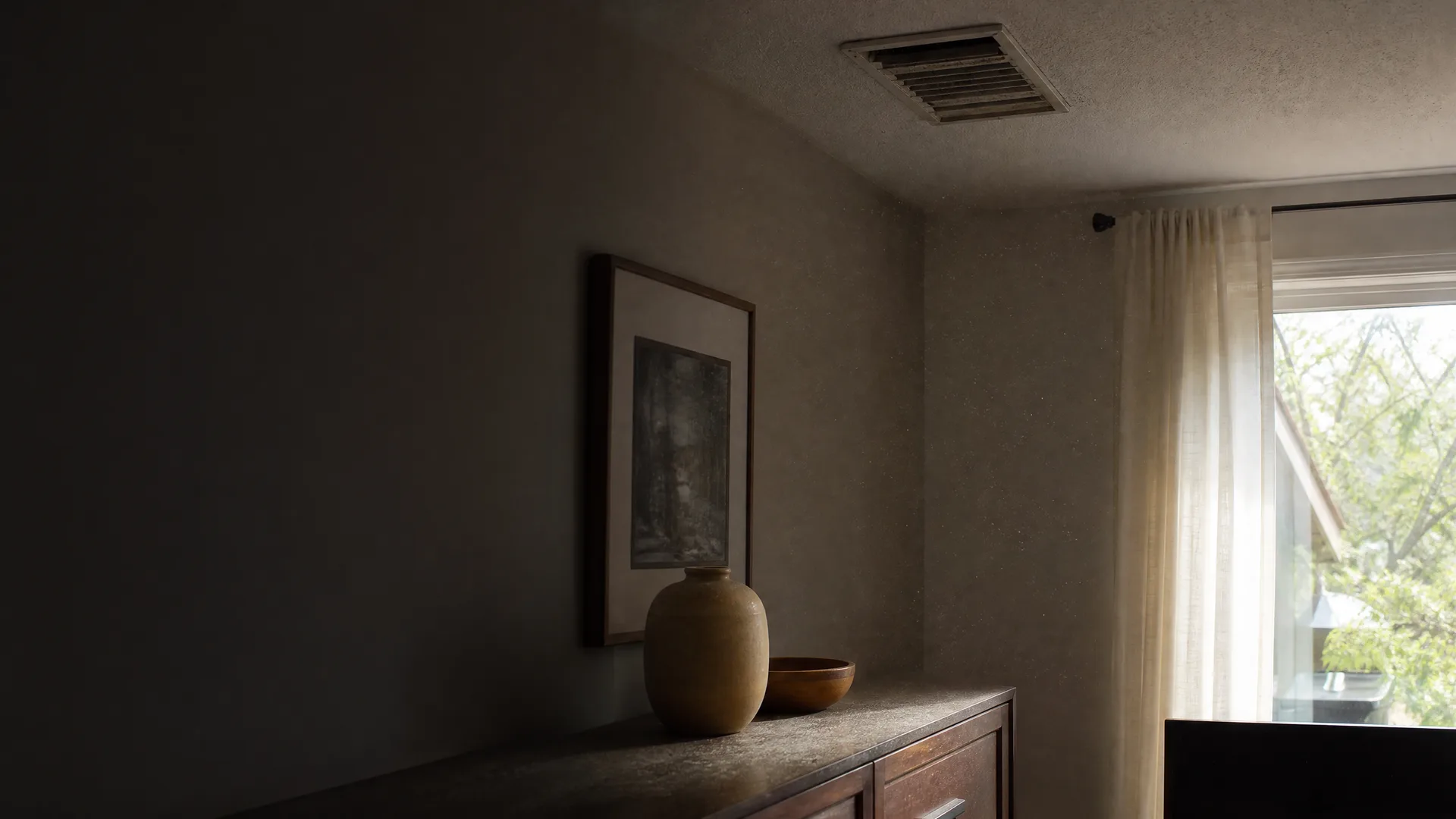
Dim room corner with a framed picture on a textured wall above a counter holding a tall ceramic vase and a shallow wooden bowl, with a sheer curtain beside a window and a ceiling air vent overhead.

It's a Saturday afternoon in April, warm enough that you've turned the AC on for the first time this year. You're on the couch with a cup of coffee when the light through the window catches the ceiling vent grille above the bookshelf. A gray ring of dust has settled around it and across the top of the shelf below, the kind that wasn't there last fall. You run a finger along the grille slats and it comes away dark. The air coming out feels weaker than you remember, like it's barely reaching the room. You make a note to wipe the shelf down, then go back to your coffee.

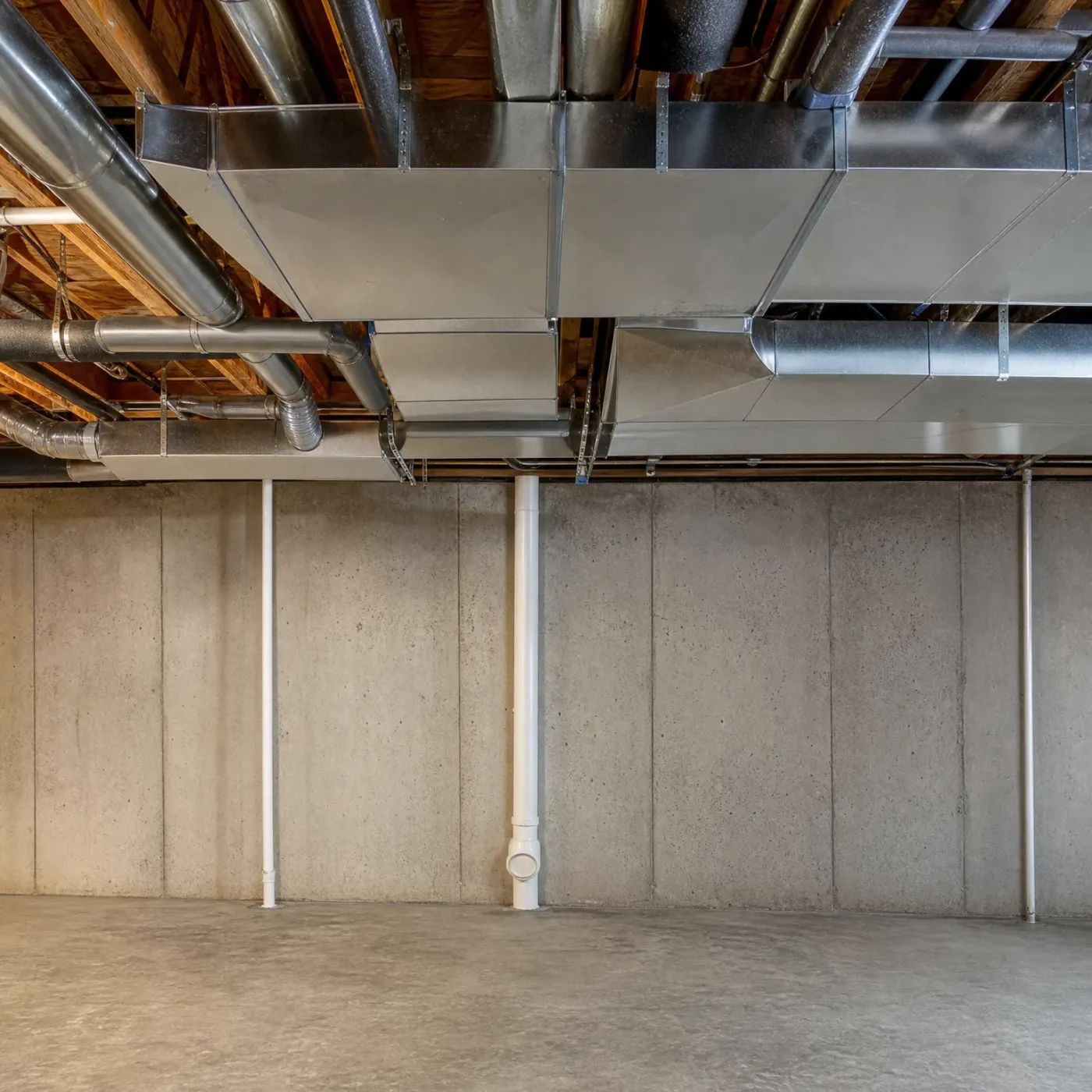
Unfinished basement with poured concrete walls, a bare concrete floor, white PVC pipes running down the wall, and exposed sheet-metal HVAC ductwork beneath wood floor joists.
Metal ducts run tight between the joists with every seam sealed, so basement air stays where the furnace put it.
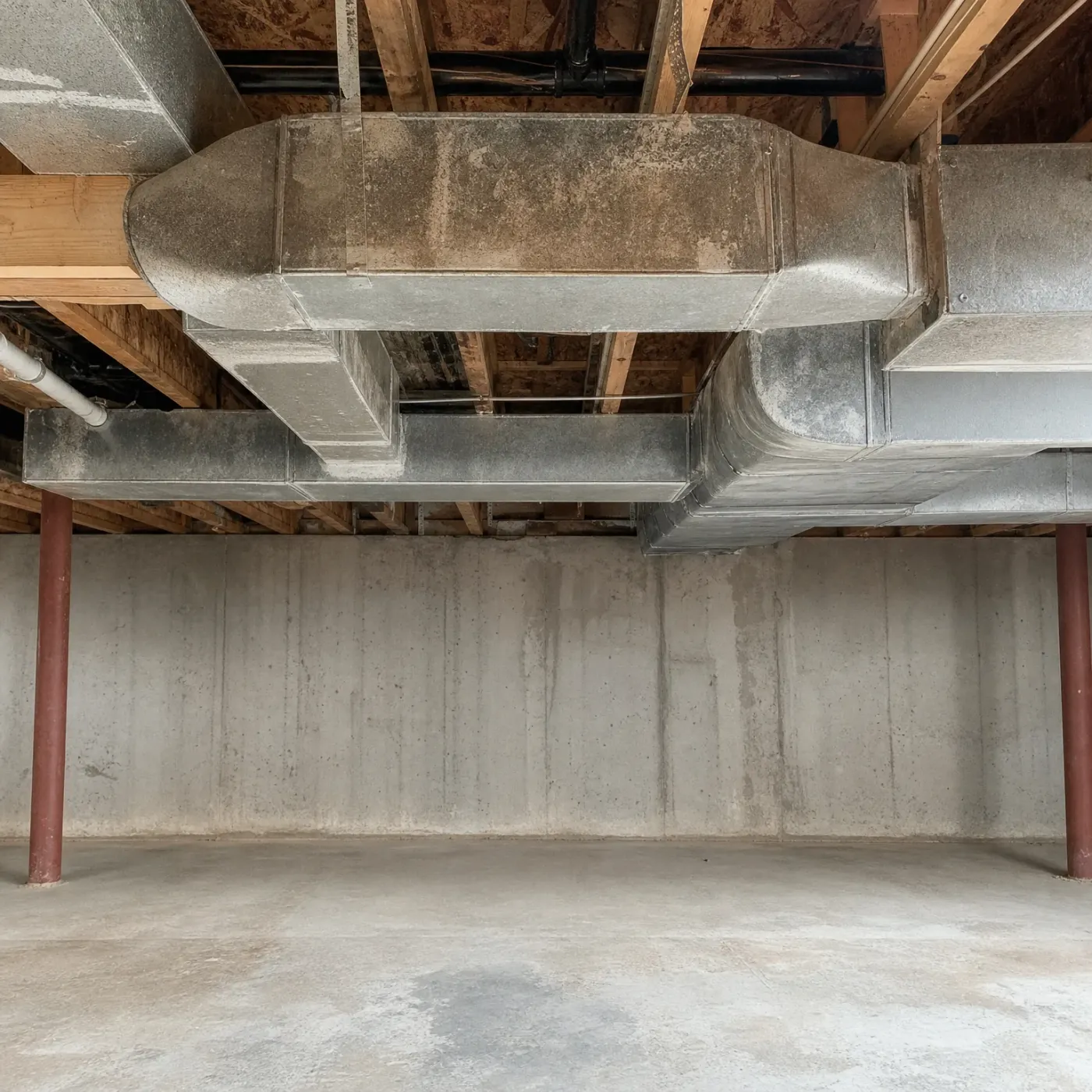
Unfinished basement with bare concrete walls and floor, galvanized sheet-metal HVAC ducts running beneath wooden floor joists, and two red steel support columns.
Ducts sag loose from the joists with gaps at the joints, letting basement air mix in before it ever reaches a register.

The blower pushes air from the furnace through the trunk line and out to every register in the house. That air only arrives if every joint along the way holds. A loose clamp or a cracked seam lets it escape before it gets there. On the supply side, that means air you paid to heat or cool ends up in the attic or crawlspace instead of your living room. On the return side, it works backward: the duct pulls in attic or crawlspace air and feeds it to the furnace, skipping the filter entirely, so dust and insulation fibers get pulled in along with it. Flex duct is the usual weak point, since the clamp holding it to the trunk line loosens years before the duct itself wears out. Metal joints sealed with mastic or foil tape tend to hold. Ones patched with cloth-backed duct tape don't, and that tape dries out and peels within a couple of seasons. Either way, the room farthest from the furnace is usually the first to lose airflow.

How a duct leak actually works

  • Air leaving the furnace blower has to push through every joint in the trunk line before it reaches a register, and a bad seam lets pressure escape there first.
  • A supply duct leak pulls conditioned air out into the attic or crawlspace, while a return duct leak pulls unconditioned air in and makes the furnace or AC work on air it never actually heated or cooled.
  • Furnace filters only clean air that passes through the return side, so a return leak draws in dust and insulation fibers that bypass the filter completely.
  • Flex duct connects to the trunk line with a clamp, and that clamp loosens with age long before the duct material itself wears out.
  • A duct losing air mid-run means the far end of the house gets less airflow than the near end, even though the thermostat reads the same for both.
  • Mastic sealant and foil tape hold up on metal duct joints for years, but cloth-backed duct tape dries out and peels within a couple of seasons.
A smiling bearded man in a green t-shirt sits on a gray sofa, looking down toward a device at the bottom of the frame, with a bookshelf and a green plant blurred behind him.
A bearded man in a plaid flannel shirt stands indoors beside a wood-framed, frost-covered window, looking outside, with a steaming brown mug on the sill and a wooden cabinet behind him.

One request and it's handed off

The pro who gets in touch is licensed in Utah and works in Salt Lake County.

No charge to send it. You decide if you hire them.

Basement ceiling with galvanized sheet metal ductwork, round pipes and rectangular plenums running between wooden joists above a bare concrete foundation wall and floor.
Before you get your ductwork cleaning
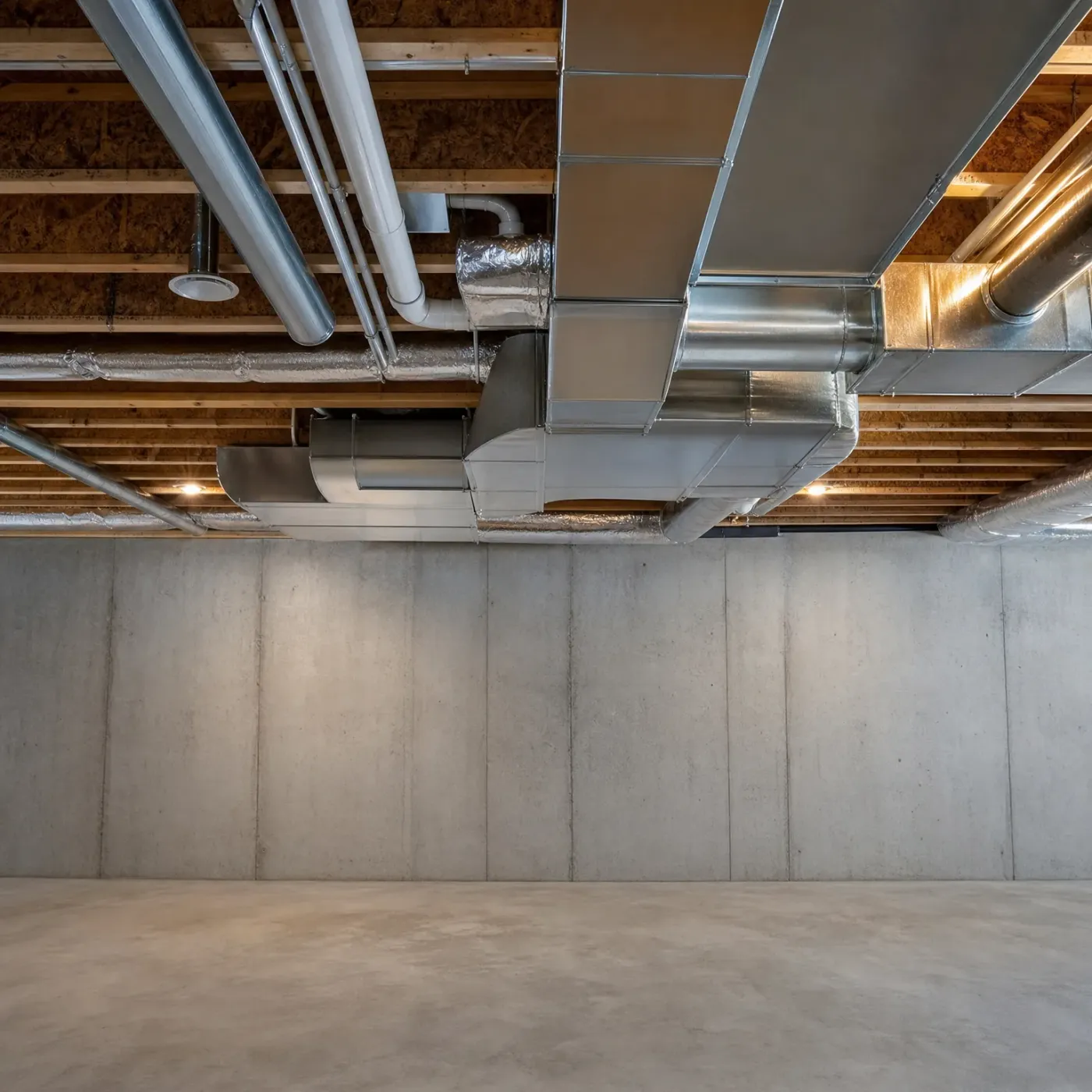
Empty basement room with bare concrete walls and floor, and an exposed wood-joist ceiling carrying sheet-metal ductwork, insulated pipes, and recessed lights.
After you get your ductwork cleaning

What the furnace blower is fighting

A furnace blower is sized to push a set amount of air against a set amount of resistance. Every leak in the trunk line gives that air a shorter path out than the register, so the blower loses static pressure right there instead of carrying it to the room. The motor doesn't know the duct is open to the attic, it just runs longer trying to reach the temperature on the thermostat. That's why a leaky system can run through more of a gas bill or a power bill in a month than a sealed one, even on a day when the weather hasn't changed at all.

Why return leaks matter too

A supply leak loses air you already paid to heat or cool. A return leak works the other way, pulling in whatever is sitting in the attic or crawlspace, dust, insulation fibers, sometimes gas odors if ducts run near a water heater or furnace closet, and feeding it straight into the blower before the filter ever sees it. That's part of why registers and the area around them can carry more dust than you'd expect from a house that gets cleaned regularly. A return leak is harder to find by feel than a supply leak, since the air is moving into the duct, not out of it.

Power here costs 13.41 cents per kilowatt-hour

At 13.41 cents per kilowatt-hour, every bit of air your blower pushes into the attic instead of your living room shows up on that bill. A leaky duct doesn't just waste heat or cooled air, it makes the furnace and AC run longer to make up for it, and you pay for that extra runtime.

EIA-861 2025

You catch it early

You go into the attic in July and notice the duct boot has pulled loose from the register box, or you feel a warm draft along a return seam in the crawlspace in January. A seam that's just started to separate is an easy patch, mastic and a few minutes. Catching it before the joint fails all the way means the furnace or AC never had to work against the full loss. Your gas and power bills stay close to what the season normally runs, and the room that duct feeds keeps holding its temperature the way it always has.

You wait until it's obvious

You notice it the way most people do, a bedroom that's never comfortable no matter what the thermostat says, or a utility bill that's climbed two months running with no change in how you live. By then the seam has likely opened further, or more than one has let go. The furnace or AC has been running longer to cover the loss the whole time, in the heat of summer and the cold of winter both. What would have been a quick seal at one joint is now a duct system that needs a real look, start to finish.

How old is the ductwork you're dealing with?

  • Half the homes here were built by 1986

    Half the homes in Salt Lake County were built in 1986 or earlier, so the duct system behind your walls may be that old too, with decades of joints that have had time to loosen.

  • Heat runs October through May

    Heat runs October through May here, eight months of the furnace pushing air through every seam in the trunk line before it reaches a register.

  • Cooling runs June through August

    Cooling runs June through August, three months where an attic duct leak pulls in triple-digit heat before that air ever makes it to your living room.

ACS 2020-2024 · NOAA nClimDiv 1991-2020

What a Tight Duct System Gets You

  • A duct system that leaks shows up as higher bills, uneven rooms, and warm or cold spots along the attic or crawlspace runs.
  • A seam caught early is a quick patch, while one left through a Salt Lake City summer or winter widens with every heating and cooling cycle.
  • Sealing the trunk line and boots restores the static pressure your furnace blower was built to push against.
  • A local contractor who works on Salt Lake County duct systems all year knows which joints in homes like yours tend to fail first.
  • Once you request a match, you're connected with one licensed local contractor instead of fielding calls from several companies.

The signs are straightforward once you know where to look. Bills that run high for the month, a room that won't match the thermostat, a duct in the attic or crawlspace that feels like it's working against you instead of for you. None of that is random. It's air leaving the trunk line before it reaches the register, and the furnace blower working harder to make up the difference.

Caught early, it's a small job. A seam that's just starting to separate takes a pass of mastic or a strip of foil tape and it's done. Left alone through a Utah summer or winter, that same seam opens wider with every cycle the system runs, and the fix gets bigger along with it. That's the difference between patching a joint and resealing a whole run.

Salt Lake County has a lot of duct systems built the same way, in homes of similar age, routed through the same kind of attics and crawlspaces. A contractor who works on them all year has seen which joints tend to go first in a house like yours, and knows what a proper seal looks like when it's done right. When you request a match through this page, you're not handed off to a pool of companies bidding for the job. You're connected with one licensed local contractor who already knows this equipment, so the next call you get is the one that matters.

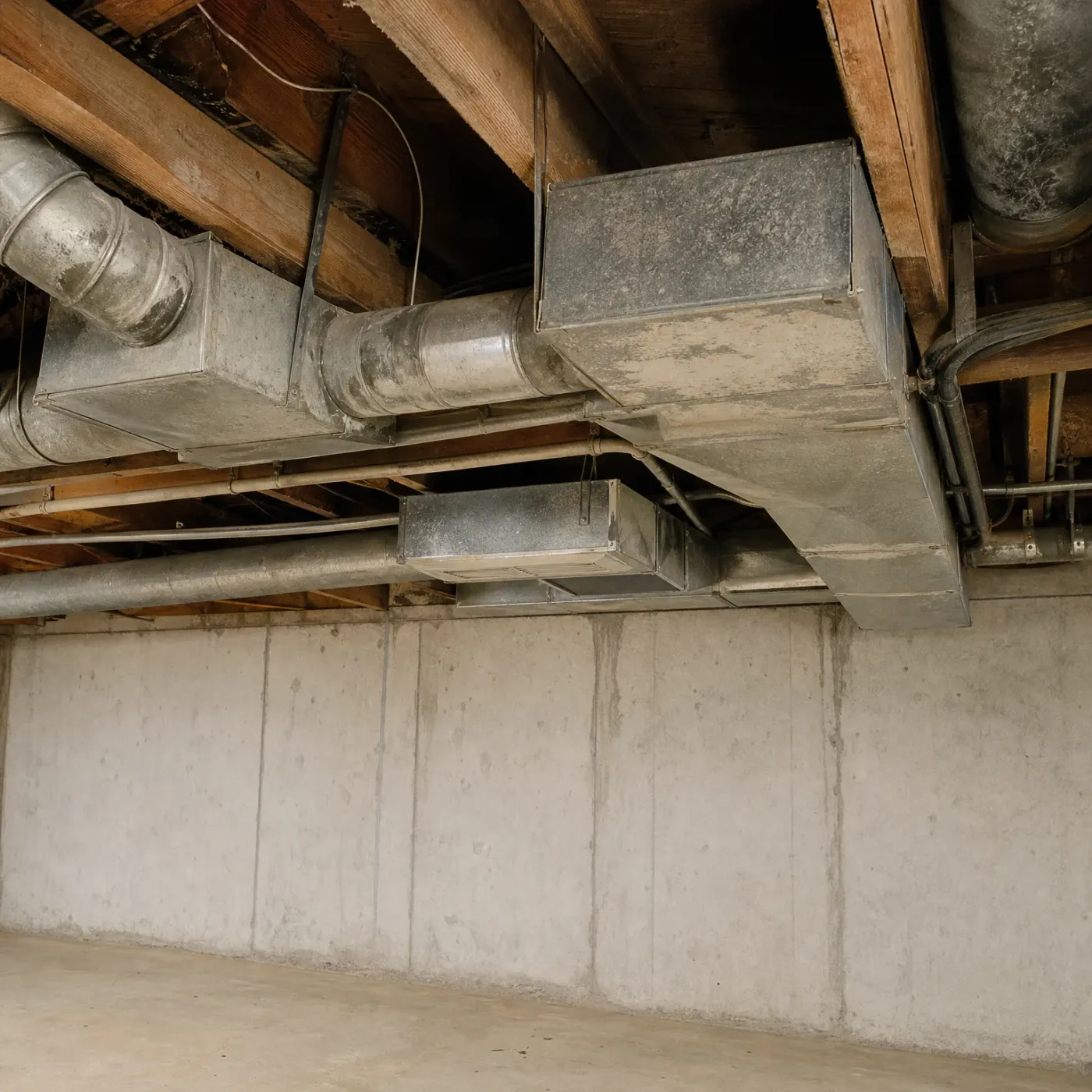
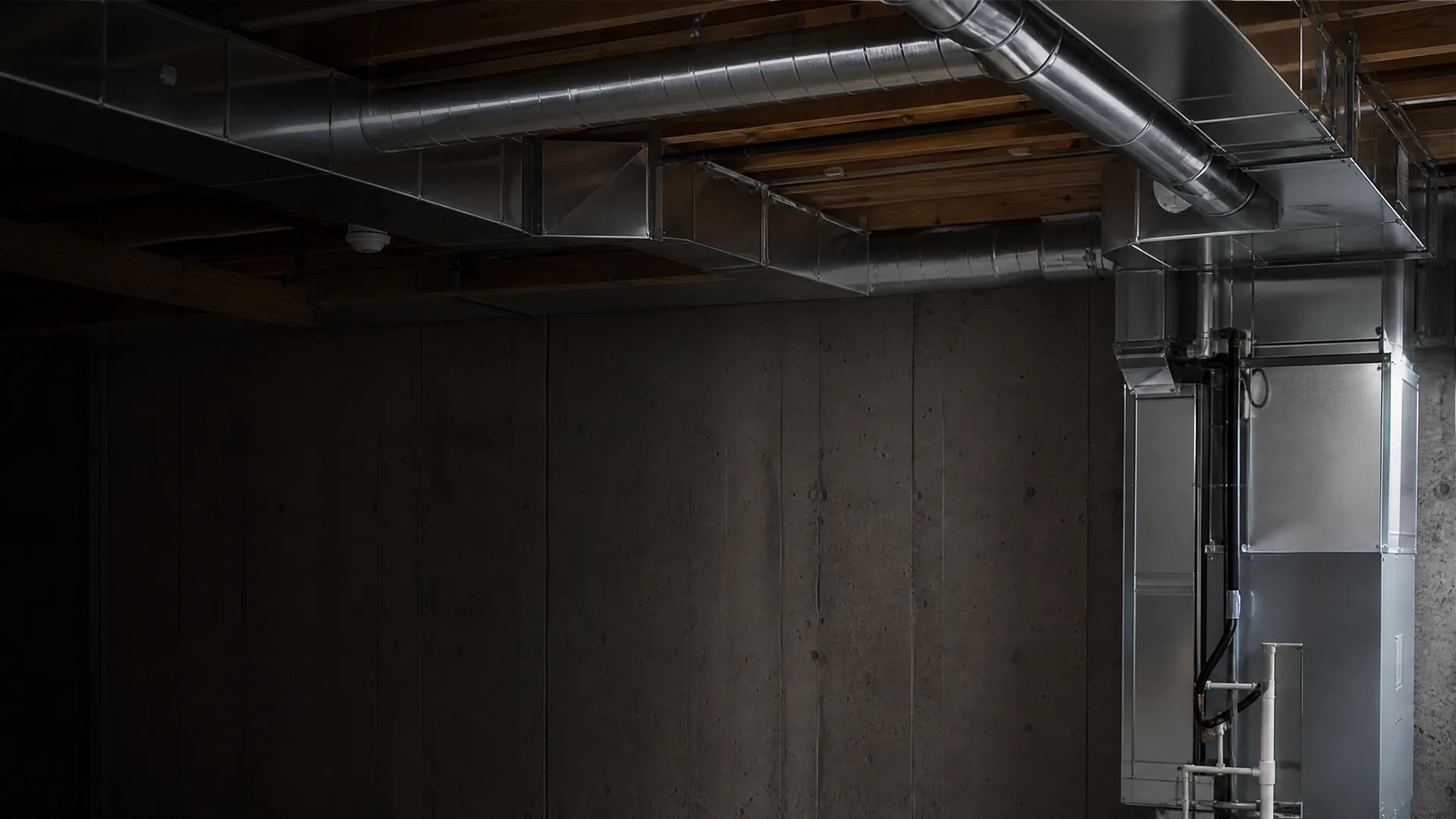
Unfinished basement with poured concrete walls, exposed wooden joists, and galvanized sheet-metal supply ducts and round pipes running along the ceiling to a furnace unit at right.

Done looking for a duct system pro

A licensed pro who works in Salt Lake County gets your request.

Duct and vent cleaningDucts or ventsSalt Lake County, UT
Step 1 of 2

What ZIP code is the job in?