Dry ductwork, no odor
These ducts stay dry because nothing is dripping into them. Air moves through, the metal stays clean, and there's nothing for mold to grow on. A basement like this won't send any smell up through the vents.
 Get matched
 with a Salt Lake County pro who cleans ducts.
A musty smell from your vents usually means moisture got into the ductwork somewhere, and something is growing there. With Salt Lake City summers as dry as they are, that smell often traces back to the AC coil or the drain pan instead, where condensation sits and doesn't fully clear. Dust that's built up over time in the ducts can hold onto that moisture too, and that's what you're smelling every time the system kicks on.
It's not something to leave alone. Musty air moving through your house all day, every time the furnace or AC runs, is air everyone in the house is breathing. Figuring out whether it's the ducts themselves, the coil, or somewhere else in the system takes someone who can actually look at what's there.
That's the part you don't have to sort out yourself. Once you say what's going on, the details get passed to a contractor near Salt Lake City who takes on duct cleaning and knows how to find where the smell is actually coming from, not just treat the vents and hope. They'll reach out to you directly to talk through what you're dealing with and work out next steps.
You don't need to know yet whether this is a quick cleaning or something more involved with the coil or the drain line. That's exactly what gets figured out once someone who does this work is looking at your system instead of guessing from a description. Sending this along is what gets that started.
From here, it's off your plate. No calling around, no explaining the problem five times to five different companies. Just a contractor who serves Salt Lake County, reaching out to you about the smell coming from your own vents.
A musty smell from your vents means moisture and mold somewhere in the system, most often on the AC evaporator coil or in the drain pan underneath it. Every time your air conditioner runs, it pulls humidity out of the air and that water has to drain away. If the drain line is clogged or the pan has cracked, water sits there instead, and anything sitting wet in the dark starts to grow. Salt Lake City air is dry most of the year, which is exactly why this smell stands out when it shows up. It's a sign something inside the system is staying wet when it should be draining. The smell itself isn't dangerous to breathe for a short time, but mold in the ductwork will keep spreading on its own and tends to get into the insulation and the blower housing if it sits long enough. A contractor can find the wet spot, clean it, and check why it isn't draining.




Half the homes here were built by 1986
Half the homes in Salt Lake County were built in 1986 or earlier. Older ductwork has had more years for small leaks and gaps to let moisture in.
Heat runs October through May
Heat runs October through May here, about eight months. That's a long stretch where ducts sit closed up and damp air has nowhere to go.
Cooling runs June through August
Cooling runs June through August, just three months. The coil only gets humid for a short stretch, but it's enough time for mold to take hold.
ACS 2020-2024 · NOAA nClimDiv 1991-2020

These ducts stay dry because nothing is dripping into them. Air moves through, the metal stays clean, and there's nothing for mold to grow on. A basement like this won't send any smell up through the vents.

The dark staining on these joists and ducts is mold, and it's been there long enough to leave a mark. Once it takes hold on wood or sheet metal, running the system just pushes that smell into every room it heats or cools.

Once mold is on the coil or in the drain pan, your blower spreads it every time the system runs. It is not staying in one closet or one corner of the basement. If you notice it in the bedroom and the living room both, that confirms it is coming from the ductwork itself, not from something sitting in one room.
A musty smell on its own will not hurt your system, but it does not go away by running a candle or changing the filter, and it tends to get stronger as more mold grows. Finding out whether it is the coil, the drain pan, or the ducts themselves takes someone who can actually open the system up and look. Once you send the request, that part stops being on you. A contractor who covers Salt Lake City follows up and takes it from there.

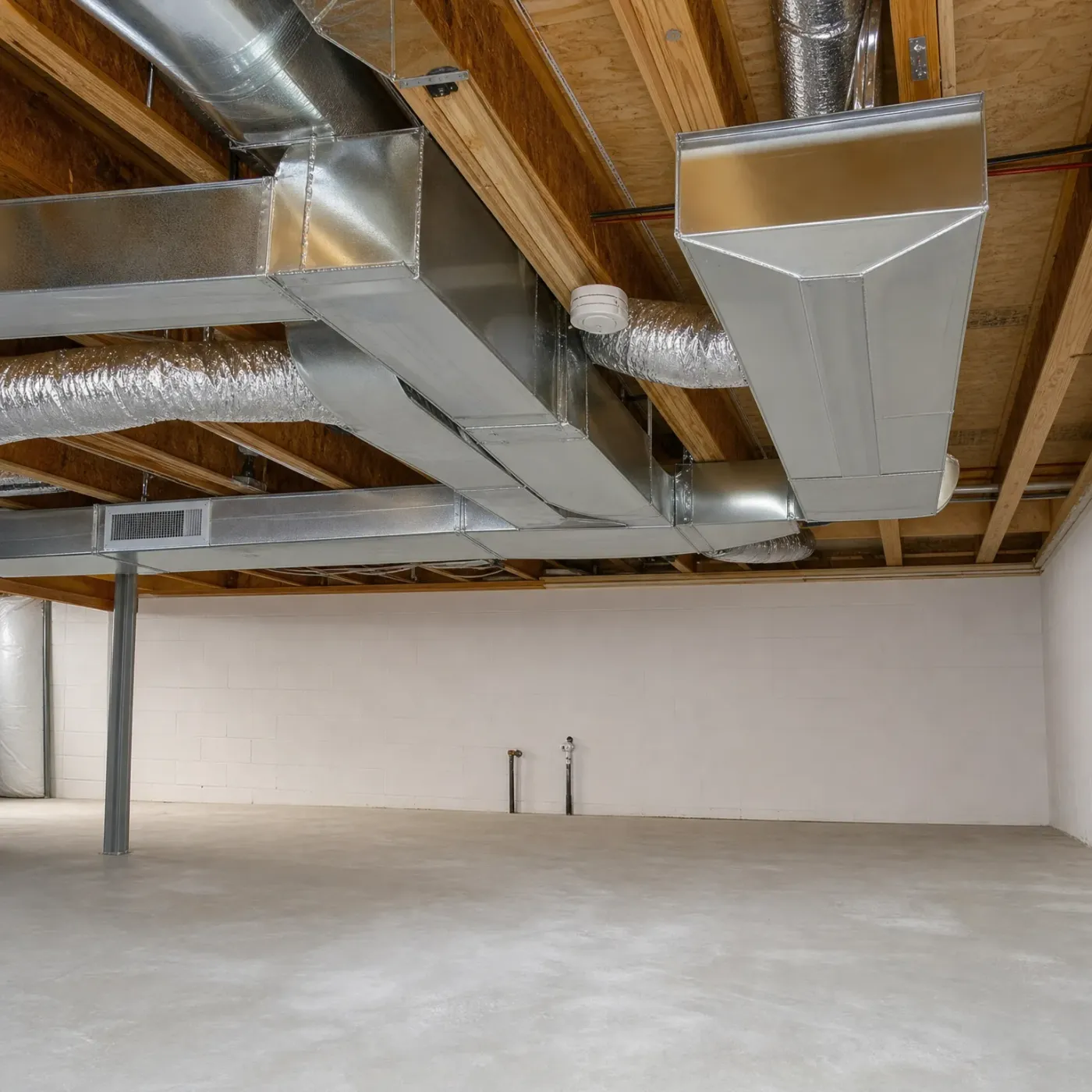
This is what a basement looks like when the ductwork is doing its job. The metal trunk lines and flex duct run clean along the joists, no streaking, no dust buildup. Air moves through without picking up anything it shouldn't.
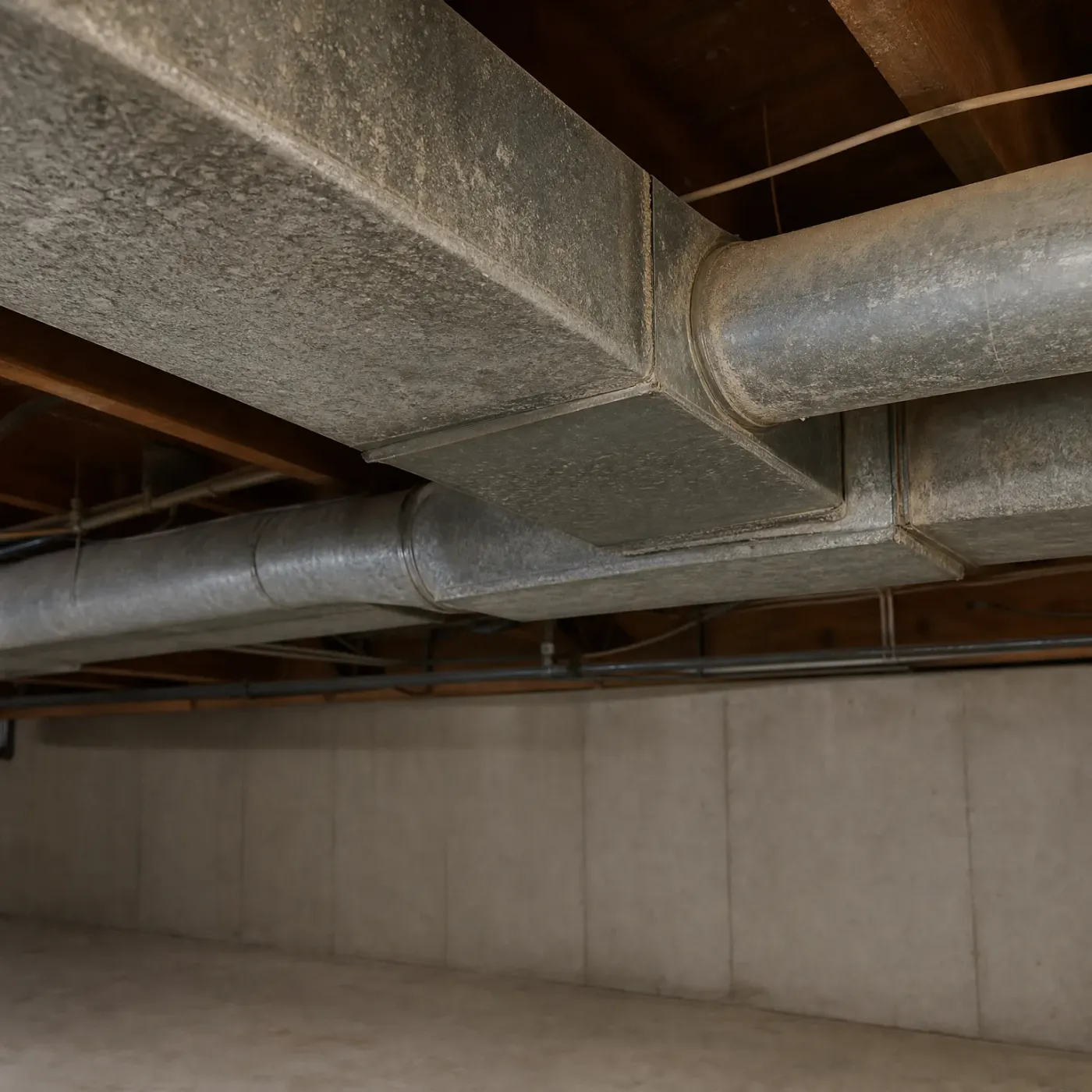
This trunk line has years of dust caked onto the metal. That coating holds moisture longer than bare metal does, and it gives mold something to hold onto. Once it builds up like this, cleaning the ducts is the only way to get it out.


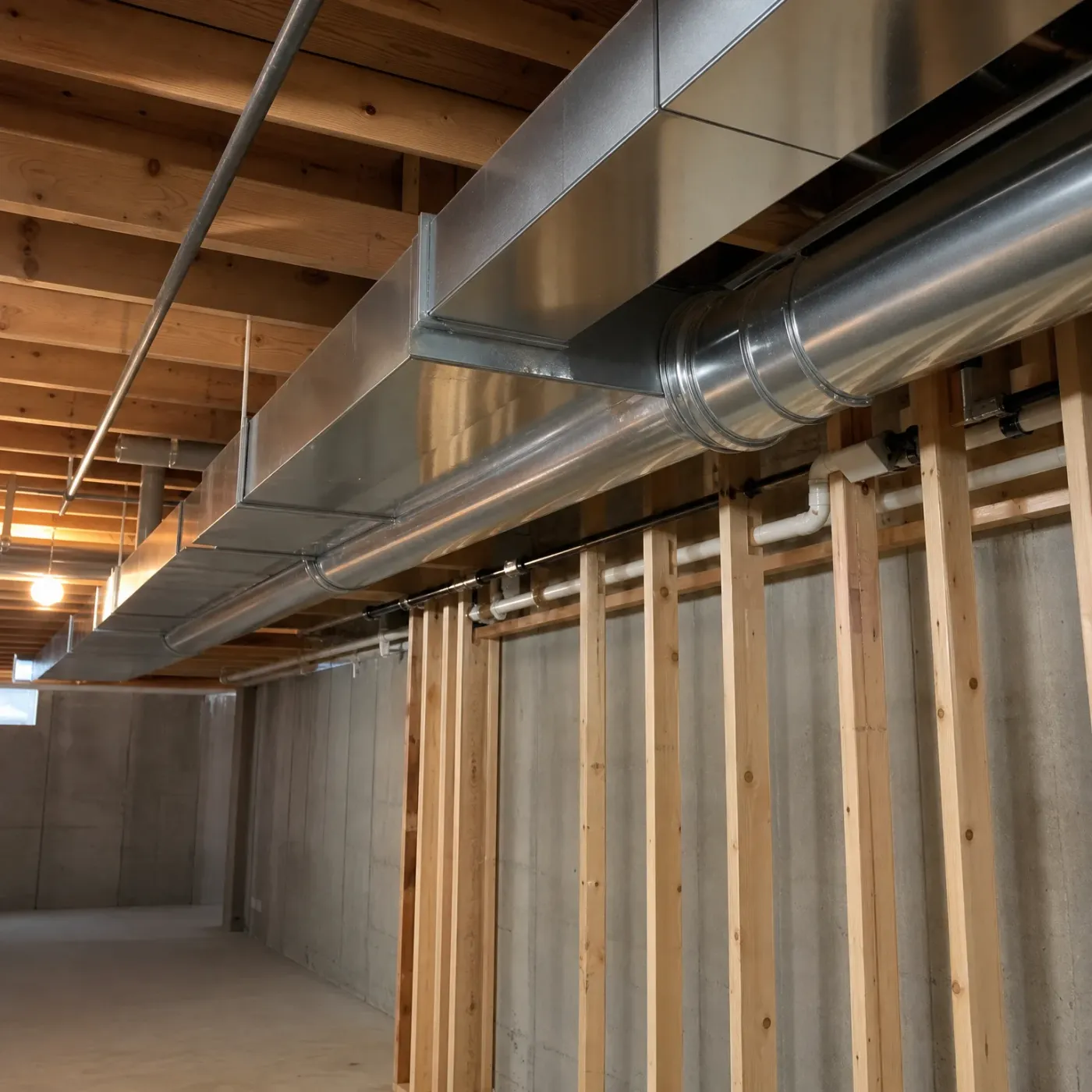
One request and the duct cleaning stops waiting on you.
Get matched with a pro who works on ducts in Salt Lake County.
You only hire the pro if you want to.



It's a Saturday afternoon in April, sun coming through the living room window. You're on the couch and you look up at the ceiling vent, the one that's been putting out that musty smell for a couple weeks now. There's a thin gray line of dust around the grille, more than you remember seeing last fall. You run a finger along the coffee table underneath it and it comes back dusty too, even though you wiped it down a few days ago. The AC kicked on an hour ago and it's still running, keeping the house cool against the dry Utah heat outside. You can smell it again now, faint, every time the air pushes through.
At 13.41 cents a kilowatt-hour, running your AC to chase that smell out on your own isn't the fix. The moisture is already sitting on the coil or in the drain pan, and more cooling just pulls in more humidity behind it. Clearing the ducts themselves is what stops it.
EIA-861 2025
The smell coming through your vents traces back to one of two spots almost every time: the evaporator coil or the drain pan underneath it. Summers in Salt Lake City are dry, but your AC still pulls moisture out of the air every time it runs, and that water sits right there on the coil or in the pan until it drains off. When it doesn't drain clean, that's where the growth starts, and your blower picks it up and pushes it through every duct run in the house. That's why it shows up in the bedroom and the living room both, not just near the basement. It's not something more cooling fixes. Running the AC harder just pulls in more humidity behind what's already sitting there, so the smell doesn't let up, it just gets more air moving through it. The actual fix is getting the coil, the drain pan, and the duct runs themselves clean, so there's nothing left for mold to hold onto and nothing for the blower to carry. Once that's done, the air moving through your vents is just air again. A contractor who looks at your system can tell you where the moisture is sitting and what it'll take to clear it out for good. From here, sending the form is the last thing you need to do yourself. Getting matched with the right contractor and having them reach out is the next step, and it's no longer something you have to chase down on your own.

Find a duct system cleaning pro in Salt Lake County