Utah HVAC Pros

Signs your ducts need cleaning in Layton, UT

Get matched with a Davis County pro who cleans ducts.

Get a duct system pro

How do I know if my ducts need cleaning?

You've noticed dust settling back on the shelves a day after you clean them, or someone in the house has been sneezing more than usual. With summers here running hot and dry and winters cold, your system runs most months of the year, and you're wondering if the ducts moving all that air are part of the problem, and how you'd even tell.

Dust buildup, weak airflow, and a musty smell near the vents mean it's time

Look at the vent covers first. If dust is caked on them or blows out when the system kicks on, the ducts are carrying it through the house. Weak airflow in some rooms but not others points to buildup blocking the path, not a thermostat problem. A musty smell when the furnace or AC runs usually means moisture got into the system at some point, and that can mean mold inside the duct itself. With your system running on gas heat through the cold months and AC through the hot dry ones, that air passes through the ducts constantly, so whatever is sitting in there gets circulated into every room, every day.

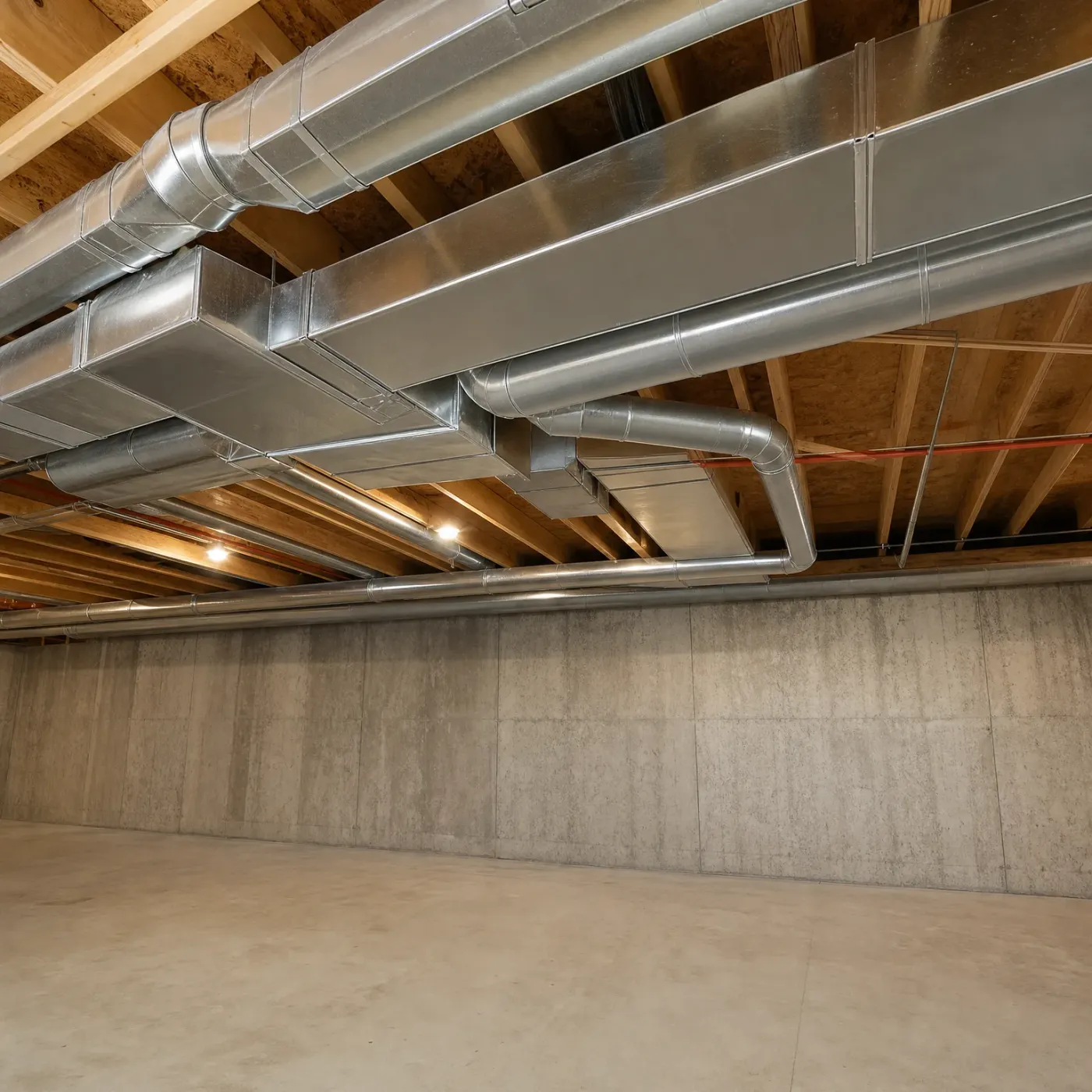
Unfinished basement with bare concrete floor and walls, showing galvanized sheet-metal HVAC ducts, pipes and recessed lights beneath a wood-joist ceiling.

Clean ducts, steady airflow

The metal stays bright and the joists above stay clear. Air moves through the ducts and out the vents without carrying anything with it. Nothing collects at the seams or around the boots, so the registers put out the same air that left the furnace.
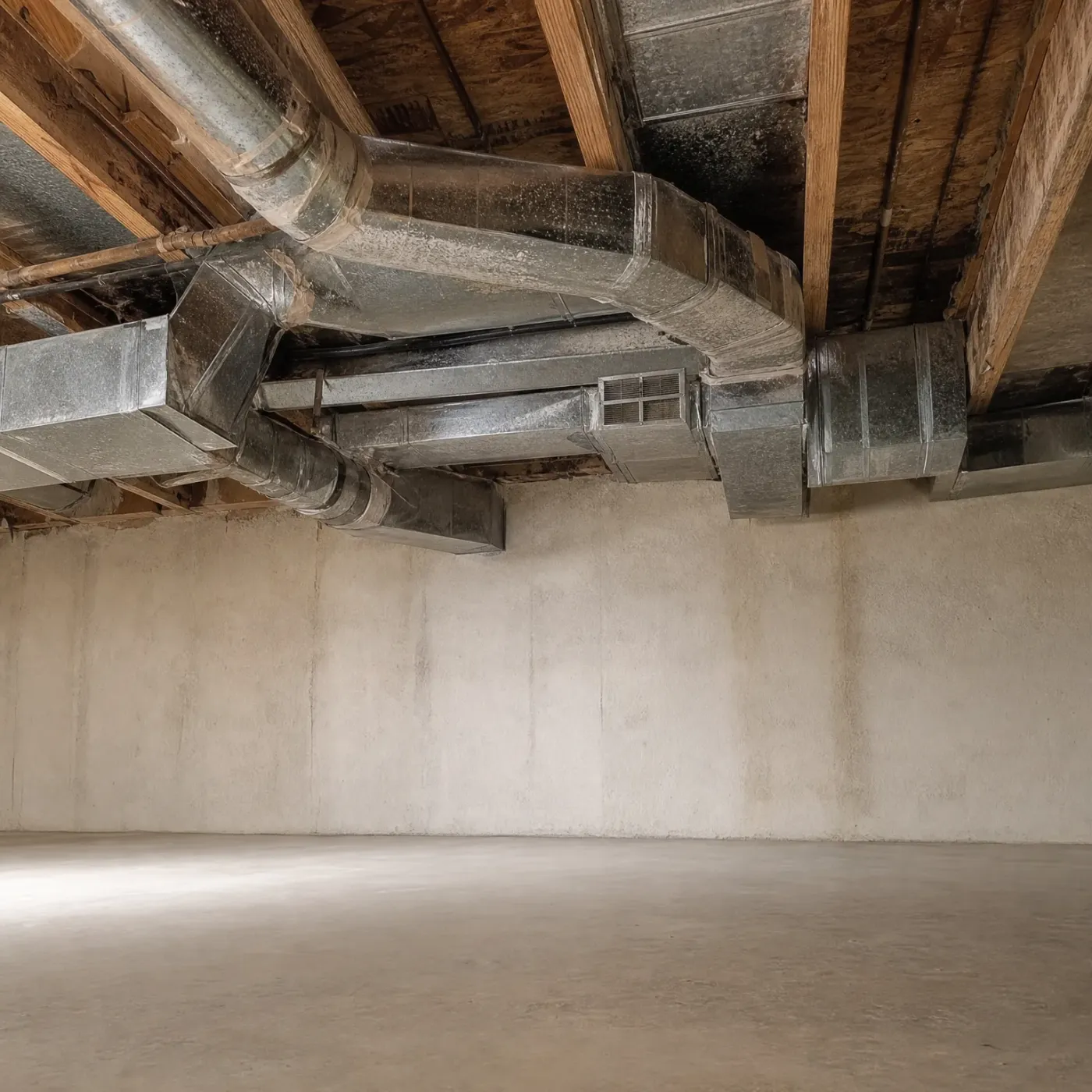

An empty basement room with bare concrete walls and floor, with galvanized sheet-metal HVAC ductwork and a vent grille running along the wooden joist ceiling.

Dust and buildup inside

The duct walls have gone dark with dust packed on thick enough to see from across the room. That buildup breaks loose a little at a time and lands on your furniture and floors. A system in this state has been overdue for a cleaning for a while.

Why does dust build up so fast in a Layton duct system?

  • Half the homes here were built by 1993

    Half the homes in Davis County were built in 1993 or earlier, so a lot of duct runs have had thirty years or more to collect dust nobody's seen.

  • Heat runs October through May

    Heat runs October through May here, about eight months, so the blower is pushing air through that same ductwork most of the year.

  • Cooling runs June through August

    Cooling fills in June through August, so for three more months the same air keeps moving through whatever has settled in the ducts.

ACS 2020-2024 · NOAA nClimDiv 1991-2020

What a dirty filter won't catch

A filter only stops what passes through it on the way back to the furnace. Dust that settles inside the supply runs, around the boots, or in the return before it ever reaches the filter stays put. That's what a cleaning removes. It's also why a fresh filter and dusty shelves can show up in the same house. The filter is doing its job on the air moving through it right now. It was never meant to clear out what's already built up further back in the system.

Why Layton ducts fill up fast

Furnaces here run October through May, and that's eight months of air moving through the same metal runs, pulling in whatever dust is sitting in them. Summer isn't a break either, since the AC uses the same ductwork to push cooled air through the house. With the system cycling on most of the year, there's rarely a long stretch where dust just sits still. It gets pushed around, settles again, and layers up over the seasons until it works its way back into the rooms you're trying to keep clean.

Power here costs 13.37 cents per kilowatt-hour

Cheap power here doesn't make up for a clogged system. When ducts are packed with dust, your furnace blower has to push harder to move the same air through the house, so you're paying that 13.37 cents more often than you'd like, all winter long.

EIA-861 2025

What you'll notice day to day

A vent that used to blow strong now barely moves air, while the one next to it is fine. Rooms at the end of a run take longer to warm up in January or cool down in July. You dust a shelf and it's gray again by the next evening, even in rooms you keep shut up. Someone in the house wakes up congested on days they didn't used to. If anyone lights a fire or uses a scented candle, the smell hangs around longer than it should, because the air isn't actually cycling through and out the way it's supposed to. None of this shows up on the furnace itself. It shows up in the rooms.

What it puts at risk over time

A blower working against packed ducts runs longer to move the same air, and it keeps doing that every day heat or AC is on. The furnace and the AC coil both depend on that airflow to work the way they were built to, and a system that's been fighting resistance for years wears differently than one that hasn't. If anyone in the house has allergies or asthma, what's sitting in those ducts is getting breathed in on repeat, not just stirred up once. None of this is sudden. It's the kind of thing that's easy to put off because the house still seems to heat and cool fine, right up until a bill or a repair makes it obvious it wasn't.

Empty unfinished basement with bare concrete walls and floor, showing exposed wooden joists, galvanized sheet-metal ductwork, pipes, and a white vent grille overhead.
Before you get your ductwork cleaning
Unfinished basement with concrete floor and walls, exposed wood joists, galvanized sheet-metal ductwork, a furnace unit, a steel support column, and a small window.
After you get your ductwork cleaning
  1. A tech checks supply and return runs with a camera first.

  2. Vents and boots are sealed off so dust can't spread.

  3. A brush or air whip loosens dust stuck in the runs.

  4. A high-powered vacuum pulls the loosened dust out.

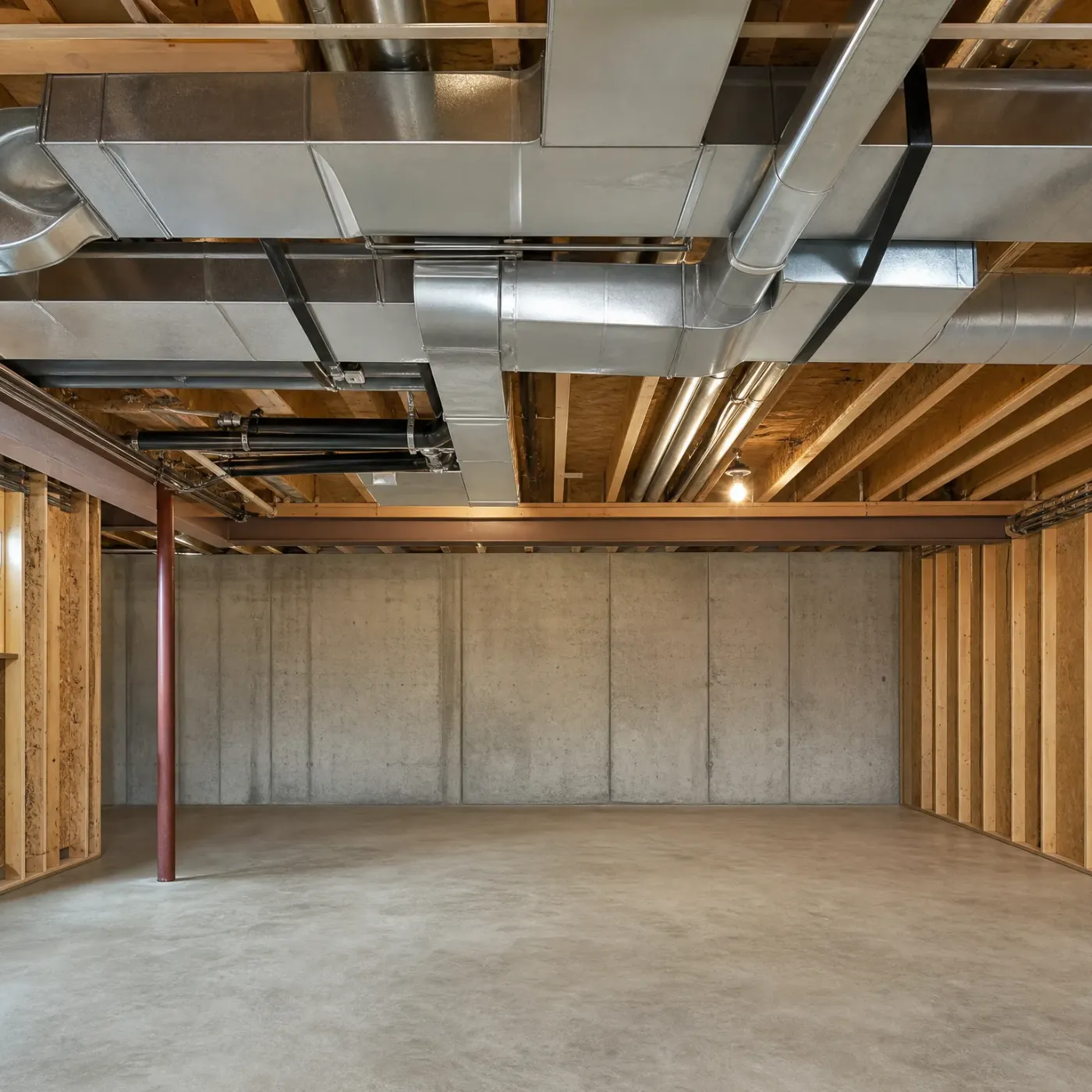
Empty unfinished basement with bare concrete floor and wall, wood-framed stud walls, exposed joists, galvanized HVAC ducts and pipes overhead, a steel beam and red support column, and a single bare bulb light.
The ducts stay dry and the metal holds its shape, so air reaches every vent in the basement and upstairs the same way.
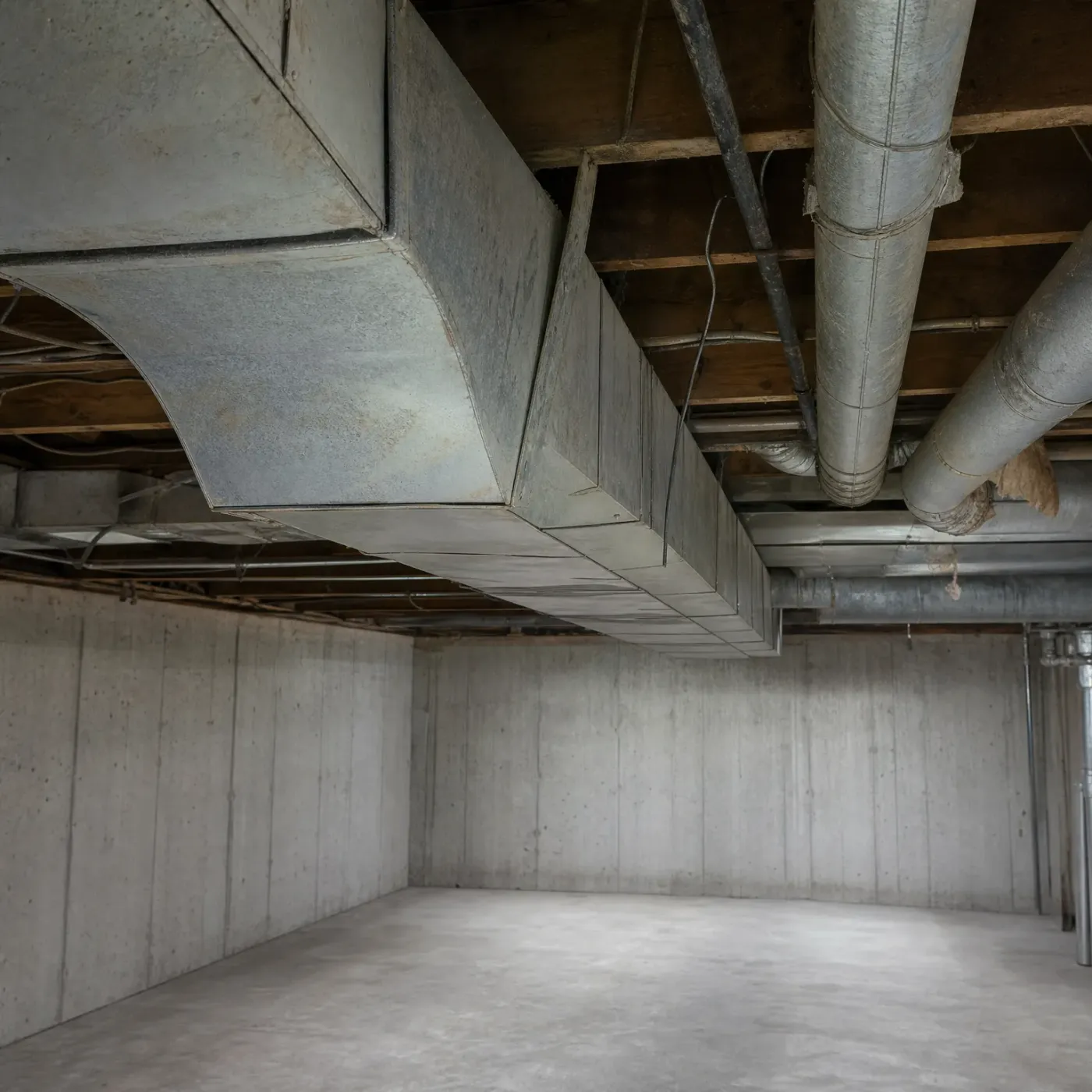
Empty concrete-walled basement with bare floor, showing large galvanized sheet-metal HVAC ducts, insulated pipes, wiring and wooden floor joists overhead.
Dust has built up thick enough along the ductwork that it's shedding into the joists instead of staying inside the runs.
An older man with gray hair and a beard, wearing a dark coat flecked with snow, stands smiling in a dimly lit home hallway with lamps, a framed picture, and a wooden door.
A gray-haired, bearded man in a dark coat dusted with snow stands just inside an open door of a warmly lit home, looking off to the side.
An older bearded man in a dark snow-dusted coat and gray scarf stands just inside a dimly lit home entry, with a framed picture, lit table lamp, and an adjoining room with a fireplace behind him, and snow visible through the open door.
A gray-haired bearded man in a dark coat and scarf dusted with snow stands smiling in a dimly lit entryway with a white front door, a side table with a lit lamp, an oval mirror, and a patterned rug.

Get matched with a duct system pro in Davis County

The pro who gets in touch is licensed in Utah and works in Davis County.

You only hire the pro if you want to.

You clean the house every week and the ducts never cross your mind, because they're sealed up in the basement or the attic where you can't see them.

They still fill with dust the same as any other surface in the house, and nobody wipes them down the way they wipe a shelf.

A woman wrapped in a thick fleece blanket sits on a sofa holding an open book, beside a lit table lamp and a frost-covered dark window.
A smiling older woman with gray hair in a loose bun wearing a ribbed beige sweater stands in a dimly lit kitchen beside a window showing darkness outside, with a loaf of crusty bread on a wooden board in the foreground.

Clean once, filter does the rest

After a cleaning, the filter is back to catching what it's built for. It isn't fighting dust already loose inside the runs.

Find a local pro

Skip it, and the filter can't keep up

Dust inside the ducts keeps shedding past the filter no matter how often you change it, because it never passed through the filter in the first place.

Find a local pro
A woman stands in the open front doorway of a single-story house with stone and wood siding while a man in a dark polo shirt and cap walks toward it along a concrete path.

What it's doing to your house right now

Walk the house room by room and you'll find the pattern. The bedroom at the end of the hall stays warm in July no matter how long the AC runs. The basement register rattles a little and barely pushes air. Upstairs, the thermostat says 72 but it doesn't feel like it. None of that is the thermostat's fault. It's dust sitting inside the runs, narrowing the path the air has to take to reach that room.

Your furnace doesn't know the difference. It just runs longer to make up for it, pulling power you're already paying for at a higher rate than you'd like. A local contractor who cleans ducts in Davis County homes every winter can tell you, from the layout of your system and how your vents are behaving, whether that's what's going on in your house, and whether it's worth doing something about before the cold months are over.

Interior corner with sheer white curtains at a window, a brown upholstered sofa in the foreground, and a wooden multi-drawer cabinet holding a round ceramic vase with leafy branches.
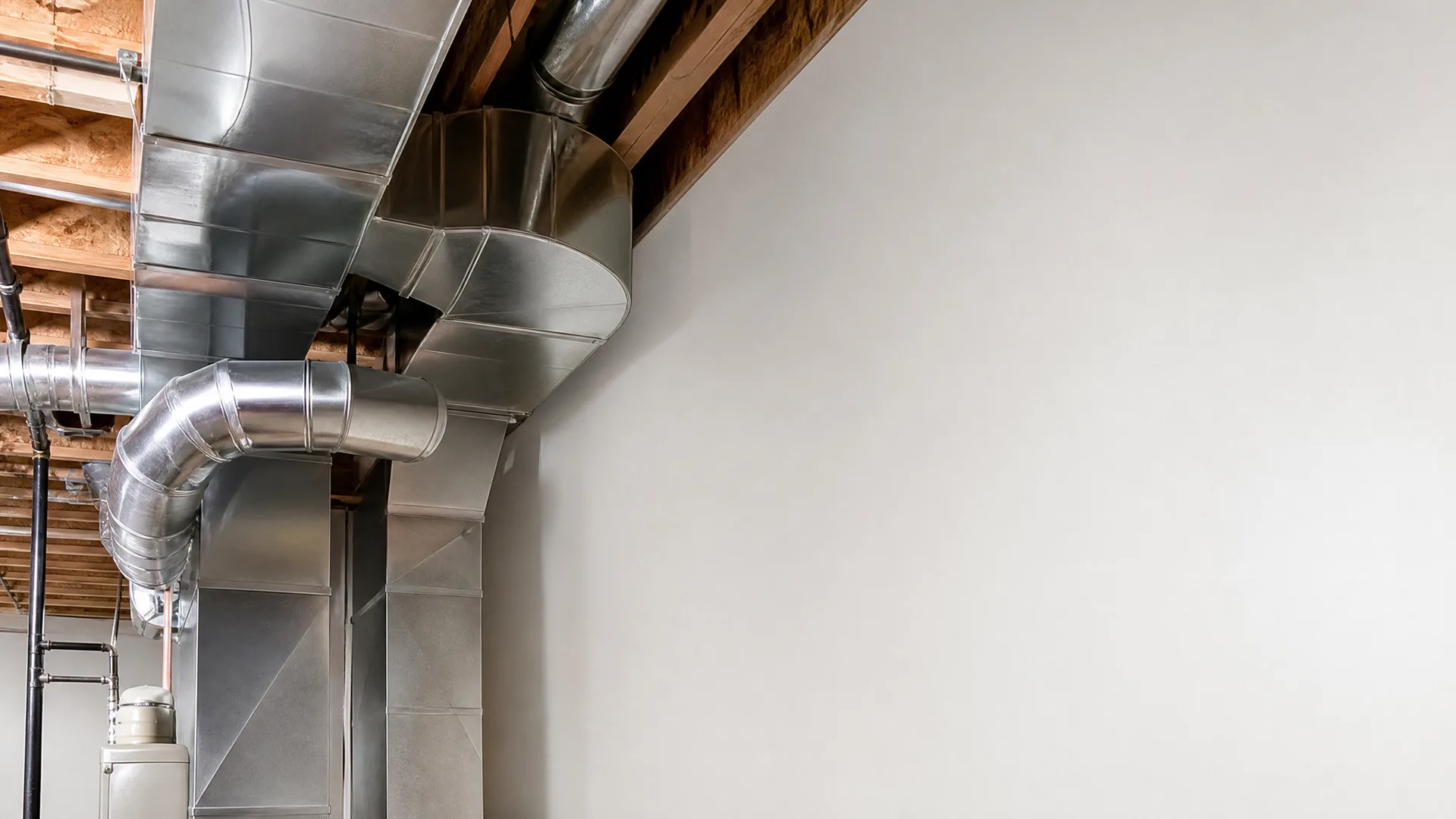
Galvanized sheet metal HVAC ductwork and round pipes running along an exposed wood-joist basement ceiling beside a plain white wall.

Leave it alone and it adds up

Dust sitting in the ducts doesn't stay put. It sheds into the airstream a little at a time, settles back on your furniture, and gets stirred up again every time the blower kicks on. The furnace keeps running the same hours it always has, October through May, but it's pushing air through runs that are narrower than they should be. Nothing fails outright. It just gets a little worse each season, and you keep dusting the same shelf.

Galvanized sheet metal HVAC ducts and round pipes installed among wooden joists on a ceiling, beside a large blank white wall.

Clean it and the house catches up fast

Once the dust is pulled out of the runs, the air moving through the vents is the same air that left the furnace, not air that picked up something on the way. Rooms that lagged behind, the one at the end of the hall, the basement, start heating and cooling at the same rate as the rest of the house. The filter goes back to doing the one job it was built for. You notice it first in how little you're wiping down the shelves.

If you're seeing dust back on the shelves within a day, weak airflow in one or two rooms, or a furnace that runs longer than it should to do the same job, your ducts need cleaning. That's the plain answer, and nothing about your house changes it. What's worth doing next is getting someone out who works on duct systems in Davis County all year, through the long heating months and the hot summers, and knows which runs collect dust the fastest and which boots tend to come loose first. You'll be matched with one licensed local contractor, not a handful of companies competing for your callback, so the person who shows up already has a sense of what to expect from a system like yours. They'll check the supply and return runs, confirm what's built up and where, and clean it out so your furnace and filter are working the way they're supposed to again.

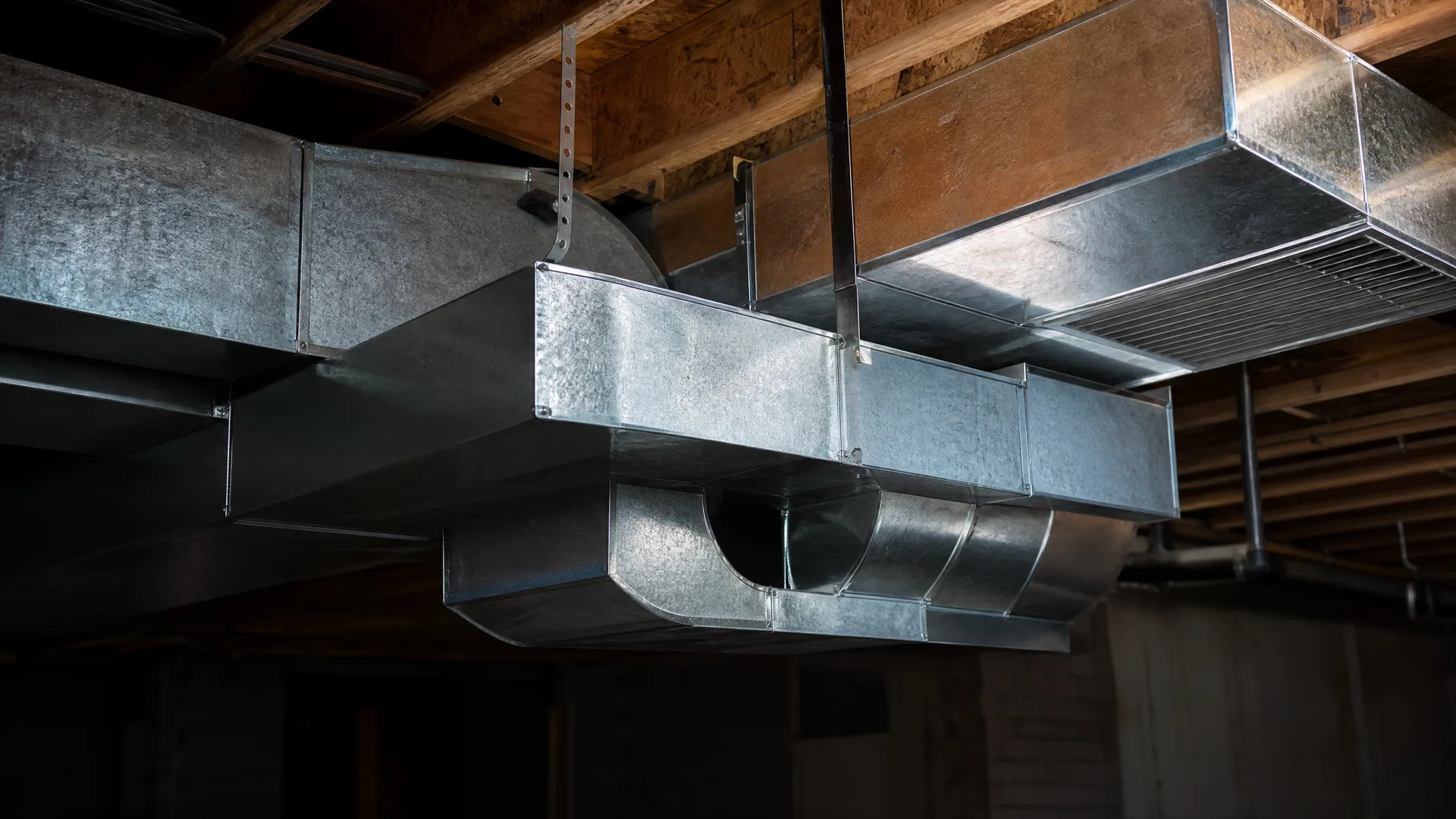
Galvanized sheet metal HVAC ductwork with rectangular trunks and round takeoffs suspended from wooden floor joists in an unfinished basement ceiling.

Get your ductwork to the right pro

Duct and vent cleaningDucts or ventsDavis County, UT
Step 1 of 2

What ZIP code is the job in?