Profile view of a bearded man wearing a dark baseball cap and a dark gray T-shirt against a plain off-white background.

How often to clean air ducts in Utah

Duct and vent cleaningDucts or ventsUtah
Step 1 of 2

What ZIP code is the job in?

How often should I get my air ducts cleaned in Utah?

You've got evenings full enough without wondering if your ducts are overdue. Utah's dry summer air and dust get pulled into the system right along with the air it's heating or cooling, and you're left guessing whether that matters or if it's just another thing on the list.

Every 3 to 5 years, or sooner if you notice dust building up fast

Every 3 to 5 years works for most homes with a duct system. Dust and dry debris move through Utah's air more than in wetter climates, and that gets drawn into the return vents and settles inside the ductwork over time. If anyone in the house has allergies, or you've had work done on the home recently that kicked up dust or debris near the vents, cleaning sooner makes sense. The same goes if you can see dust coming out of the registers when the system runs, or if it's been long enough that you honestly can't remember the last time it was done.

Basement interior showing a furnace with sheet-metal ductwork, a round flue pipe and copper lines running beneath exposed wooden floor joists next to a plain light-colored wall.

Where the dust actually comes from

Utah's summer air carries fine dust that works its way into the return side of your system whenever it runs. That dust doesn't stay in the air. It settles along the inside of the ducts, layer by layer, and builds up fastest in the runs closest to the return. A system that runs most of the year, cooling through a hot dry summer and heating through a cold winter, moves a lot of air across that buildup.

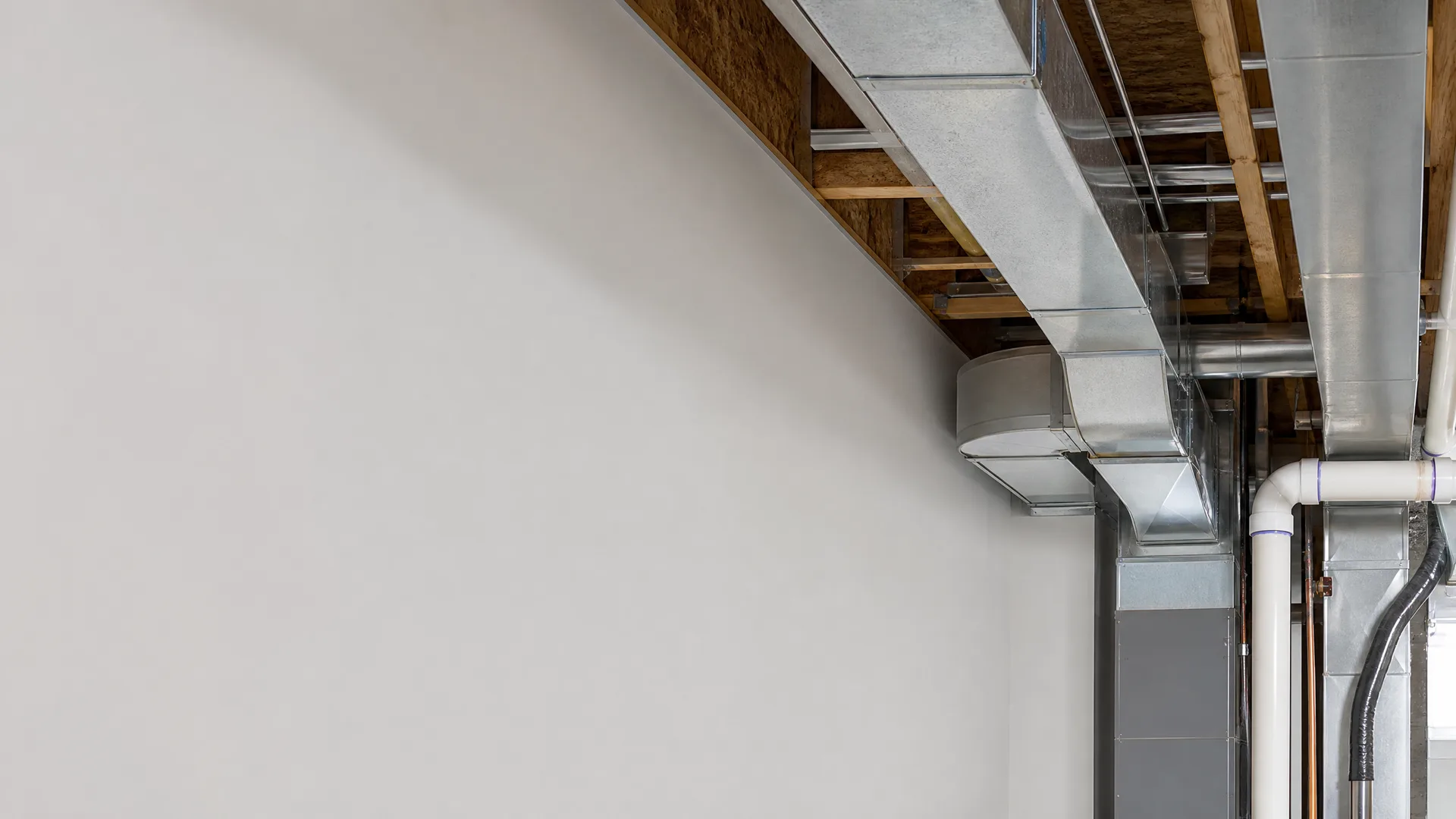
Interior corner of a building with a large blank white wall beside an unfinished ceiling showing wood joists, galvanized sheet-metal ductwork, and white and copper pipes.

What a dirty filter doesn't catch

The filter cleans the air passing through it, but it doesn't touch what's already settled in the ductwork. Dust that bypassed the filter early on, or built up before the last filter change, sits in the ducts and gets stirred back into the airflow every time the blower kicks on. That's true whether your furnace runs on gas, which most homes here do, or the system is electric. The ducts need their own cleaning, separate from filter changes.

Why does your house feel dustier than it should

You turn on the furnace or the AC and notice a smell that wasn't there before, a little musty or just stale. Dust comes back on the shelves and the TV screen within a day or two of wiping them down. Someone in the house is sneezing more at home than anywhere else, or a vent is blowing out a puff of dust when the system first kicks on. Look at the supply vents themselves. If the grille has a gray ring of buildup around it, that's what's been passing through all along. Left alone, that buildup is what the system keeps circulating, and anyone with allergies or asthma in the house feels it first.

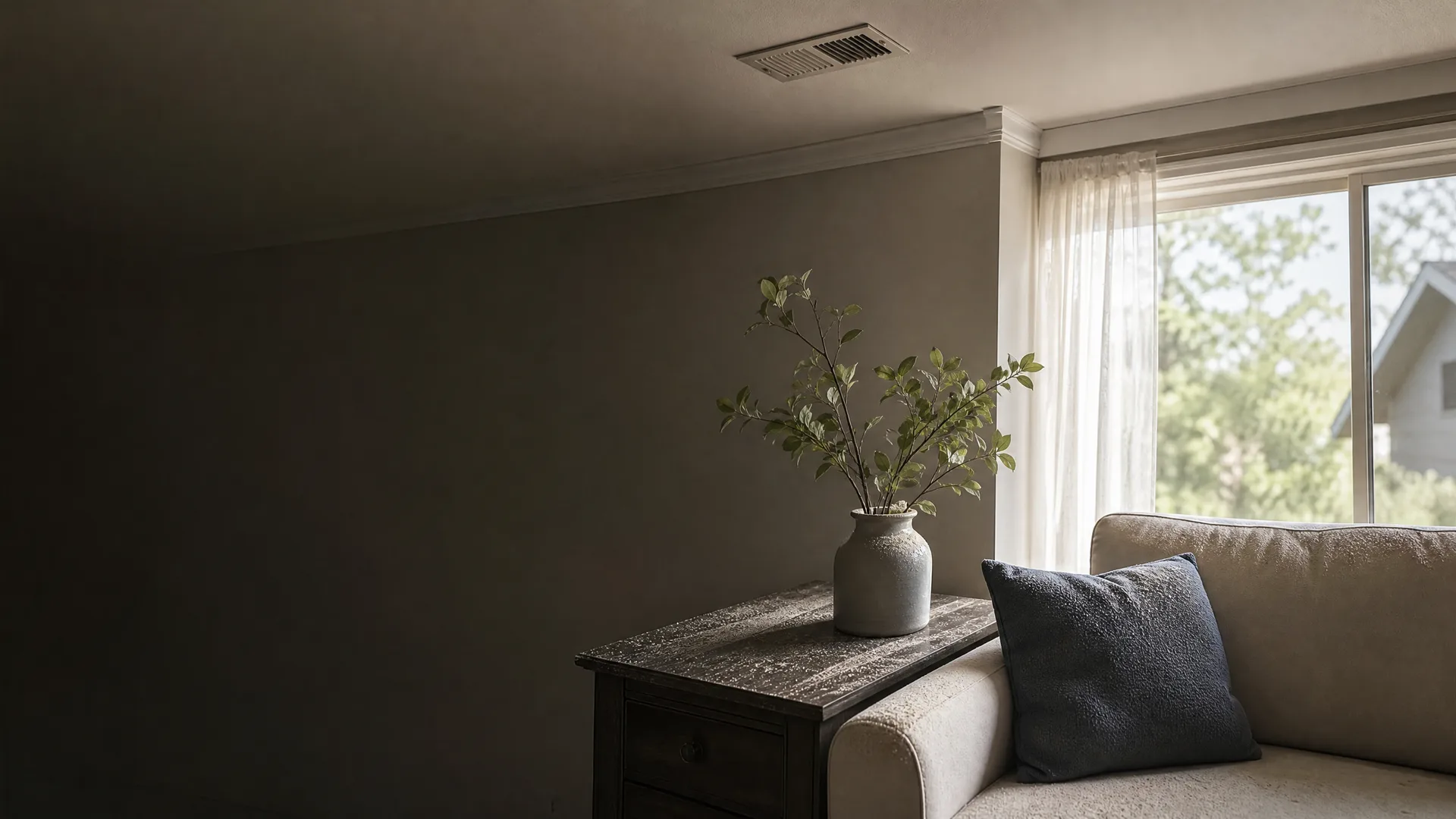
A dimly lit living room corner with a dark wood side table holding a pale ceramic vase of leafy branches, a beige sofa with a dark gray cushion, and a sheer-curtained window showing trees and a roofline outside.

It's late April, warm enough that you've had the AC on for the first time since last fall. You're on the couch after dinner when you notice the ceiling vent above the TV stand, a gray ring of dust around the grille, thicker than you remembered. You run a finger along the top edge of the TV and it comes away dark. The side table under the vent shows the same film. You wipe both down, and by the time you've got the cloth back under the sink, you're already thinking about who to call about it, and whether this is normal for a house or just yours.

Done looking for a duct system pro

You already know the dust is there. What's left is finding someone who actually cleans ducts, not just a general HVAC outfit that does it on the side. That usually means searching listings, calling a handful of companies, explaining the gray ring around your vents and the musty smell every time, then sitting on quotes trying to figure out who's worth the money. Send this request instead and that whole search is off your plate. You're not spending another evening cross-checking reviews or waiting on hold to describe the same problem a third time. Utah's dry summers keep pushing dust into your system whether you deal with it this week or next, but the part that was yours to sort out, finding a contractor who actually does this work, stops being something you have to carry.

Homes that have never had it done

If your ducts have never been cleaned, the buildup has had years to settle, through every summer of dry dust pulled in and every winter the furnace ran. It's usually worse than a quick look through a vent suggests, because what you see at the grille is only the start of it. The rest coats the inside of the ductwork further back, in the runs you can't see. A first cleaning on a system like this tends to pull out more than people expect, simply because nothing has ever been taken out before.


Homes on a regular schedule

If you've had it done before and kept to a schedule, each cleaning is working against less. The ducts aren't starting from years of buildup, so there's less for the dry summer dust to cling to between visits. You're less likely to notice the gray ring at the vent or the musty smell when the system kicks on. It doesn't mean skipping a cleaning is risk-free, dust still gets pulled in every time the system runs, but staying on schedule keeps it from piling up the way it does in a system that's never been touched.

A smiling bearded man in a dark green henley shirt sits on a blue-gray couch in a living room, with a bowl of popcorn in the foreground and a houseplant and window behind him.
A smiling man in a dark sweatshirt reclines on a gray sofa in a living room, with a wooden bowl of popcorn on a table in the foreground and a dining area, shelving, and pendant lamp behind him.
A smiling man in a navy long-sleeve shirt reclines on a sofa in a living room, with a bowl of popcorn on a wooden coffee table and framed pictures on the wall behind him.
A smiling man in a dark green long-sleeved shirt sits on a gray sofa in a living room, with a bowl of popcorn in the foreground and windows and a potted plant behind him.

Every 3 to 5 years

That's the usual stretch for a Utah home with no unusual dust problems and a furnace that's been running fine. It keeps buildup from getting ahead of the system.

Skip calling around

Sooner, if you've seen the signs

A gray ring on the vents, dust back within a day of wiping, a musty smell when the furnace kicks on. Any of those means don't wait out the full stretch.

Skip calling around
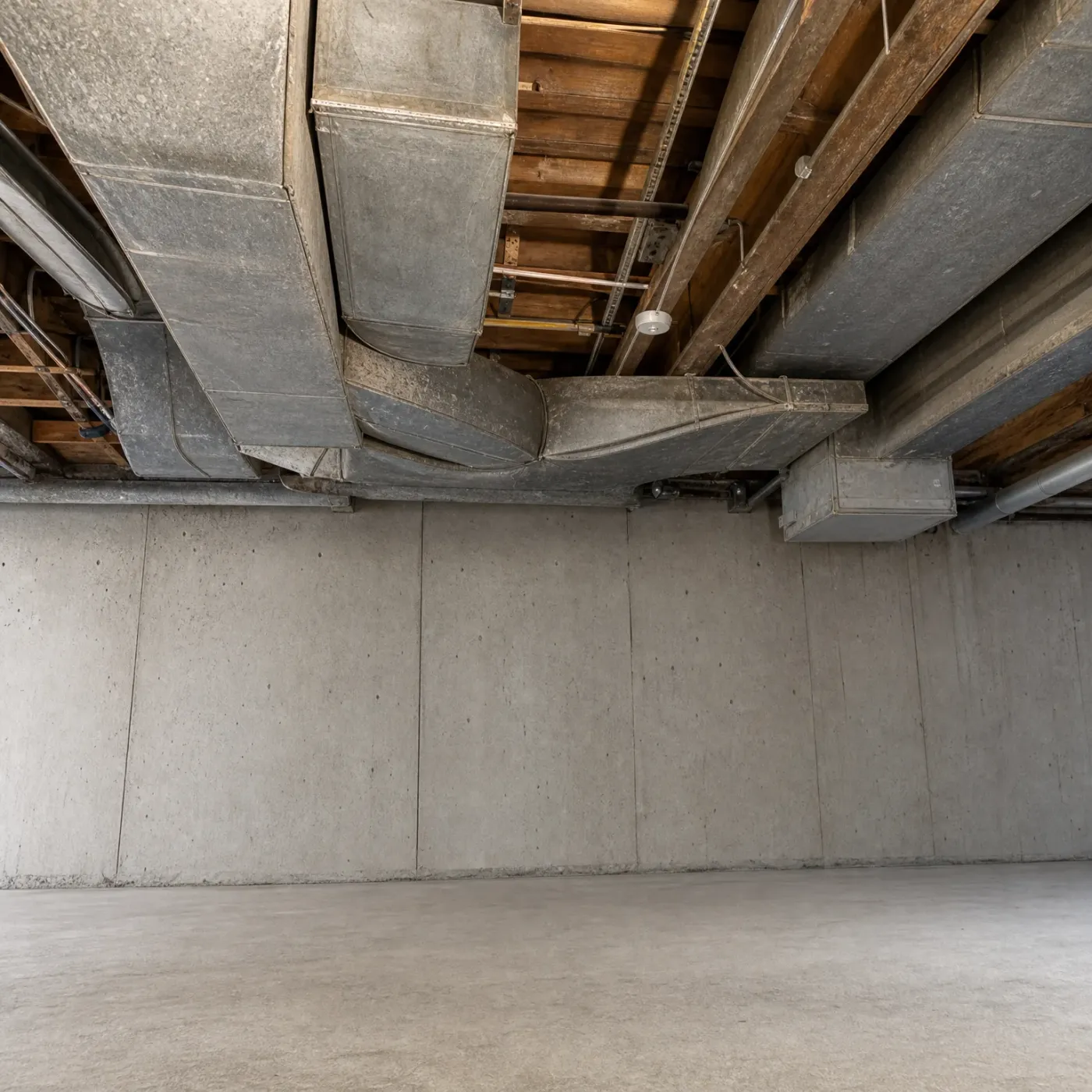
Empty basement room with bare concrete walls and floor, and an exposed ceiling of wooden joists with large galvanized sheet-metal ductwork and pipes.
Before you get your ductwork cleaning
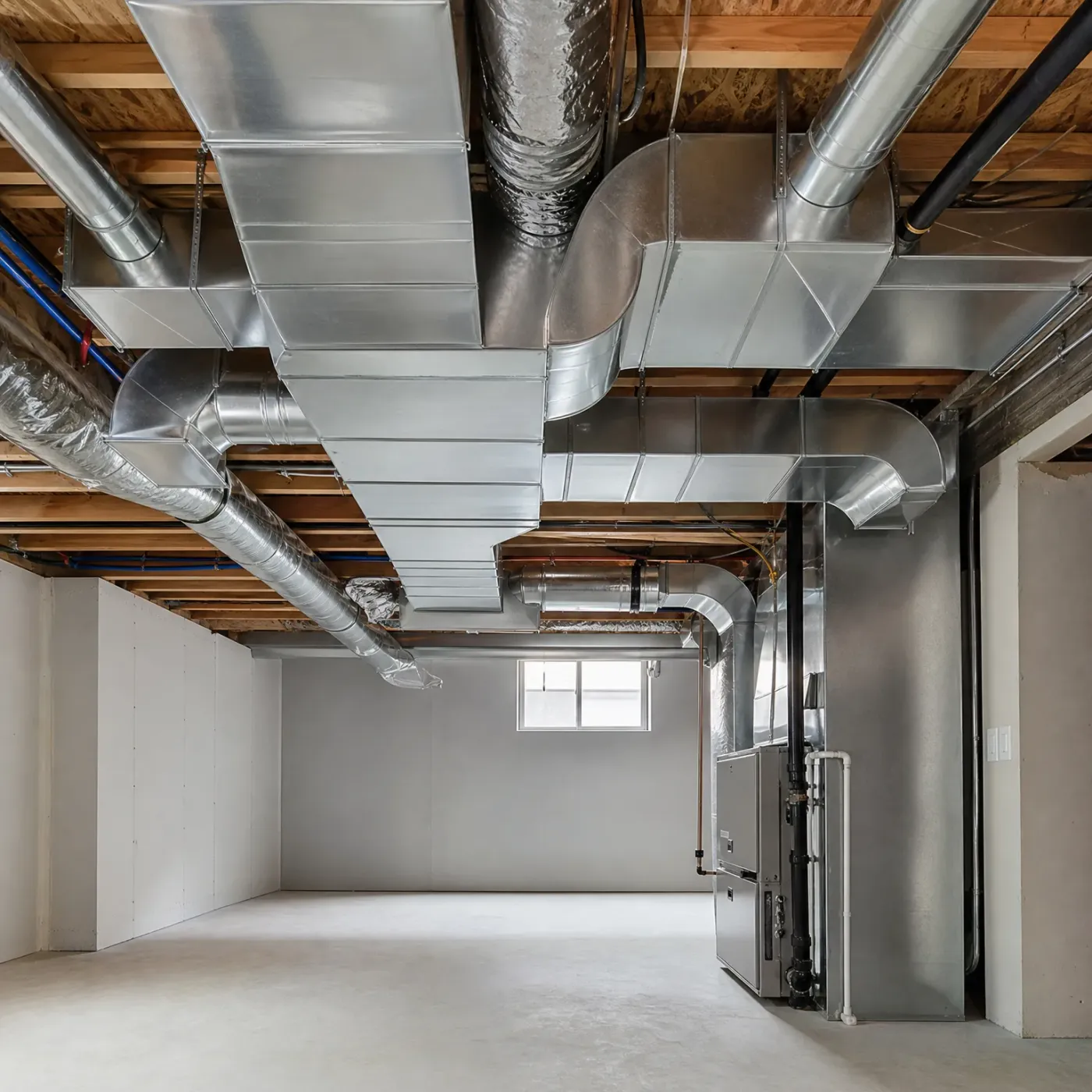
Unfinished basement with exposed wood joists, galvanized sheet-metal ductwork, insulated flex ducts, piping, a small window, and a furnace or air handler against a gray wall.
After you get your ductwork cleaning

Dust sits in the ducts and gets pushed back into every room each time the furnace or the AC kicks on. You keep wiping the same shelves and still breathe the same air.

With the ducts cleaned out, the air moving through the house is the air that came from the furnace or the AC, not the layer that built up behind the grille. You notice it most the first time the system runs after.

Power costs 13.02 cents per kilowatt-hour statewide

At 13.02 cents a kilowatt-hour, running your furnace blower or AC fan through ducts packed with dust doesn't show up as its own line on the bill, but a system working harder to push air through buildup still draws power the whole time it runs. Clean ducts just move air easier.

EIA-861 2025 statewide residential average

  1. A technician checks every supply and return vent in the house.

  2. A powerful vacuum hooks up to the main trunk line to pull debris out.

  3. Agitation tools knock dust loose from inside the duct walls as it runs.

  4. Loosened dust and debris get pulled into the vacuum, not back into your rooms.

Every 3 to 5 years for a normal Utah home, sooner if you've seen the gray ring on the vents or felt the dust coming back fast, that's the answer. The signs you've noticed, the smell when the furnace kicks on, the shelves that need wiping again the next day, all point the same direction. What's left isn't figuring out whether your ducts need attention. It's finding a company that actually does duct cleaning well, instead of spending an evening scrolling listings, calling around to ask if they even offer it, and explaining the same gray ring and musty smell to each one before you can compare what they'd charge. Once that search is handed off, you're not the one doing it anymore. You know where your ducts stand. The rest is just getting someone qualified out to deal with it.

Unfinished basement with bare concrete walls and floor, exposed wood floor joists and steel beams, red support columns, and galvanized metal ductwork and pipes overhead, with a small window on the right.

Stop chasing a duct system pro

Fill out one form

One form replaces the calls you'd make to find a duct system pro.

No charge to send it. You decide if you hire them.