Why your house is so dusty in Layton, UT

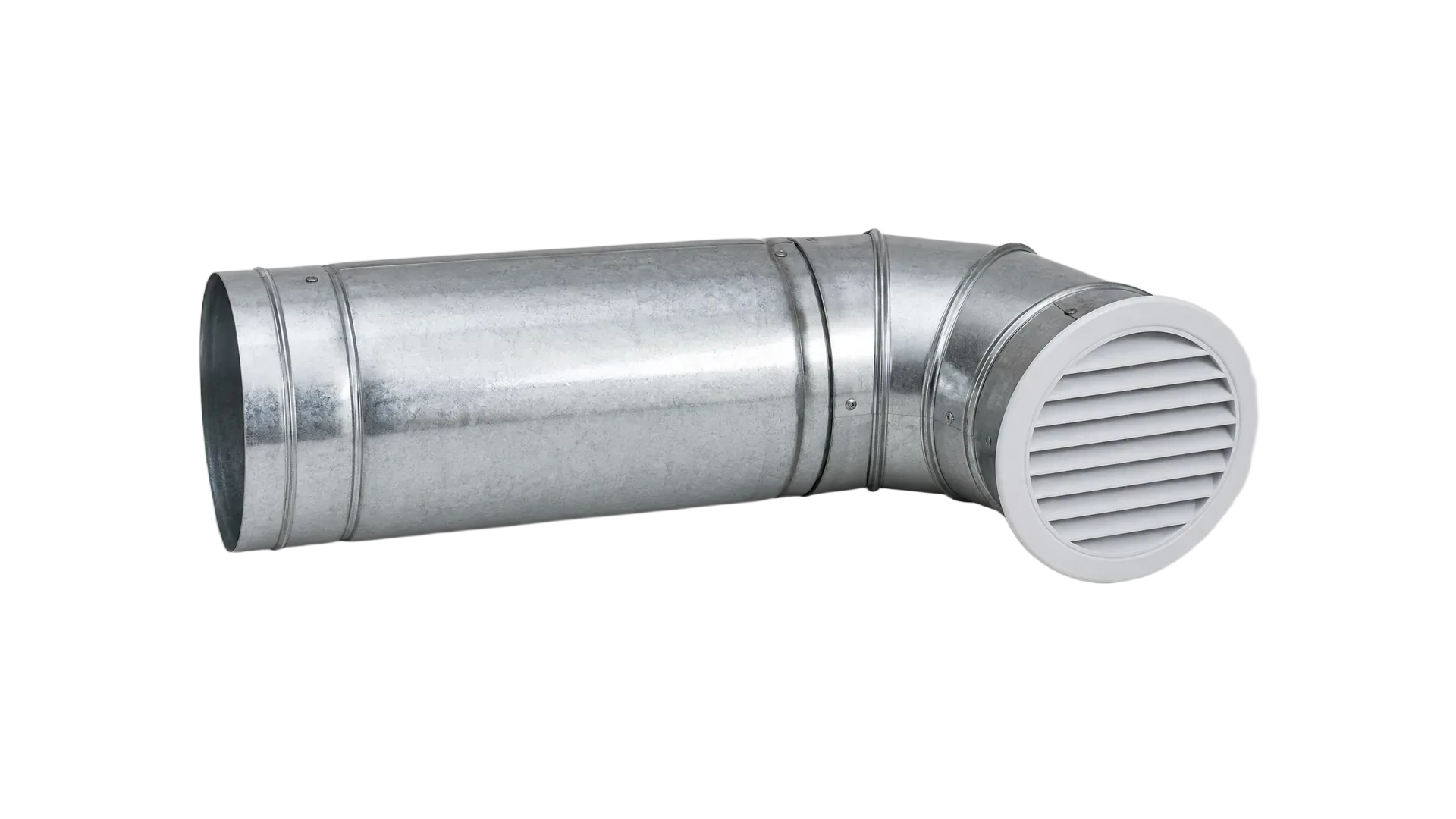
A galvanized steel round duct with a 90-degree elbow and a white louvered vent cover on one end, shown against a plain gray background.
Connect with a pro

Why is my house so dusty all the time?

You vacuum and dust and a few days later it's back, settled on the shelves and showing up on the furnace filter faster than it should. With the dry summers and cold winters here in Layton, you run the system most of the year, so if something in the ductwork is feeding dust into the air, it's working against you nonstop.

Your ducts are circulating dust, not just carrying air

Dust that settles back fast usually means the ductwork itself is holding it. Dust, pet hair, and debris build up along duct walls over time, and every time the blower kicks on, some of it gets pushed back into the rooms. In Davis County, that's most months of the year, since gas furnaces here run all winter and AC runs through the hot, dry summer. A dirty filter makes it worse, since air starts finding its way around the filter instead of through it. If you've changed the filter regularly and the dust is still heavy, the buildup is likely further back in the supply and return lines, where only a duct cleaning reaches it.

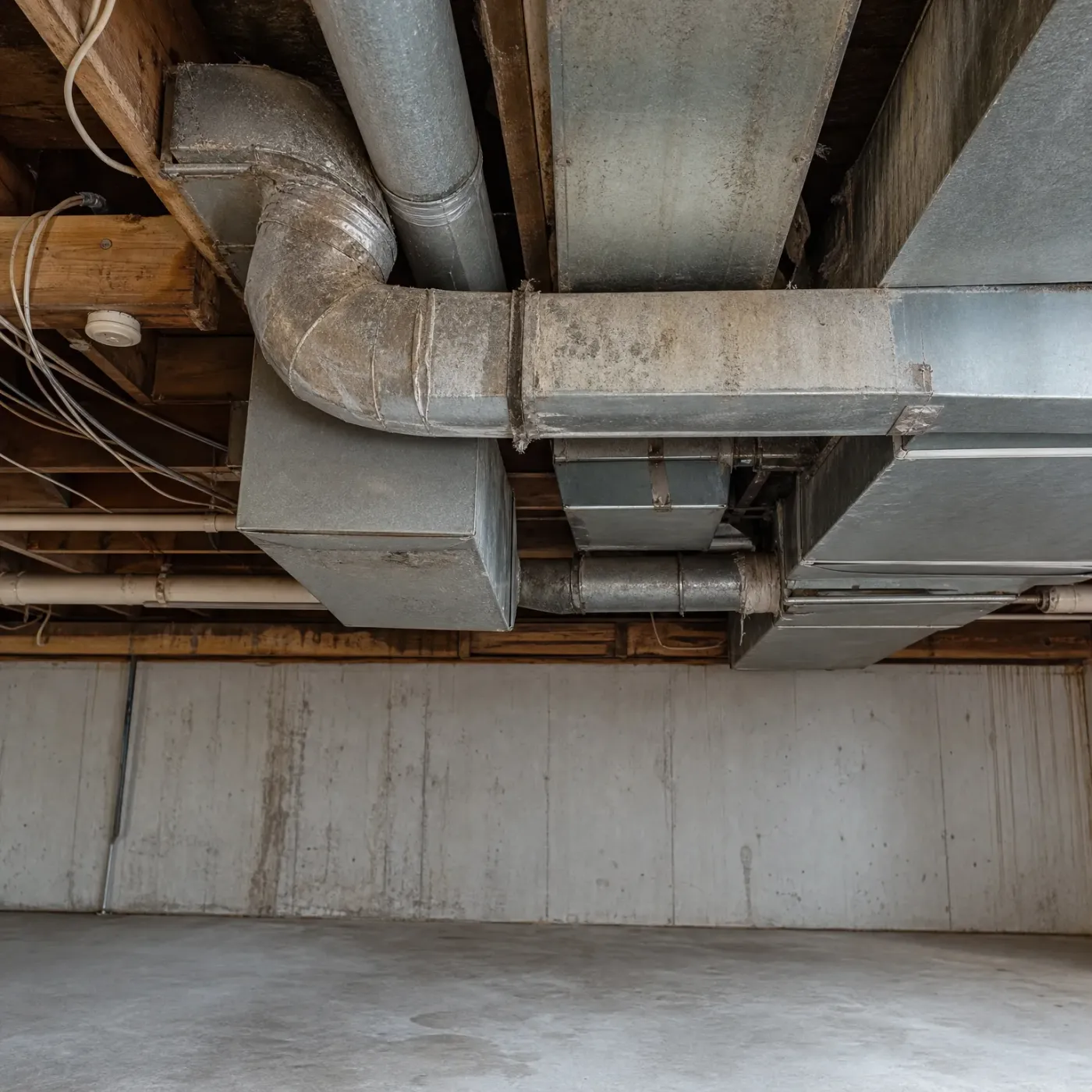
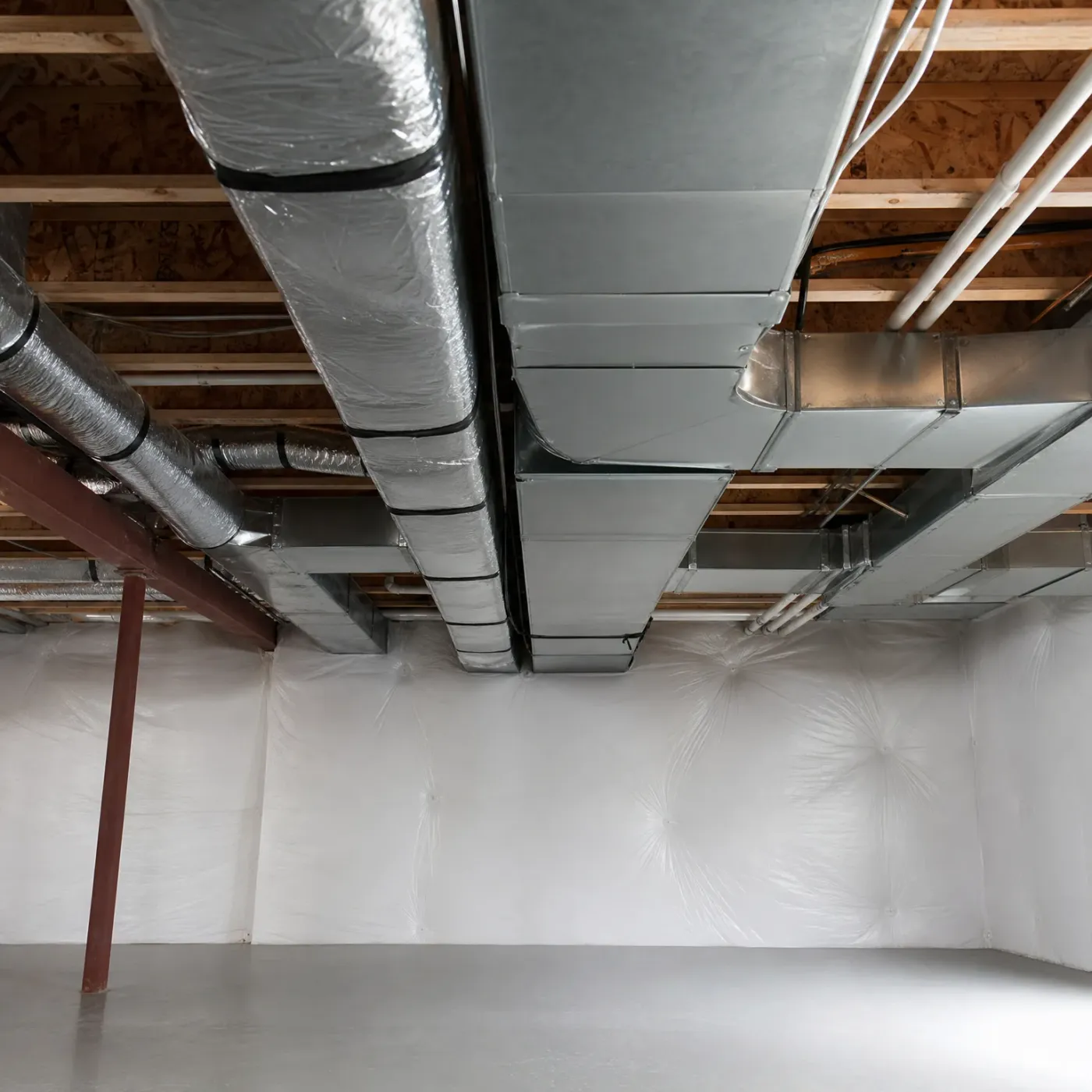
Unfinished basement with exposed wood joists, sheet metal and insulated flexible ductwork, white pipes, a steel support post, plastic-covered walls, and a bare concrete floor.

Clean duct run

This is what moves air through your house without adding to the dust. The metal trunks are sealed, the flex runs are intact, and nothing is torn open to the floor joists above. Air gets to your rooms and back to the furnace filter without picking up anything along the way.

Galvanized sheet-metal ductwork and round pipes run beneath wooden floor joists in a basement with concrete walls and floor.

Duct leaking into the crawl space

Here the trunk line has gaps where it meets the fittings, pulling in air straight off the foundation wall and the dirt below the joists. Every cycle pulls that into your supply air. That's dust the filter never gets a chance to catch, no matter how often you change it.

Why does dust keep piling up in your house?

  • Half the homes here were built by 1993

    Half the homes in Davis County were built in 1993 or earlier, so a lot of the ductwork moving your air has been doing it for decades.

  • Heat runs October through May

    Furnace or heat pump, your system runs October through May here, about eight months of the year pulling air through the same ducts.

  • Cooling runs June through August

    Add June through August of the AC running and your ducts are moving air almost year round, with only a short break in between.

ACS 2020-2024 · NOAA nClimDiv 1991-2020

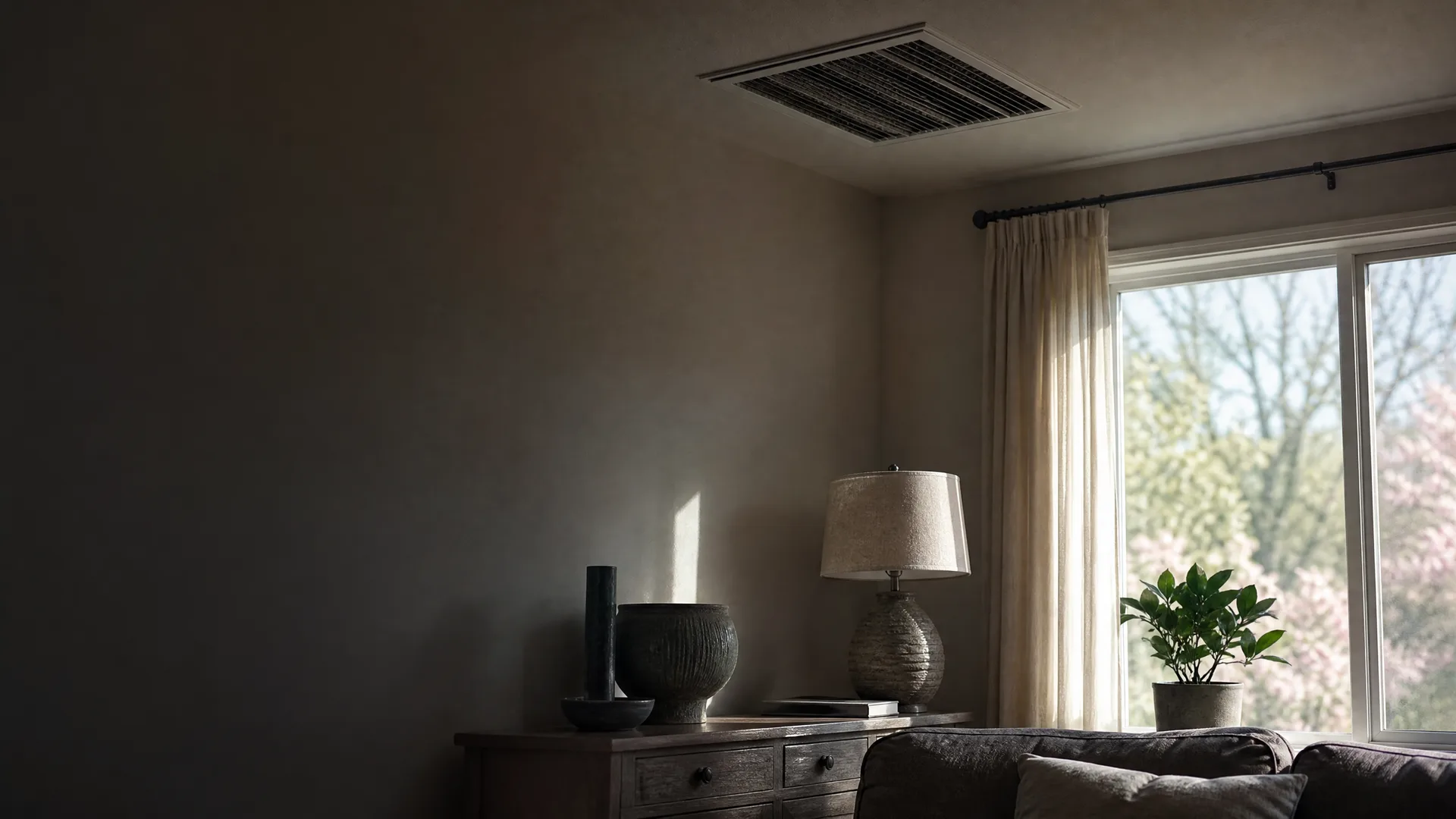
A dim living room corner with a ceiling air vent, a curtained window showing blossoming trees, a table lamp and dark ceramic vessels on a wooden dresser, a potted plant, and a sofa in the foreground.

The sun is already warm by nine in the morning, coming in low through the living room window. You're sitting with your coffee when the light catches it: a gray film along the slats of the ceiling vent, thick enough to see from the couch. You look down and the end table has the same film, and so does the lamp base next to it. You wiped that table down on Sunday. It's Wednesday. The furnace clicked on twice overnight, just enough to take the chill off, and somewhere in that run the vent let go of more than it took in. You make a note to pull the filter and see how it looks, already guessing before you check.
A woman in a long cream cardigan and jeans stands at an open wooden front door of a gray shingled house with stone-based porch columns, with a second person visible inside, and potted flowers and shrubs beside the entry.

Where the dust is actually coming from

Air gets pulled into the return, through the filter, across the blower, and back out through the supply ducts to every room. That filter is the only thing standing between your living room and whatever's built up inside the metal. A gap at a joint, a seam that's worked loose over the years, and the return side starts pulling in air from the attic or the crawlspace instead of just the room it's supposed to draw from. That air carries insulation fibers, old drywall dust, whatever's sitting up there, straight into the trunk line and out through your vents.

A duct system gets inspected camera-first, trunk by trunk, so whoever looks at yours can show you exactly where air is leaking in instead of guessing. Once they know which joints have opened up and which runs are clean, they can tell you what actually needs sealing and what doesn't, matched to your house instead of a general rule. You get a specific answer instead of a list of things that might be wrong.

A light-colored ceramic vase holding green leafy branches sits on a round wooden table, with a wooden-framed armchair draped in a cream throw, a tripod floor lamp, and sheer curtains blurred in the background.
An older man with gray hair and a beard, wearing a dark jacket dusted with snow, stands smiling in a dimly lit hallway with lamps and a living room visible behind him.
A gray-haired, bearded man in a dark snow-dusted coat stands smiling in a dimly lit entry hall with a staircase, a lit table lamp, a framed picture, and a living room visible through a doorway.
An older man with white hair and a beard, wearing a dark snow-dusted coat and scarf, stands in a warmly lit interior hallway with a framed landscape picture, a table lamp and a potted plant behind him, and a snowy view through a window at left.
A gray-haired, bearded man in a dark coat dusted with snow stands smiling in a dimly lit room with a lamp, mirror, framed art, and a sofa in the background.

Get matched with a duct system pro in Davis County

You've already read what's riding through your ducts and why Layton's dry summers and cold winters push so much of it through your system. Finding someone to actually clear it out means calling a few companies, explaining the gray film on your vents to each one, and sitting with quotes that don't line up because nobody looked at the same ductwork. That's the part this handles. One request, sent to a contractor who works on duct systems like yours in Davis County, and the comparing and re-explaining is off your plate. The dust came from somewhere specific, your ducts, your filter, the air moving through both for eight months a year, and getting it looked at doesn't require you to spend an afternoon sorting through options first.

How dust actually gets in

  • The blower pulls return air across the filter before it ever reaches the furnace or coil, so a clogged filter forces more air to slip past the edges unfiltered.
  • Leaks at duct joints and seams pull air from attics and crawl spaces into the supply side, adding dust the filter never sees.
  • A blower set to run the fan constantly moves more air past every seam and register, which spreads existing dust faster through the house.
  • Static pressure that's too high, often from a filter that's too restrictive or a duct run that's too narrow, pushes more air around the filter instead of through it.
  • Registers and the return grille collect dust first because that's where room air funnels down before it enters the duct system.
  • A duct system that was never sealed at the plenum or boot connections leaks conditioned air out and pulls unconditioned, dusty air back in to replace it.

Air in your house is always moving, pulled in through the return grille, across the filter, through the blower, and out to every room through the supply ducts. That filter is the one thing standing between the air you breathe and whatever's sitting in the ducts, the attic, or the crawl space. When it's clogged, the blower still needs air, so it pulls some around the edges of the filter instead of through it. A filter that's rated too high for your system causes the same problem, it resists airflow so much that static pressure builds up and air finds the path around it rather than through it.

The ducts themselves are usually the bigger issue. Joints and seams that were never sealed, or have come loose at the plenum or at a boot connection, work both ways. Conditioned air leaks out into the attic or crawl space, and to replace it, unconditioned air gets pulled back in through those same gaps, carrying attic dust and insulation fibers straight into your supply ducts. None of that air ever crosses the filter. If the blower is set to run constantly rather than cycling with the thermostat, all of this happens faster, because more air is moving through every leak and seam all day instead of only when the system calls for heat or cooling. Registers and the return grille show it first, since that's where room air funnels down before it enters the system, which is why they get the heaviest film even when the furnace filter still looks fairly clean.

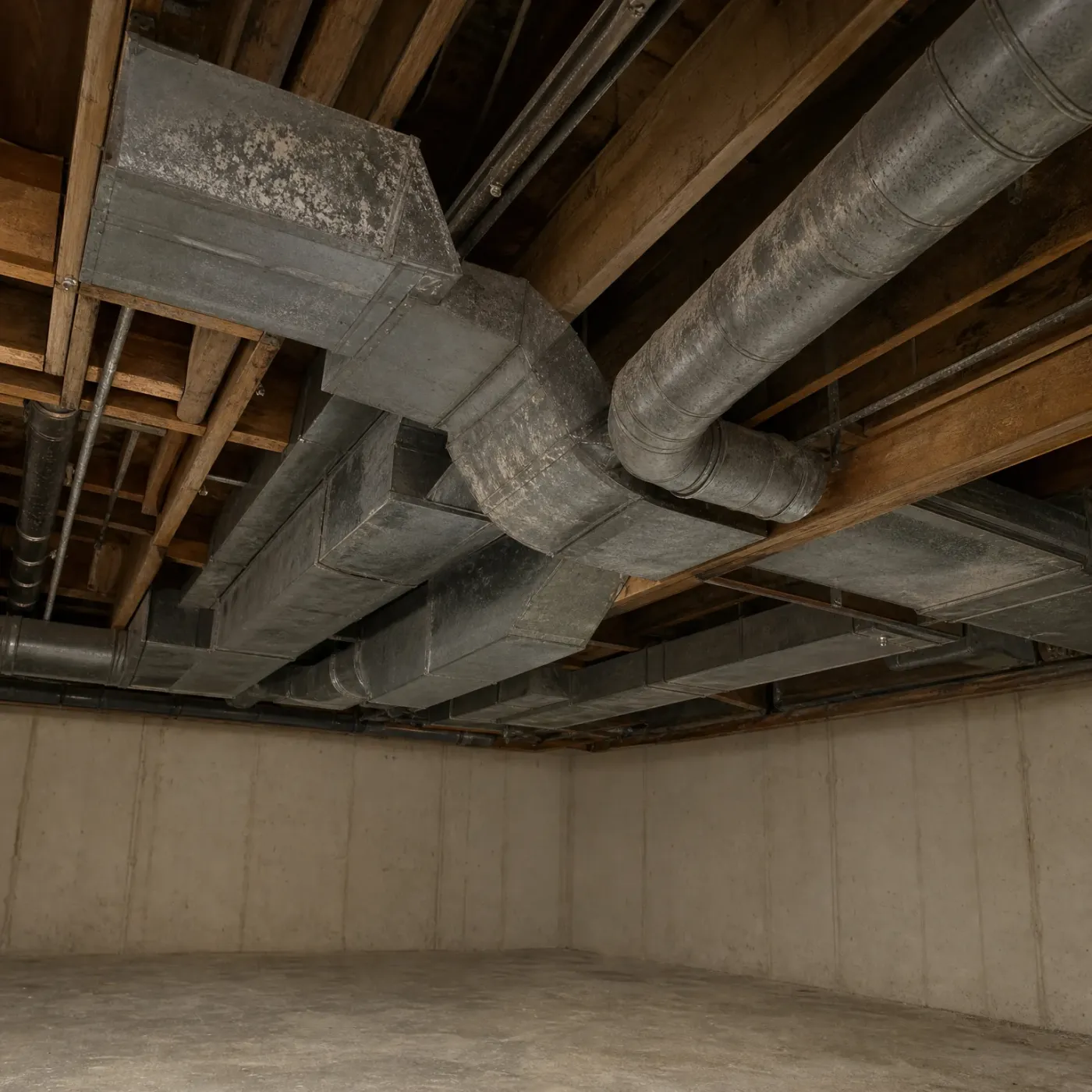
Empty concrete-walled basement room with exposed wooden joists and galvanized rectangular and round ductwork plus pipes running across the ceiling.
Before you get your ductwork cleaning
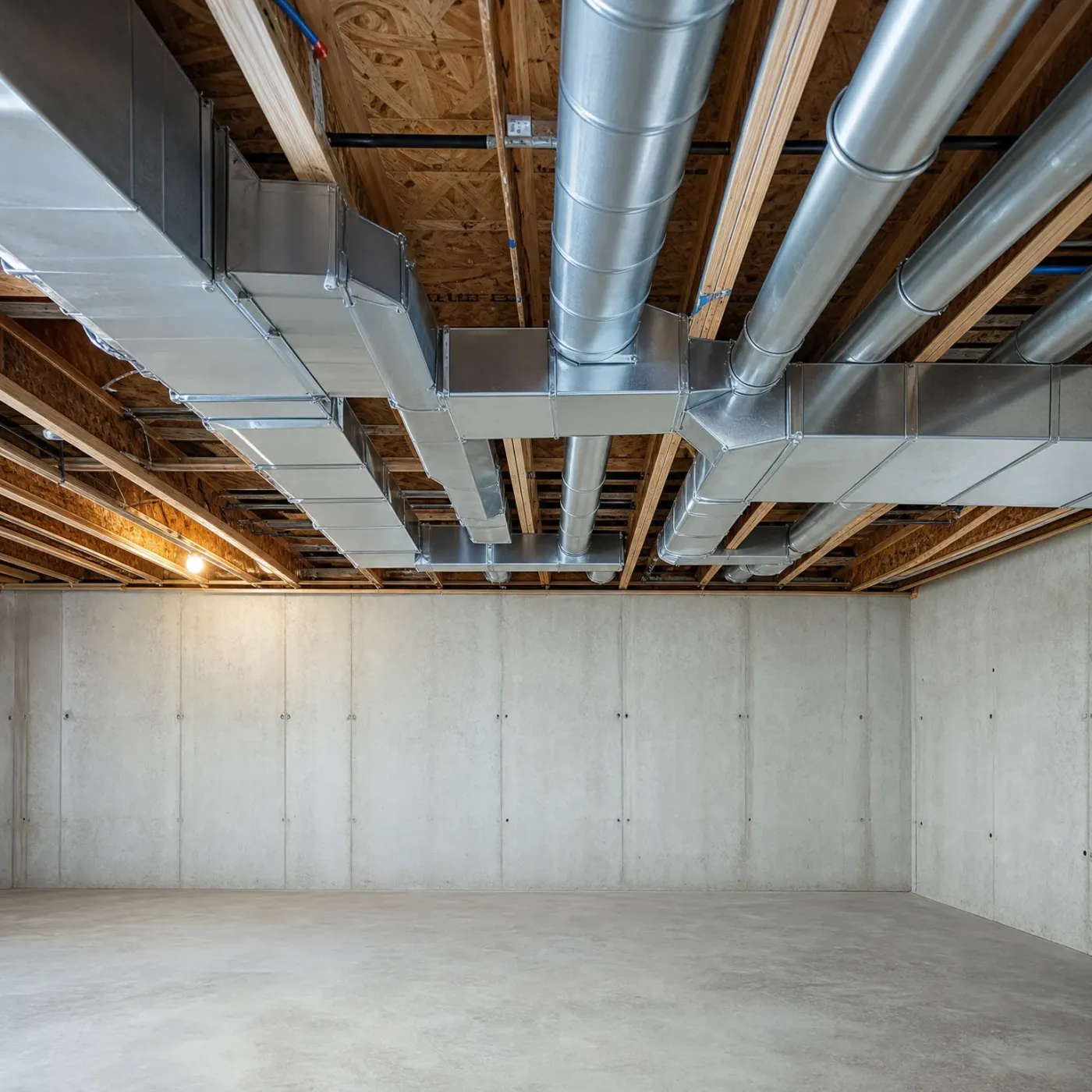
Empty concrete-walled basement room with bare floor and an exposed wood-joist ceiling carrying galvanized rectangular and round sheet-metal ducts, black pipes, and wiring.
After you get your ductwork cleaning

8 months a year

That's how long the furnace or heat pump runs here, October through May. Every one of those hours pulls air across the filter and through the ducts.

Get my match

1993 or earlier

Half the ductwork in Davis County homes dates back this far. Older runs are more likely to have gaps at the joints that pull in attic and crawl space dust.

Get my match

Clean It Yourself or Call

Clean it yourself

  • You can pull and wash the vent covers and run a vacuum with a brush head into the first foot or two of each duct, where you can reach.
  • A shop vac at the return grille picks up what has settled near the opening but can't reach the trunk lines behind the wall.
  • Swapping the filter on a regular schedule keeps new dust from building up as fast, even though it won't touch what's already in the ducts.
  • Wiping down registers and dusting shelves addresses what's landed in the room, not what's still moving through the system.
  • None of this reaches the sealed metal trunks or flex runs where dust has been collecting for years, especially if your ductwork is original to the house.

Call for cleaning

  • A contractor runs equipment that reaches the full length of the trunk and branch lines, not just the first few feet past the register.
  • Getting there on your own means calling several companies, describing the gray film on your vents each time, and sorting through quotes that aren't priced the same way.
  • A contractor can also check duct joints and seams while they're in there, since leaks at those points pull in attic or crawl space air along with the dust.
  • Matching with a contractor who services Layton and the surrounding area skips the searching and the repeat phone calls.
  • Once you're matched, the contractor reaches out to you directly to look at your specific setup.
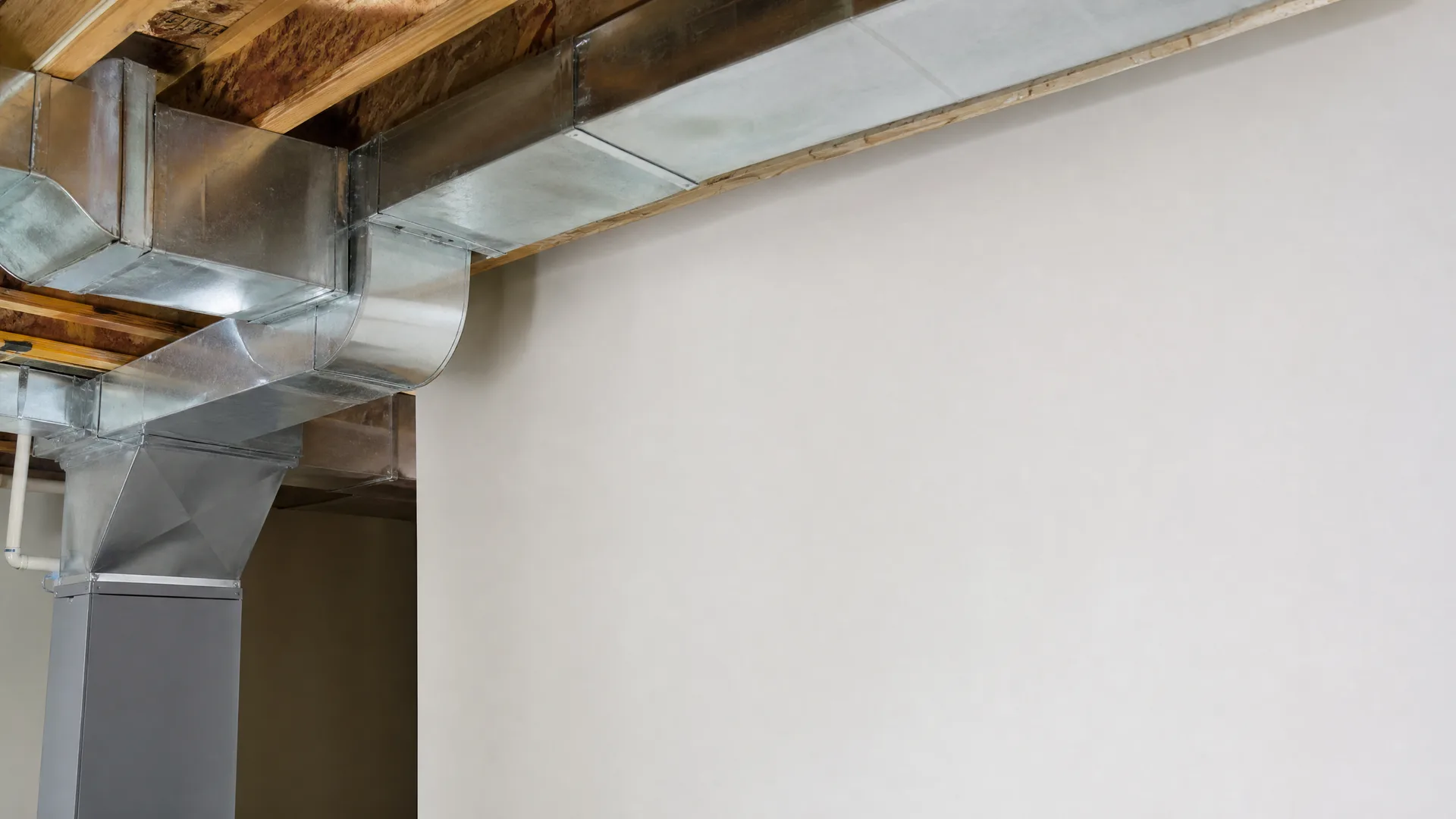
Galvanized sheet-metal HVAC ducts running along wooden joists at a basement ceiling, next to a plain off-white wall.

A house that keeps up with itself

Walk through and the shelves are clear. No film on the TV stand, nothing gray along the baseboards. You dust on your own schedule, not because the vent above the couch forced your hand. The air coming out of the registers doesn't carry a smell when the furnace kicks on. You can go a week without running the vacuum over the same spots twice, because the dust isn't being fed back into the room every time the blower cycles on.

Unfinished basement interior with galvanized sheet-metal HVAC ductwork and round pipes running along a wooden joist ceiling, a furnace and water heater at the far end, and a blank white wall filling the left half of the frame.

A house that never catches up

You wipe the shelf and by the weekend it's back. The furnace filter looks packed again after a month instead of three. There's a thin gray line along the ceiling vents you've started to just not look at. You run the vacuum more than you used to and it doesn't show. Open a closet near a return and the smell is close to what's sitting on top of the fridge. Every cycle through the winter and summer here is putting it back faster than you can clear it.

Power here costs 13.37 cents per kilowatt-hour

At 13.37 cents a kilowatt-hour, running the blower eight months a year doesn't hit your bill hard the way it might elsewhere. That's worth knowing, because it means there's no cost reason to run the system less than it needs to. A clogged filter or leaky duct just means that cheap air carries more dust through the house, not less.

EIA-861 2025

The dust on your shelves is coming through your ducts, pulled in through leaky joints and pushed out every register for eight months straight each year. A filter catches some of it. It can't catch what's already settled in the trunk lines or what's leaking in past the seams. Cleaning out the ductwork is what gets ahead of it, so you're dusting less and the furnace filter isn't loading up before its time. That's the answer. What's left is finding someone who'll actually do the work, without you having to call around Davis County explaining the same gray film on your vents to five different companies.

A woman wrapped in a chunky knit blanket sits in an armchair with an open book on her lap, beside a lit table lamp and a window with frost and snow outside.
An older woman with grey-blonde hair in an updo and a beige turtleneck sweater smiles while looking to the side in a warmly lit kitchen, with a round loaf of bread on the counter in front of her and a dark window showing snow outside.

Ductwork Cleaning

The right pro for this job

One form replaces the calls you'd make to find a duct system pro.

A black-framed smartphone standing upright against a plain light gray background, its screen filled with solid green.
Duct and vent cleaningDucts or ventsDavis County, UT
Step 1 of 2

What ZIP code is the job in?