Utah HVAC Pros

Why your furnace is blowing dust in Utah

After you send the request, you're done searching.

Tune-up, service, or cleaningFurnace or heatingUtah
Step 1 of 2

What ZIP code is the job in?

Dust blowing out of your vents usually means the furnace is pushing air through a dirty filter or a duct system that's picked up a season's worth of buildup. Utah summers are hot and dry, and that dry air carries fine dust that works its way into return vents and settles in ductwork all summer while the furnace sits idle. When you fire it up for winter, that first blast of air knocks loose everything that's collected since spring. A clogged or old filter makes it worse, since air starts finding gaps around the filter instead of passing through it, carrying dust straight into your rooms. Sometimes it's the blower compartment itself, dusty from disuse, getting stirred up the moment the furnace kicks on. None of this means the furnace is broken. It usually means it hasn't been cleaned or checked since last winter, and a furnace that sits unused all summer needs that look before it runs hard again.

A man in a blue sweatshirt reclines with closed eyes in a brown leather armchair in a living room with a bookshelf, houseplant, sofa, window, and a side table holding newspapers and a dark mug.
A bearded man in a gray pullover reclines with closed eyes on a brown leather sofa in a sunlit room with a window, framed picture, potted plant, and a wooden cabinet holding papers and a dark mug.
A man in a gray sweater leans back with closed eyes in a brown leather armchair beside a wooden side table holding a dark mug and a folded newspaper, with bookshelves and a window seat behind him.
A man in a green sweater reclines in an armchair with his eyes closed and a slight smile, beside a window with plants, a small table holding a mug and folded newspaper, and bookshelves behind him.
A dark high-efficiency furnace on a concrete pad in a basement, connected to galvanized ductwork, white PVC vent pipes, and copper and black gas piping, with concrete walls and wood framing nearby.
A clean filter seated right and tight duct joints keep the air moving through metal, not through gaps that pull in basement dust.
A gas furnace with a louvered upper panel stands on a concrete pad in a basement, flanked by sheet-metal ductwork, white PVC and metal pipes, and insulated columns.
A furnace left unchecked season after season lets dust and rust scale build up inside the cabinet and blow out with every cycle.
A furnace in a dim basement with a dirty pleated air filter partially pulled out of its slot, beside a water heater and concrete walls and floor.

You pull the filter out in October, the first cold week, and it's grey all the way through, thicker at the edges where the frame doesn't quite seal. Behind it the blower housing has a film on it too. The furnace has been off since April, maybe May, sitting in the dry basement air while the rest of the house settled dust nobody swept. Now it kicks on for the season and every vent in the house breathes that summer out. You can see it on the sill behind the couch upstairs before you even think to check down here. The filter was due for a swap a while ago. You just hadn't needed the heat yet to notice.


Why does my furnace blow out more dust after sitting all summer?

You pull the filter out in October, the first cold week, and it's grey all the way through, thicker at the edges where the frame doesn't quite seal. Behind it the blower housing has a film on it too. The furnace has been off since April, maybe May, sitting quiet through a hot, dry Utah summer while dust settled into everything connected to it.

The dust was already there. The furnace just moves it.

A furnace that's been idle doesn't collect more dust by sitting, it collects dust the same as any still surface does. What changes is what happens when the blower motor kicks on for the first time in months. Air that's been dead still in the ducts and the cabinet gets pushed hard, and whatever settled on the heat exchanger, the blower wheel, and the inside of the ductwork goes with it. Utah's dry summer air makes this worse because dry dust doesn't stick, it just lifts and travels. The first few cycles of the season carry the heaviest load, then it tapers off once the loose dust has worked its way through and out the vents.

An older beige furnace with a louvered vent panel stands on a concrete basement floor beside galvanized sheet-metal ductwork, a metal flue pipe and vertical pipes along a concrete wall.
Before you get your furnace maintenance
A beige high-efficiency furnace with white PVC vent pipes stands beside galvanized sheet-metal ductwork in a basement with a concrete floor, exposed wood studs, and metal piping along the wall.
After you get your furnace maintenance
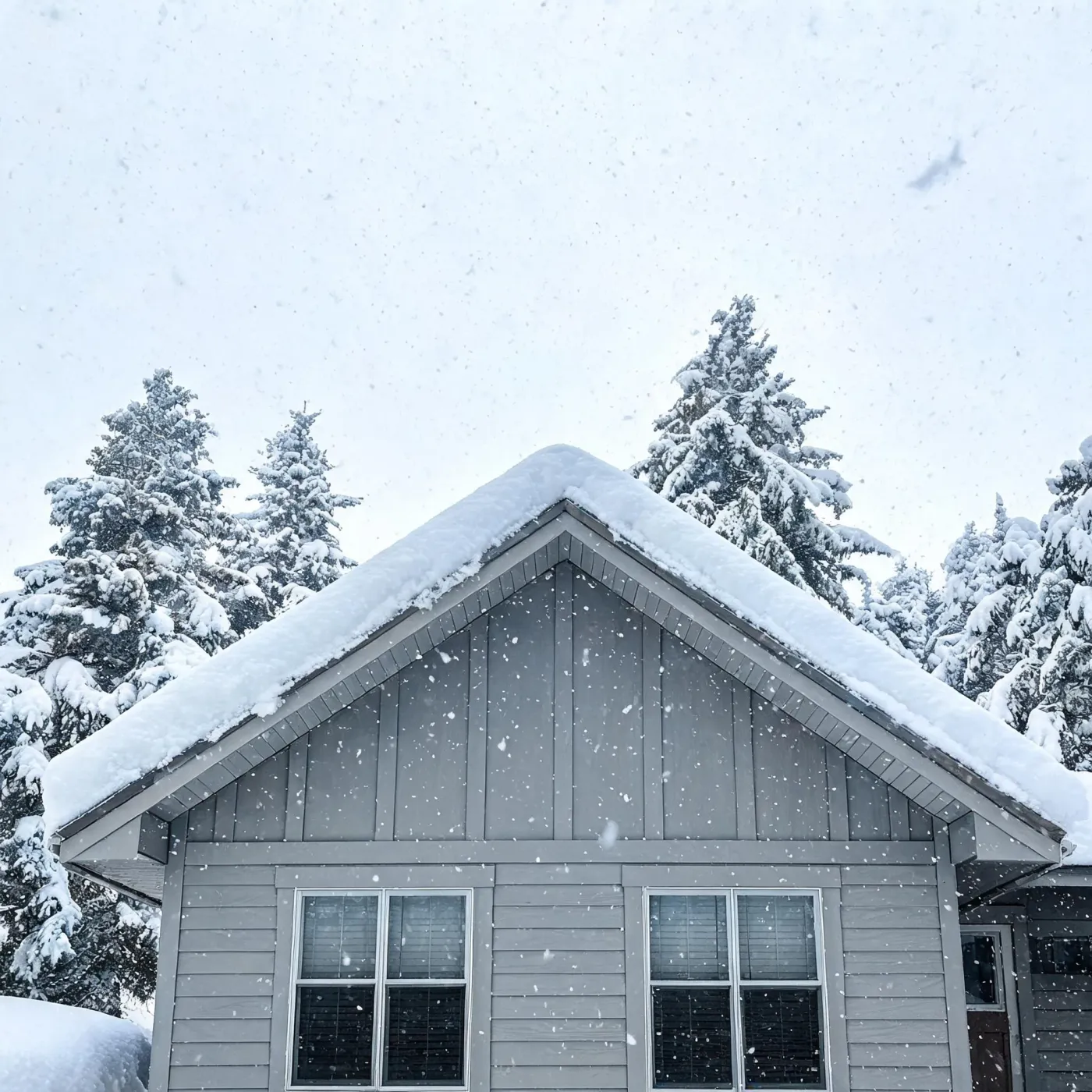
A gray-sided house with a steep gable roof covered in thick snow, framed by snow-laden conifers under a pale sky with falling snowflakes.

Winter nights average 21°F statewide, according to NOAA climate data. That's cold enough that your furnace runs long stretches without a break, and every one of those hours it's pulling air through the filter and the ductwork. If dust settled in over the summer while the system sat idle, those long winter runs are what push it out into the rooms you live in. The longer the furnace runs each night, the more air moves through whatever's built up inside the cabinet and the return lines. A furnace that's been looked at before the cold sets in doesn't have that buildup to push around. Once you send the request, you're not the one tracking down who can look at it. That part's off your plate.

NOAA nClimDiv 1991-2020 county normals weighted by homes

Send one request and you're done looking

A licensed local pro takes the request for your furnace tune-up.

It costs nothing to send, and you don't have to hire anyone.

  1. Air pulls dust off the summer-dry basement floor and framing

  2. Return ducts draw that dust into the blower compartment

  3. A dirty or loose filter lets fine particles pass through

  4. The blower motor spins and forces air past the heat exchanger

Dusty Vents: Ignore It or Fix It

Skip maintenance

  • The blower keeps forcing air past whatever dust and rust scale built up in the cabinet over the summer, so it ends up in your vents instead of staying put.
  • A filter that's not seated right lets air slip around the edges instead of through it, and anything that bypasses the filter goes straight into the ducts.
  • Loose duct joints pull in dust from the basement or crawlspace as the system runs, adding to what the furnace already had sitting in it.
  • Nobody checks the blower housing or the heat exchanger until the dust shows up in the house, which means the cause has already had all summer to build.
  • With winter nights averaging 21°F statewide, the furnace runs long stretches without a break, and every one of those hours moves more dust through the same dirty path.
  • The problem doesn't go away on its own. It shows up again the next time the furnace kicks on for a long stretch.

Get it serviced

  • A technician who works on furnaces every fall knows to check the blower compartment and the cabinet for the buildup that collects over a Utah summer, not just swap the filter.
  • Duct joints get checked for gaps that pull in basement dust, and a loose seal gets sealed before the cold sets in.
  • The filter gets seated so air moves through it instead of around it, which is the difference between dust getting caught and dust getting through.
  • Rust scale and debris inside the cabinet get cleared out before the blower has a chance to push it into your living space.
  • One licensed technician local to your area handles the whole visit, so you're not fielding calls from a handful of different companies.
  • Once the furnace is checked before the long winter runs start, you've got one less thing to think about when the temperature drops.
A gray high-efficiency furnace with two PVC vent pipes stands in an unfinished basement beside sheet-metal ductwork, a framed and plastic-covered wall, and a bare concrete wall with vertical pipes.

Running Clean

A filter seated flush, a blower wheel free of buildup, and the flue and gas line doing their job without dust riding along. Air moves through the ductwork above and comes out the vents the way it went in. Nothing in the cabinet is loose enough to shake free when the burners fire.

A gray furnace cabinet in a basement, connected to galvanized sheet-metal ductwork and white PVC pipes, against a concrete wall with exposed metal piping and insulation overhead.

Running Dirty

Set on a pallet or not, this furnace has been pulling basement air through a filter that's stopped sealing. Dust and rust scale sitting inside the cabinet get picked up every time the blower spins and pushed out through the ductwork overhead. The condensate line and framing around it tell you nobody's opened this unit up in a while.

A gray-haired man in a blue quarter-zip sweater sits in an armchair with his eyes closed, beside a large window with bare trees outside and a potted plant and lamp nearby.
A woman in a cream knit sweater sits in an armchair with her eyes closed and head tilted back, beside a window showing orange autumn foliage and a wooden side table with a mug.

The blower wheel takes the brunt

The blower wheel spins fast enough to fling dust off its own blades if it builds up unevenly, and a wheel that sat idle all summer collects it unevenly by nature. One side gets more airflow past it than the other, so dust settles thicker in the low spots. When the furnace fires up again, that buildup doesn't just sit there. Some of it breaks loose and rides the airstream straight through the ductwork and out your vents before the filter ever gets a chance at it.

Rust scale adds to the load

Inside the cabinet, any moisture that got in over the summer can leave a thin layer of rust scale on metal surfaces, especially around the heat exchanger. That scale flakes with heat, and a furnace running hard through a 21°F night is cycling that heat over and over. Each cycle knocks a little more loose. It's a different source than basement dust, but it travels the same path, through the blower and into the ducts, and it shows up the same way at the vent, as fine grit mixed in with everything else.

Winter nights average 21°F statewide

At 21°F, your furnace isn't cycling on and off for a few minutes at a time, it's running long stretches to hold the house steady. That's more hours of air moving past whatever settled in the cabinet over the summer, and more of it ending up in the ductwork before the air warms up.

NOAA nClimDiv 1991-2020 county normals weighted by homes

What the Dust Comes Down To

  • Dust in the vents traces back to a filter or duct seal problem, not something wrong with the air itself.
  • A furnace checked before the cold hits runs the blower against a clean wheel instead of one caked from summer.
  • Catching a loose filter frame or a gap in the duct joints now means less dust riding through the whole house all winter.
  • A local contractor who services furnaces through every Utah winter knows which parts collect buildup first in a system that sat idle since spring.
  • One contractor takes the job, checks the filter, the blower wheel, and the duct seals, and tells you plainly what needs doing.
  • Once the furnace is seen to, the dust stops being a mystery and starts being a settled question.

Dust blowing out of your vents is not a mystery once you look at what it is. A filter that is not seated tight, a duct joint that has worked loose, a blower wheel that sat still all summer collecting buildup unevenly. Every one of those is a thing a furnace can be checked for before the first cold week in October asks the system to run for hours at a stretch.

That is the point of getting it looked at now rather than after the dust shows up. A contractor who works on furnaces through Utah winters has seen this pattern enough times to know where to look first. The filter frame, the blower housing, the seams in the ductwork near the cabinet. These are the spots that collect dust and rust scale after months of sitting idle, and they are the same spots that, left alone, feed dust straight into the air moving through your house all winter.

Send the request and one local contractor takes it, not five companies competing for your callback. That contractor checks the filter seat, the blower wheel, the duct seals, and tells you straight what's loose or dirty and what isn't. No guessing which company to call back, no juggling quotes. Once the furnace has been looked at, the dust stops being something you wonder about every time the heat kicks on. It becomes a settled question, answered before winter asks the system to prove it.

The gabled roof peak of a house with a stone chimney, dark siding and wood brackets, framed against forested hills and a rocky mountain ridge under a cloudy sky.

Finding a pro stops being your job

Find a licensed pro

No charge to send it. You decide if you hire them.

A furnace that sat idle since spring won't clear that dust on its own once you flip it back on. Send the request and a local contractor who checks furnaces like yours every fall takes it from here.