Utah HVAC Pros

Why your AC is blowing dust in Utah

A local pro who services air conditioners gets in touch about the tune-up.

Find an air conditioner pro

That fine dust coming out of your vents is usually the filter, not the air itself. Utah air is dry, and dry air carries more loose dust and dander than humid air does, so your filter is catching more than it would somewhere wetter. If it's been in there too long, it stops catching and starts letting dust blow straight through, or air starts slipping around the edges where it's packed with dust and pushing it into the duct. A dirty blower wheel does the same thing, flinging dust that built up on the blades back into the airflow. Either way, the dust was already in your house. Your AC is just moving it around instead of pulling it out. Left alone, this is also a sign your system isn't moving air the way it should, which during a Utah summer means it has to work harder to keep the house cool.

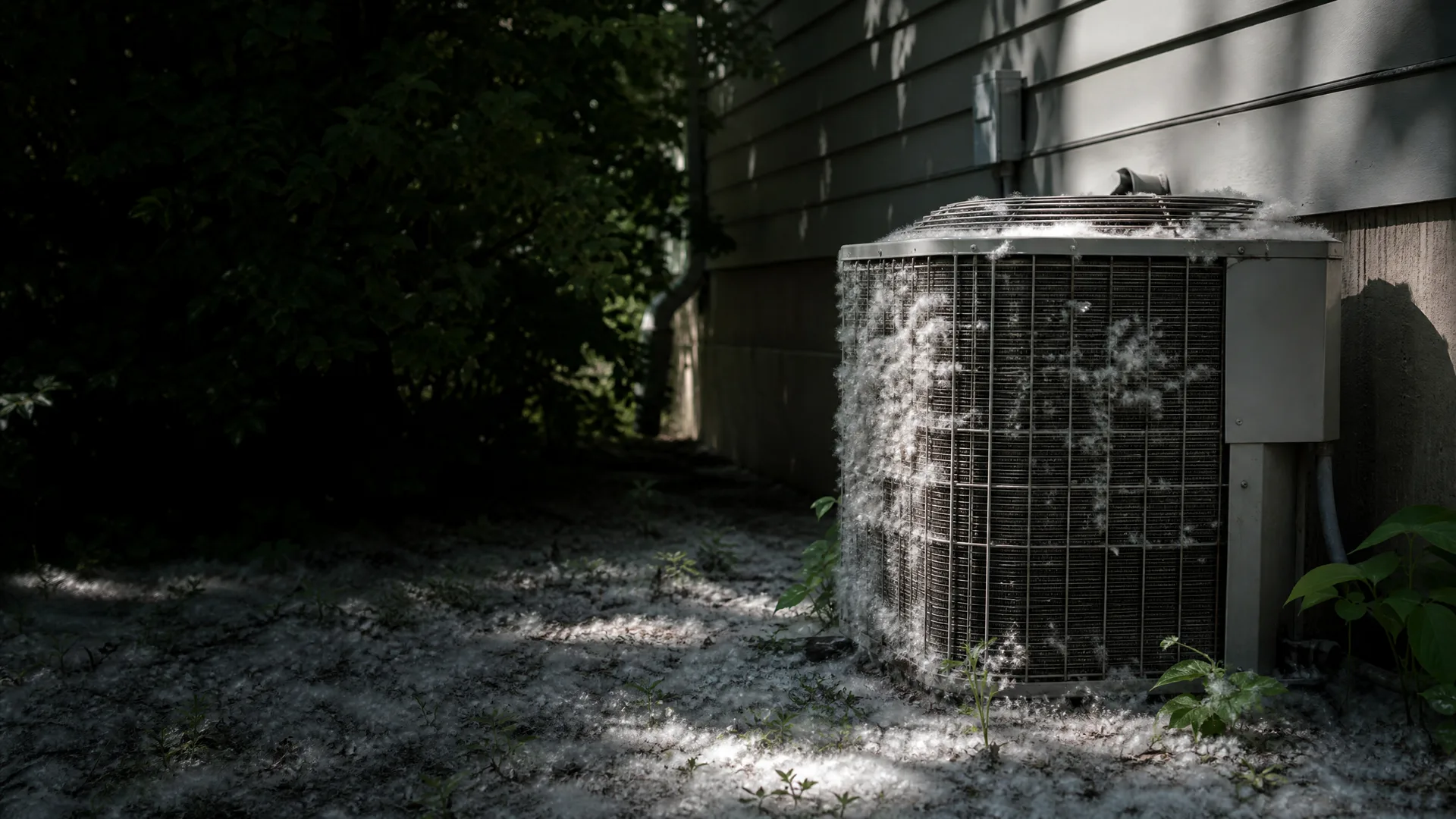
An outdoor air conditioner condenser unit beside a house with horizontal siding, its coil covered in white cottonwood fluff that also blankets the ground around it.

You're out pulling weeds along the side yard in late May when you notice it, the condenser fins packed white with cottonwood fluff, thick as felt across the whole unit. It drifted off the trees weeks ago and settled into the coil every time the system kicked on, layer after layer. You run a finger across it and dust comes off on your hand. That same fine stuff is what's been riding the air back through your ducts and out the vents, past a filter that's already working overtime in this dry air. The unit's still running. It just has to pull harder to do it.


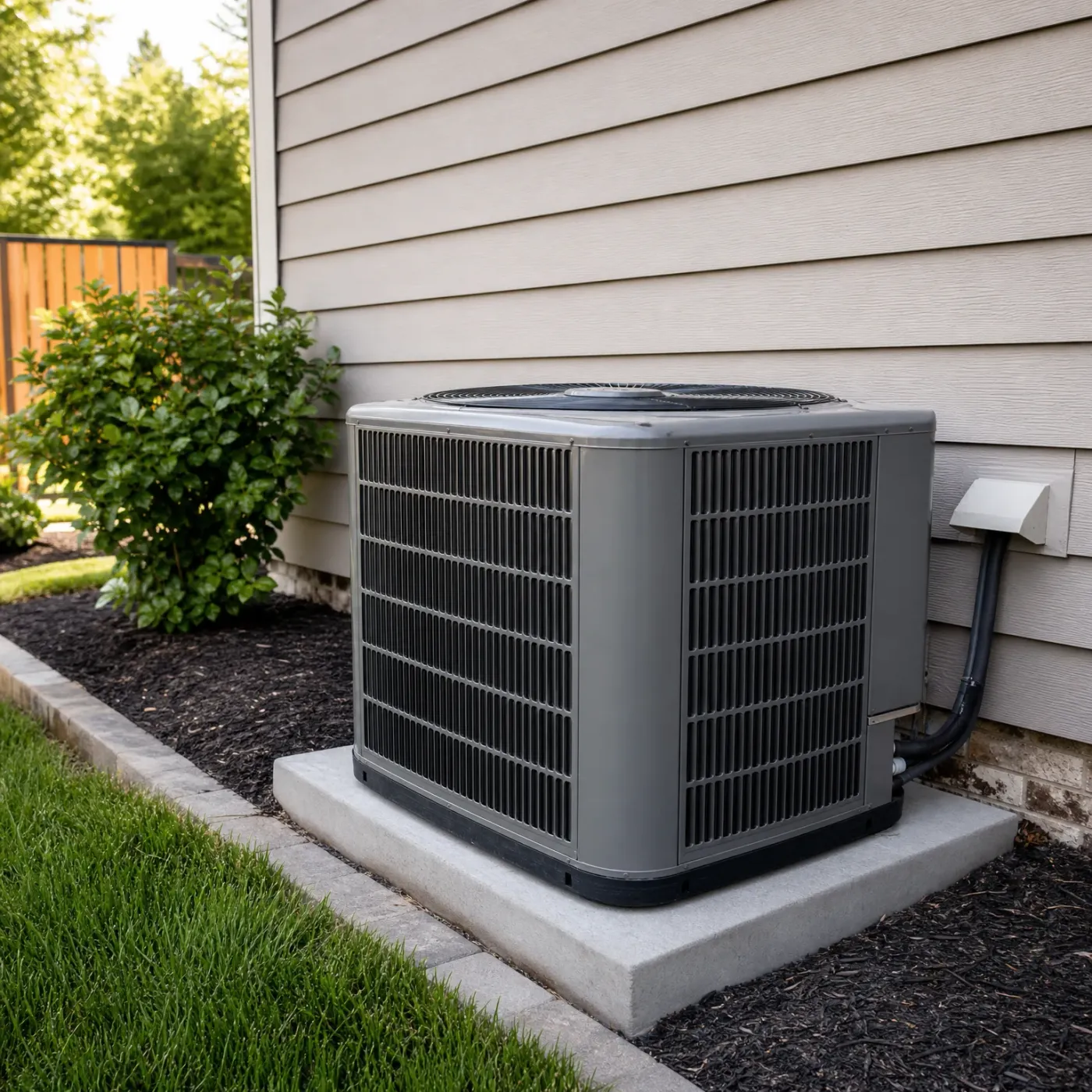
A gray outdoor air conditioning condenser unit on a concrete pad beside a house with horizontal lap siding, with a wall-mounted disconnect box and conduit, and shrubs to the left.
A clean coil like this moves air the way it was designed to, so dust that gets pulled in keeps moving to the filter instead of settling.
An outdoor air conditioning condenser unit on a concrete pad beside a house with horizontal siding and a concrete foundation, with dry brown leaves on the ground to either side.
Caked like this, the coil can't shed heat right, and dust sitting in that grime is a sign of a unit that hasn't been serviced in a while.
  1. Air pulls through the filter before it ever reaches the coil.

  2. A loaded filter lets fine dust slip past the edges.

  3. That dust settles on the blower wheel and the coil.

  4. Built-up dust then sheds back into the air you breathe.

Why does my AC blow dust right when it kicks on?

You've noticed it happens right at startup, that first gust from the vent carries more dust than the steady airflow after. It's not your imagination, and it's not random. The timing tells you something specific about what's sitting inside the ductwork and the unit itself, and why that first second of airflow is different from the rest of the cycle.

The first blast of air dislodges dust that settled since the last cycle

Between cycles, the blower sits still and any loose dust in the ducts and on the blower wheel settles out, the way dust settles on a shelf. When the system kicks on, that first rush of air picks up whatever gathered there and pushes it straight out the vents. Once the air's been moving for a minute, there's less loose dust left to grab, so it tapers off. In Utah's dry air, more dust stays airborne and loose instead of clumping, so there's more of it ready to move the moment that blower starts. A dirty filter or a dusty coil behind it feeds that pile faster between cycles.

An outdoor air conditioner condenser unit on a concrete pad beside a house with beige horizontal siding and a stone-veneer base, with refrigerant lines running to a gray wall-mounted electrical box, surrounded by dark mulch, a flowering shrub and an evergreen on the left.

Maintained unit

This condenser is clear and the pad around it is clean. Airflow moves through the coil the way it was designed to, so the filter keeps doing the catching and the house stays ahead of the dust. A unit checked once a season tends to stay in this shape.

An outdoor air conditioning condenser unit on a concrete pad beside a house with light vinyl siding, an electrical disconnect box and conduit on the wall, bare shrubs and mulch to the right, and a concrete walkway in the foreground.

Neglected unit

Nothing here looks broken, and that's the problem. A coil that never gets looked at keeps running dirty long before it ever trips a breaker or stops cooling. By the time dust is visibly coming through your vents, this unit has been working that way for a while.

An older woman with gray hair in a cream knit sweater sits under a blanket on a sofa by a window, looking outside toward yellow-leaved trees, with a lamp, shelves and an armchair in the room behind her.
A gray-haired woman in a chunky knit sweater sits in an armchair with a blanket, looking out a window at yellow autumn foliage, with bookshelves and a potted plant behind her.
A gray-haired woman in a navy sweater sits in an armchair with a knit blanket beside a window, looking out at yellow autumn foliage, with a dining table and houseplant in the room behind her.
A gray-haired woman in a gray cowl-neck sweater sits in an armchair with a blanket, looking out a dark-framed window toward yellow autumn trees.
A gray outdoor air conditioning condenser unit on a concrete pad beside a house with horizontal vinyl siding, with mulch, a shrub, and lawn nearby.

The right pro for this job

One form instead of hunting for a pro who does air conditioner tune-ups.

Describe your air conditioner job, and a local pro who handles it gets in touch.

Skip the search

You only hire the pro if you want to.

Seasonal Check or Guesswork

Skip the seasonal check

  • The filter keeps loading past the point it can catch fine dust, and nobody notices until vents are blowing it visibly.
  • A coil that never gets inspected can go a full summer collecting dust and pollen behind the filter without anyone knowing.
  • If the blower wheel picks up a dust coating, it stays there until someone opens the unit and looks.
  • You're left guessing whether the dust is the filter, the coil, or something else, with no one who's seen the inside of your system to tell you.
  • Finding a contractor on your own means calling around, explaining the same problem more than once, and comparing quotes with no way to know who actually checks coils and blower wheels versus who just swaps a filter.

Get matched for a seasonal check

  • A contractor who looks at the coil and blower wheel once a season catches buildup before it sheds back into the air.
  • Being matched means someone who covers your part of Utah reaches out to you directly, instead of you working down a list of numbers.
  • You explain the dust problem once, to the contractor who's actually going to look at your unit.
  • A tech who's already seen your system knows what it looked like last time, so this season's check isn't starting from zero.
  • You get paired with someone suited to your setup instead of sorting through quotes to guess who's a good fit.
A single-story house with gray vinyl siding, dark shingled gable roofs, and white-trimmed windows, set behind a partly dry green lawn under a clear blue sky.

A dew point averaging 41°F across June, July and August, measured from where homes sit around the state, tells you the air moving through your system is dry, not heavy. Dry air doesn't weigh down dust the way humid air does, so loose particles stay airborne longer and ride the airflow straight toward your filter and coil instead of settling out in the yard. That's part of why Utah systems load up with fine dust faster than the same unit would somewhere muggier. A filter doing that job all summer needs checking more often than the box it came in suggests, or the dust it's holding starts finding its way back into the house.

NASA POWER T2MDEW county cells weighted by homes

Notice it worse on the dresser, not just the vents

You run a cloth over the dresser or the TV stand and it's gritty again in a couple of days, faster than it used to be. Maybe you've started sneezing more in the evenings, or the dog's been scratching at the vents. A film shows up on the ceiling fan blades too. None of that means your house is dirty. It means the system is moving air through a filter and coil that aren't catching what they should, so the dust passing through ends up back in the room instead of trapped where it landed. Left alone, that's more dusting, more allergy flare-ups for anyone sensitive in the house, and a blower wheel doing more work than it needs to.

An outdoor air conditioner condenser unit on a concrete pad beside a house with light horizontal lap siding, with an electrical disconnect box and conduit on the wall behind it.
Before you get your air conditioner maintenance
An outdoor air conditioning condenser unit on a concrete pad beside a house with white horizontal lap siding, with an electrical disconnect box and insulated refrigerant line on the wall and a shrub over mulch to the right.
After you get your air conditioner maintenance

1 filter vs. none

A furnace filter only catches what passes through it. Checking it every month during the summer run catches the point where it's loaded and no longer trapping fine dust.

Get a local pro

41°F average dew point

That's how dry summer air here stays. A coil inspection checks whether dust is building up where dry air can't help settle it out on its own.

Get a local pro
A woman in a cream knit sweater sits in an armchair with her eyes closed near a window showing yellow autumn foliage, with a mug on a round wooden side table beside her.
A gray-haired man with a beard in a blue button-placket shirt reclines on a couch with his eyes closed, beside a sunlit window with a green plant.

Power costs 13.02 cents per kilowatt-hour statewide

At 13.02 cents a kilowatt-hour, running the blower longer than it needs to doesn't cost much here, so a dirty filter or coil can drag on for weeks before the bill makes anyone look. Nothing stops the dust until someone actually checks the unit.

EIA-861 2025 statewide residential average

A gray outdoor air conditioner condenser unit on a concrete pad beside a house with white horizontal siding and a brick foundation, with a wall-mounted disconnect box and conduit, and a green shrub with mulch at left.

Unit running clean

Nothing on the grille or the fins. Air moves through the coil the way it was built to, so the filter keeps catching what it's supposed to catch instead of letting dust slip past into the house.

An outdoor air conditioning condenser unit on a concrete pad beside a house with white horizontal vinyl siding, with a gray electrical disconnect box and refrigerant lines on the wall behind it.

Unit caked with grime

The grille and top cover are gray with buildup, not just a little dust but a layer of it packed in. A coil that dirty has been sitting past due for a look, and the dust you're seeing inside is coming from somewhere like this.

A woman in a cream sweater and jeans stands in the open doorway of a white stucco house, holding the dark door, while a man in a dark quilted jacket seen from behind walks toward the entry past potted plants.

The dust stops when the unit gets checked

A filter that's done its job, a coil that's clean, a blower that's not shedding grime back into the air you breathe. That's the whole answer. Utah's dry air was always going to carry more loose dust than somewhere humid, but the system is supposed to be built to handle that, and it only does when someone's looked at it recently.

You don't have to be the one who tracks down who does this. Finding a contractor, calling around to compare, explaining the same vents-blowing-dust story more than once, sorting through quotes that don't match up. That part can go to someone else. What's left for you is getting matched with a contractor who knows what a Utah summer does to a system like yours, and having them reach out to set it up.

A living room corner with a beige sofa and cushion, a round wooden coffee table holding a pale ceramic vase of eucalyptus stems and a wooden bowl, and a curtained window with a potted plant above a latticed radiator cover in the background.
At dusk, a dark board-and-batten house with a standing-seam metal roof and lit entry walkway of stone pavers, with two large outdoor heat pump units on a stone-walled pad at right and trees and hills in the background.

Air Conditioner Maintenance

An air conditioner pro near you

Tune-up, service, or cleaningCentral ACUtah
Step 1 of 2

What ZIP code is the job in?

  • A brown leather and wood armchair with a cream knit throw sits in a corner beside a woven basket holding a dark cushion, under a framed mountain photograph, with a wood-trimmed window showing yellow and green foliage.
    • A dark wood dresser against a pale wall holds a ceramic vase of eucalyptus branches, a stack of books with a wooden bowl, and a woven basket, with a framed landscape painting above and a woven basket holding a knit blanket on the floor beside a window.
      • One request and finding someone for the tune-up is handled.
      • Once you send the form, finding a pro is off your list.
    • A window seat with beige linen and brown textured cushions, a chunky knit blanket, and an open book, beside a window showing blurred yellow autumn foliage.
      • Fill out one form instead of calling around for an air conditioner tune-up.
      • Fill out one short form instead of calling around.
    • A cream upholstered armchair with a rust-colored pillow and knit fringed throw sits beside a window with a ceramic vase of orange-leafed branches on the sill, overlooking autumn trees and leaf-covered ground.
      • A licensed local pro takes the request for your air conditioner tune-up.
      • The pro who reaches out is licensed in Utah.