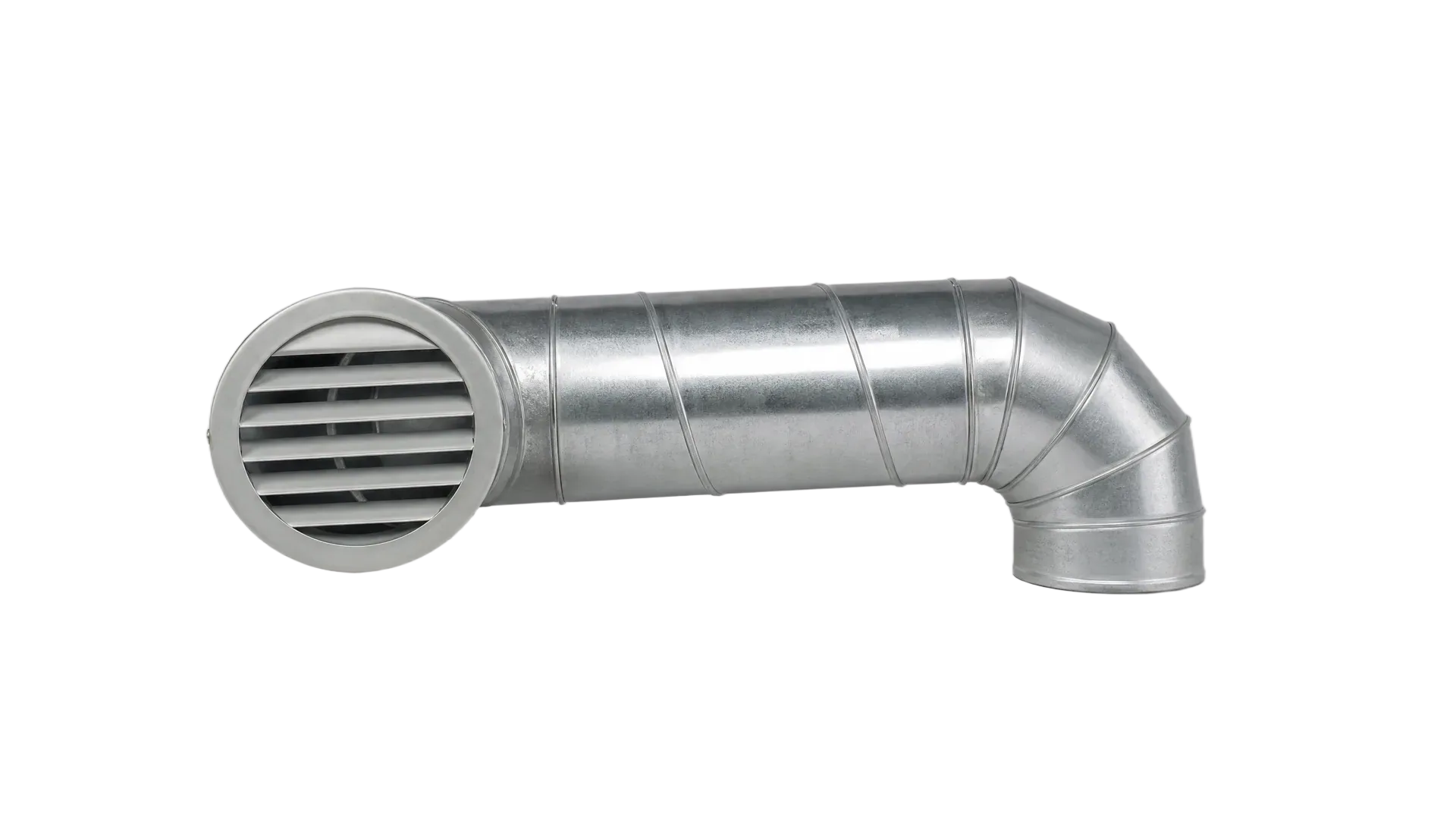
Ducts running clean
Metal ductwork like this should look dry and bare, with no streaking or dust clumps around the seams. Air moving through it carries no smell. A basement like this stays dry enough that mold has nothing to grow on.
Utah summers are hot and dry, which usually keeps mold off most people's worry list, so finding a musty smell coming from the vents or dark spots around a register catches homeowners off guard. You keep the house up, and you want to know whether what you're noticing is actually mold or something else before you decide what to do about it.
The smell is usually the first sign. Mold growing inside the ducts puts a musty odor into the air every time the system runs, and it tends to fade when the blower is off. Dark specks or a fuzzy coating around the supply or return vents are the next thing to check for, since that's where moisture collects and where you can actually see the duct interior. Some people notice allergy symptoms that get worse indoors and ease up outside. Utah's dry summers mean the air itself isn't the moisture source. A duct system grows mold when water gets in some other way, through a leak, condensation at the coil, or a return pulling air from a damp crawlspace. The smell and the spots point to a problem that needs a closer look.

Metal ductwork like this should look dry and bare, with no streaking or dust clumps around the seams. Air moving through it carries no smell. A basement like this stays dry enough that mold has nothing to grow on.

At a junction like this, dust and moisture collect where the metal seams meet. Dark spots or a musty smell near a joint or register mean something is growing inside, not just settling on top of it.




A musty smell in the ducts is not something to sit on, even in a dry climate like this one. Mold needs moisture, and once it finds a damp spot inside metal ductwork, dry outdoor air in Salt Lake City or St. George doesn't reach it. It just keeps growing and blowing through the vents every time the system runs. Cleaning the ducts is the only way to deal with mold that's already inside them. A contractor who handles duct cleaning around Utah all year knows where these homes tend to get damp inside the ductwork, whether that's a crawlspace tie-in or condensation near the air handler, and what to check first. Submitting your information here gets your situation in front of one local, licensed contractor, not a handful of companies competing for the job. They'll reach out to you directly once they have what they need to look into it.
Utah's dry air doesn't stop mold if water gets into the system some other way. A condensate line that drains slowly, or backs up, leaves standing water right at the coil, and that water sits inside the ductwork long after the air outside has dried out. A duct that runs through a crawlspace can also pick up ground moisture through a loose seam or a gap in the insulation wrap. Once that moisture is inside the metal, the dry summer air moving past it doesn't reach it. The mold keeps the damp spot it started with, no matter what the thermometer says outside.
A gas furnace with properly sealed ductwork shouldn't be feeding outside air into the system at all, damp or otherwise. The air moving through the registers should be air that already passed through the furnace and the filter, nothing pulled in from a crawlspace or attic along the way. Gaps at the seams or a disconnected section change that, letting in whatever moisture is sitting in those spaces. A duct system that's sealed the way it should be gives mold nowhere to start, no matter how dry it is outside, because there's no outside air getting in to begin with.
At 13.02 cents per kilowatt-hour, running the blower longer to chase a musty smell doesn't hit your bill hard. That gives you room to let a contractor run the system during inspection and cleaning without watching the meter, so the actual mold gets found and cleared instead of guessed at.
EIA-861 2025 statewide residential average
A musty smell from the vents, dark spots around a register, or dust that clumps instead of sitting loose are the signs that point to mold in your ducts, not just dry Utah air stirring up dust. The dry climate here doesn't cause it. Water does, whether that's a slow condensate line, a leaky duct pulling in damp air from a crawlspace, or a basement that holds more moisture than the rest of the house. Once mold has a damp spot to grow on, sealed metal ductwork keeps it fed and keeps it hidden, no matter how hot and dry it is outside. Checking it yourself only goes so far, since most of the duct run sits behind walls and above ceilings where you can't see it. A contractor who works on ductwork around Salt Lake City or St. George knows where moisture tends to collect in homes built here and can get into the parts of the system you can't reach on your own.


Matched to your ductwork job
Your duct cleaning request goes to one local pro.
