Utah HVAC Pros

Signs of leaky ductwork in Ogden, UT

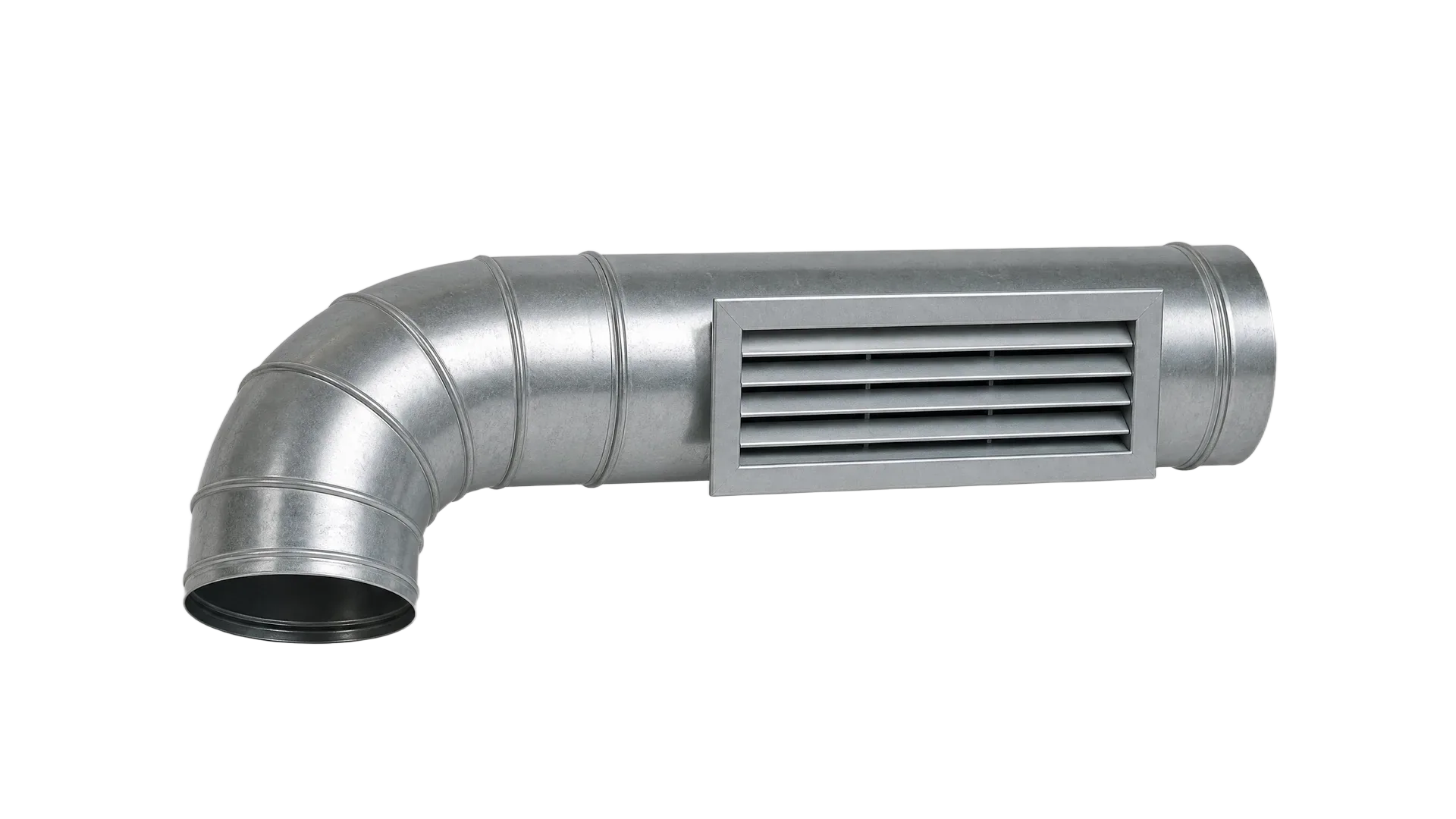
A galvanized steel round duct section with a 90-degree elbow and a rectangular louvered grille on its straight run, shown against a plain gray background.
Connect with a pro

Leaky ductwork usually shows up as rooms that never feel right. One bedroom runs hot while the rest of the house is fine. Your system runs longer than it should to hit the thermostat setting. You might notice dust coming through the vents, or feel warm air leaking from duct joints in the attic or crawlspace. A summer power bill that jumps more than the heat alone explains is another sign, since cool air you paid for is leaking into the attic instead of your rooms. In winter, the same gaps let furnace heat escape before it reaches the register, so the furnace runs longer to keep up through the cold months. Ducts leak at the seams and connections first, where sections join or where someone cut in a branch line. Once a joint opens, it stays open and gets worse, not better. If two or more of these signs sound familiar, the duct system is worth having looked at before another season of hard heating or cooling runs through it.

Unfinished basement with concrete floor and walls, exposed wood joists, steel support posts, and large galvanized sheet-metal ductwork running to a furnace or air handler against the far wall.
Sealed joints and tight connections along this run mean the air your furnace heats stays inside the ducts until it reaches the vent.
Galvanized sheet-metal ductwork and round pipes run along a wooden floor joist ceiling above a bare concrete wall and floor.
Gaps like this between joist bays let heated air spill into the basement instead of your living space, so your furnace runs longer for less.

How Duct Leaks Actually Happen

  • A duct leak at a joint near the furnace loses conditioned air before it ever reaches a single vent.
  • Flex duct sags between joist bays and that low spot traps air and slows delivery to the rooms at the end of the run.
  • Return leaks pull hot attic or crawlspace air into the system and your furnace ends up heating air it already lost.
  • A disconnected duct in a crawlspace or attic can dump air there instead of the room it was meant for.
  • Supply and return leaks behave differently: supply leaks waste heated air, return leaks pull in unconditioned air and make the furnace work against itself.
  • Mastic sealant and metal tape hold up over time on ductwork; ordinary cloth duct tape dries out and lets joints open back up.

Every duct run has joints, and every joint is a place air can escape. Near the furnace, pressure is highest, so a loose joint there loses more air than one further down the line. That air is gone before it ever reaches a vent, so no room gets credit for it. Flex duct adds its own problem. It runs through joist bays and over time it sags, and a sag acts like a low point in a drain line. Air has to push through that low spot before it can reach the rooms at the end of the run, and a lot of it never makes it. Return ducts leak too, and they fail differently than supply ducts. A supply leak loses air you already paid to heat or cool. A return leak pulls in hot attic air or crawlspace air and feeds it straight into the furnace, so the system is working against air it just has to heat all over again. In a crawlspace or attic, a duct can come apart at the connection entirely, and when that happens, it dumps air into that space instead of the room it was built to serve. What holds a duct together matters too. Mastic sealant and metal tape are built to stay flexible and stuck through years of temperature swings. Ordinary cloth duct tape dries out, the adhesive lets go, and the joint opens back up.

Why would duct leaks be worse in your house than your neighbor's?

  • Half the homes here were built by 1984

    Half the homes in Weber County were built in 1984 or earlier, so duct runs that old have had decades to work loose at the joints.

  • Heat runs September through June

    Heat runs here from September through June, about ten months a year, so a leak keeps losing you conditioned air almost every month on the calendar.

  • Cooling runs July through August

    Cooling only runs July and August here, so a leaky duct wastes less of your money in summer than it does the other ten months of the year.

ACS 2020-2024 · NOAA nClimDiv 1991-2020

Galvanized sheet metal HVAC ductwork and insulated flexible ducts running along a wooden-joist ceiling beside a plain light-colored wall.

How much air leaks out

A duct system that leaks at the rate many older homes do can lose a quarter of the air moving through it before it ever reaches a vent. That air doesn't vanish. It goes into the attic or the crawlspace, places your furnace was never meant to heat. Your system keeps running to make up the difference, because the thermostat only knows the temperature where it sits, not what's actually reaching the rooms down the hall.

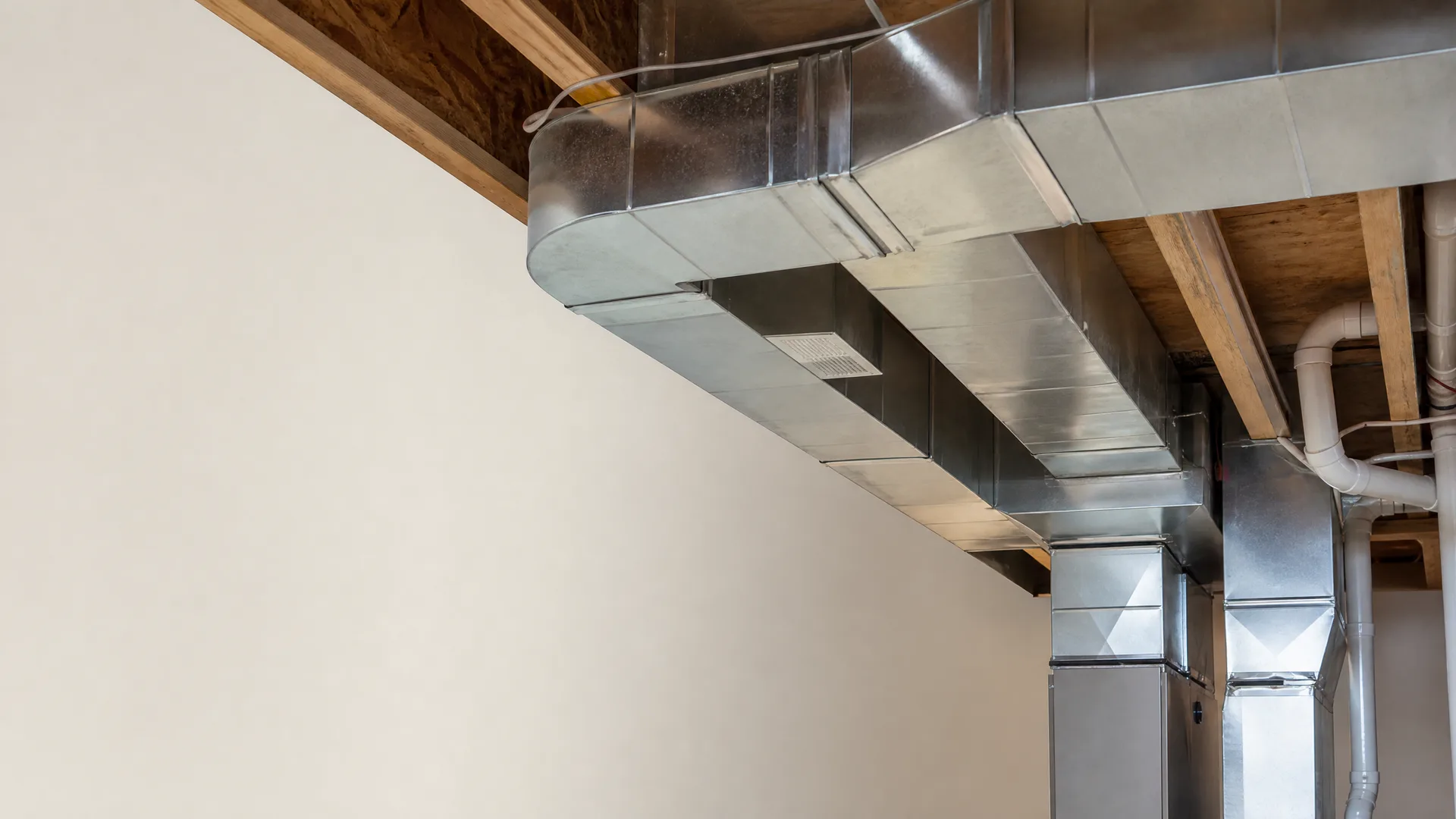
Galvanized sheet metal HVAC ductwork running along a wood-joist ceiling beside a plain light-colored wall, with white pipes nearby.

Where the leaks tend to start

Metal ducts expand and contract every time your furnace cycles on and off, all winter long. Over enough winters, the mastic or tape at a joint dries out and pulls away, and that joint opens a gap. Flex duct fails differently. It sags where it's been strapped too loosely, and that low spot collects air and slows it down rather than losing it outright, which is its own kind of problem for the rooms past that point.

Where Your Ducts Run Matters

Attic and crawlspace ducts

  • A run through an unconditioned attic can swing 30 or more degrees hotter than the house in July, so any leak there dumps that heat straight into the duct.
  • Crawlspace ducts sit close to the ground, and a loose joint underneath can pull in damp, musty air that ends up blowing through your vents.
  • These runs are harder to reach, so a leak can sit unnoticed for years while the furnace works to make up for it.
  • Insulation wrapped around attic ducts hides the metal, so a separated joint underneath won't show until someone pulls the wrap back.
  • Supply runs that cross a long attic or crawlspace lose more air per leak just from the extra length of ductwork involved.

Ducts inside the house

  • A duct run between floors or inside a wall stays closer to room temperature, so a small leak there loses less heat than the same leak in the attic.
  • Leaks here often show up faster because the air escapes into a closet or a wall cavity near where you live, not somewhere you rarely go.
  • A joint behind a basement ceiling panel is usually easy for a contractor to open up and inspect without cutting into drywall.
  • These runs are shorter on average, so there are fewer joints between the furnace and the vent where a seal can fail.
  • A leak in a wall chase can sometimes be heard as a faint hiss near the vent, something an attic leak rarely gives you a chance to notice.
Unfinished basement with bare concrete floor and walls, exposed wood joists, metal ductwork, a furnace unit, steel support posts, and a small window.

Ductwork sealed and running clean

These ducts run tight across the joists with no gaps at the joints. Air moves from the furnace straight to the vent, so the basement stays out of the equation and the rooms upstairs get what the furnace actually produced.

Empty basement with bare concrete walls and floor beneath an exposed wood-joist ceiling carrying galvanized sheet-metal ductwork, round ducts and pipes.

Ductwork losing air along the run

This duct sits exposed along the joist bays with seams that have had time to work loose. Air escapes into the basement before it reaches the vent, and the rooms it was meant to heat run short while the furnace keeps working to make up for it.

An older man with gray hair and a beard stands in a doorway of a home, wearing a dark coat dusted with snow, with a lit fireplace and lamp visible in the blurred room behind him.
A bearded older man in a dark snow-dusted coat and scarf stands just inside a home's front door, with a lamp-lit room and snowy window visible behind him.
An older man with gray hair and a beard wearing a dark snow-dusted coat stands in a home entryway, with a lamp-lit living room and a wooden staircase behind him.
An older man with gray hair, a dark coat and scarf dusted with snow stands in a warmly lit entryway with an open wooden door, a table lamp, framed pictures, and a plant in a vase.

A local pro for your ductwork cleaning

A licensed pro who works in Weber County gets your request.

You're not committing to anything by asking.

What it does to your bill

Power here is cheap, but gas is doing most of the work all winter, and a leaky duct makes your furnace run longer to reach the same setting on the thermostat. That extra runtime shows up on your gas bill before you ever see the leak itself. With heat running from September through June, a few months of that adds up. You end up paying to heat air that's warming your attic or your crawlspace instead of your living room.

What it does to the house itself

Air pushed into your attic or crawlspace through a leaky joint carries moisture with it. In a crawlspace that moisture sits against the floor joists and the insulation underneath your floors. In an attic it works against the roof deck. Neither spot was built to handle warm, damp air blowing into it all winter. You may never see it happen, but it's working on the house while your living room stays a few degrees short of where you set the thermostat.

A woman wrapped in a thick cream knit blanket sits in a chair with an open book on her lap, beside a lit table lamp and a frost-covered window at night.
A bearded man in a plaid flannel shirt stands indoors looking out a condensation-covered window at a snowy landscape, with a speckled mug on the sill and kitchen shelves behind him.

Power here costs 13.52 cents per kilowatt-hour

At 13.52 cents per kilowatt-hour, running your blower motor longer isn't what drives up a leaky duct's cost here. Gas is the one doing the work all winter, so the real loss from an air leak lands on that bill, not your electric one.

EIA-861 2025

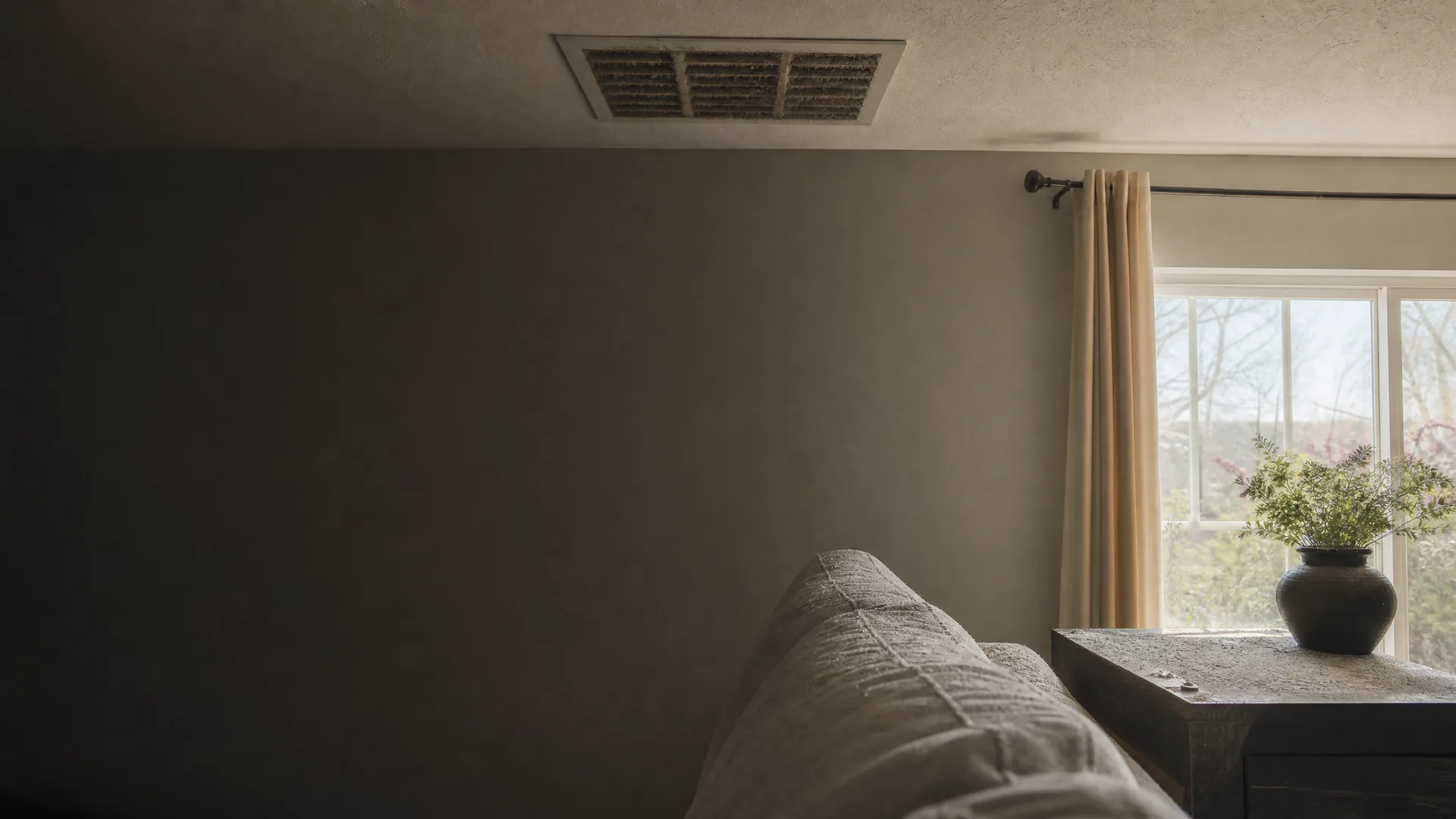
Dim interior corner of a room with a ceiling air vent, a beige wall, a cream curtain beside a window showing bare trees, and a dark ceramic vase of flowers on a wooden side table behind a light upholstered sofa back.

It's a quiet afternoon in April, warm enough that the furnace only kicks on once in a while. Light comes in low across the living room and catches it, a soft gray ring of dust on the ceiling vent grille, and a matching film settled on the bookshelf and the top of the TV stand underneath it. You run a finger along the shelf and it comes back dark. The vent hasn't blown anything in an hour, but the dust keeps showing up anyway, like it has somewhere else to come from. You make a note to wipe it down again before company comes this weekend, same as you did last month.

Is your furnace running more than it used to?

Check the floor vents in the rooms you use most. If the air coming out feels weaker than it does at the vent nearest the furnace, that's air leaving the duct before it gets there. Look at the basement ceiling near the ductwork for dust streaks or a gray film on the joists, a sign air is pushing out through a gap. Touch the duct itself where it runs through the crawlspace or attic. If it's noticeably warmer or colder than the air coming out the vent, something is leaking along the way. A thermostat that never seems satisfied, cycling on again a few minutes after it shuts off, often means the furnace is fighting to make up for what the ducts lose. Left alone, that's wear on a furnace that's already working longer than it needs to.

Basement ceiling with galvanized sheet-metal ductwork, wooden joists and subfloor, black and white pipes, above a concrete wall and floor.
Before you get your ductwork cleaning
Unfinished basement with bare concrete walls and floor, exposed wood joists, and galvanized sheet-metal HVAC ductwork and pipes running across the ceiling.
After you get your ductwork cleaning
Empty unfinished basement with bare concrete floor, insulated walls with vapor barrier between wood studs, exposed wood joists, galvanized sheet-metal ductwork, a recessed light, and a steel support column.

Ducts sealed and supported

These runs sit tight against the joists with foil tape holding every seam. The insulation behind them stays dry and in place, doing its job on the walls instead of catching dust from a leak above it. Air leaves the furnace and reaches the vent with nothing lost along the way.

Empty basement room with bare concrete walls and floor, exposed wooden floor joists overhead, large galvanized sheet-metal ducts with a vent grille, colored pipes, and a single lit bulb.

Bare metal, open seams

Exposed duct like this has no insulation around it and nothing covering the seams where sections meet. Conditioned air finds those gaps before it reaches a single vent upstairs, and the concrete walls and floor around it do nothing to stop the loss. The furnace just keeps running to make up for it.

A man with a duffel bag walks up a concrete path toward a white board-and-batten house where a woman stands in the open wooden front door, flanked by potted plants and black lanterns.

What it comes down to

A room that won't hold its temperature, a furnace that runs long, dust around the grille, warm air in the basement where there shouldn't be any. Any one of those points to the same thing: air leaving the ducts before it reaches the vent. You don't need all four to have a real leak worth fixing.

A local contractor who works on ductwork through a Weber County winter has seen what joints in houses your home's age tend to do, and where a run through a crawlspace or attic usually gives out first. Answer a few questions about your house and you'll be matched with one contractor, not a handful calling at once, who can look at your actual ducts and tell you what's really going on.

Interior corner of a living room with a beige upholstered armchair holding a textured pillow and throw, a eucalyptus arrangement in a ceramic vase on a wooden table in the foreground, a blurred glass-front cabinet behind, and a potted plant on a sunlit window sill.
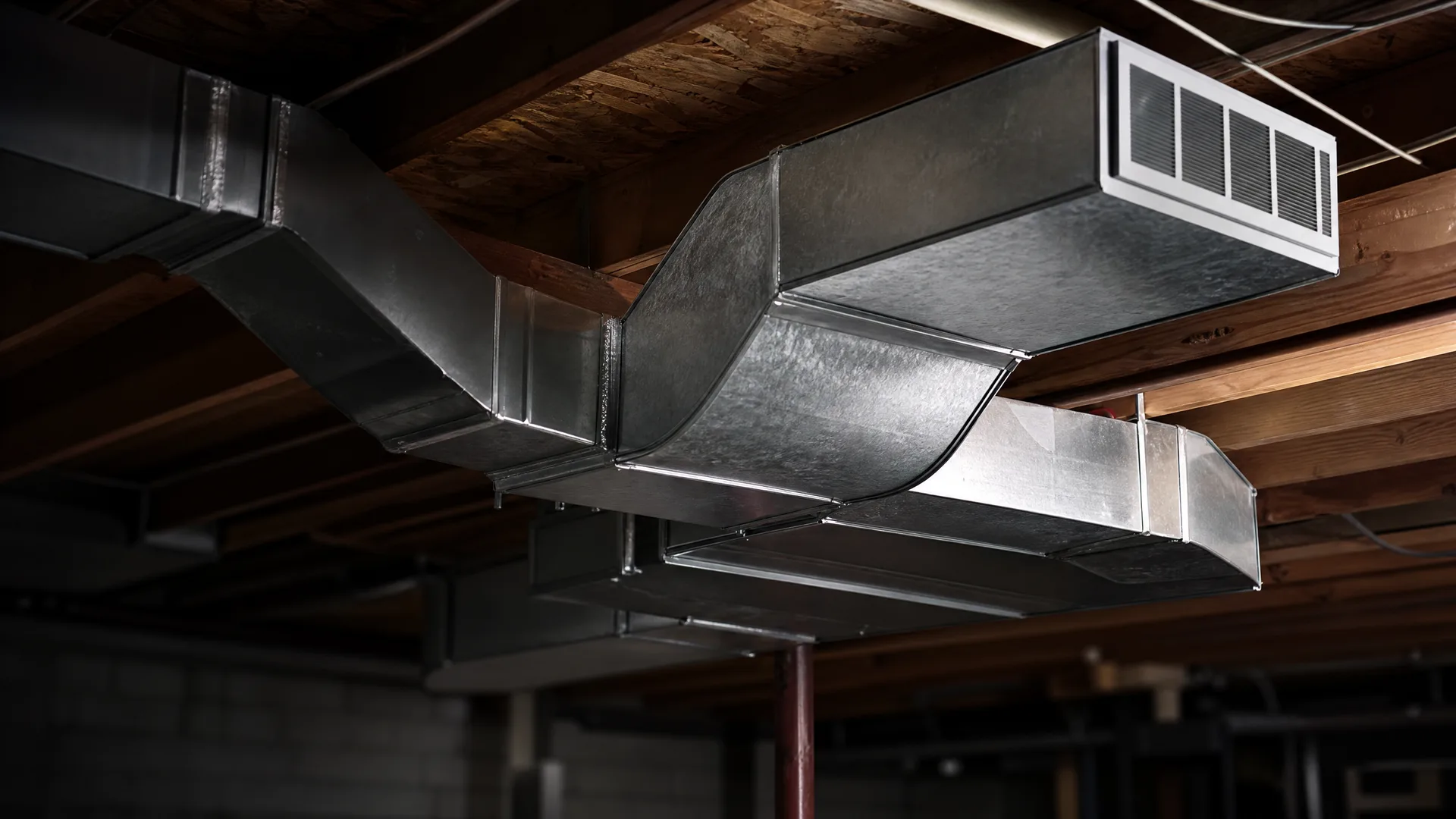
Galvanized sheet metal HVAC ductwork with a white vent grille, mounted against wooden floor joists in a dim basement with concrete block walls.

Get the right pro for your ductwork

Duct and vent cleaningDucts or ventsWeber County, UT
Step 1 of 2

What ZIP code is the job in?