How do I lower my heating bill this winter in Utah?
Gas prices don't move much year to year, so when the bill jumps in January, most of that increase is your furnace running longer, not rates going up. You want to know what actually brings the number down before the cold months get deeper, and whether that means a new thermostat, a new furnace, or something cheaper than either.
Get the furnace serviced before the cold sets in
A furnace that hasn't been serviced works harder to put out the same heat. A dirty flame sensor, a clogged filter, or burners that aren't firing clean all make the furnace run longer to reach the temperature on your thermostat, and that extra runtime is what shows up on the gas bill. Utah winters ask a lot of a furnace from November through February, so small losses in efficiency add up over those months. Servicing before the heavy cold hits catches those problems while they're cheap fixes instead of mid-winter breakdowns. It won't change what gas costs per therm, but it changes how many therms your furnace needs to burn to keep the house warm.
1
Cold air returns through ducts and hits the filter first.
2
A clogged filter makes the blower work harder to push air.
3
The igniter lights the burners once the thermostat calls for heat.
4
The heat exchanger warms air before the blower sends it through ducts.
What a furnace running longer actually costs you
A furnace that's working harder than it should doesn't just raise the bill. It shortens its own life. The blower motor and igniter cycle on and off more often, and parts wear from cycling, not just from age. If your furnace already struggles to keep the house even, a few more winters of that strain is how a repair turns into a replacement.
You'd notice it in smaller ways first. A room that used to warm up fine now takes longer. Dust around the vents. A furnace that runs through most of the night instead of cycling off. None of that tells you exactly what's wrong, and tracking it down yourself means calling a few companies, describing the same symptoms each time, and weighing quotes that aren't quite comparable. Getting matched with a contractor who knows Utah furnaces skips that part. You describe the house once, and the right person follows up.
A furnace running clean
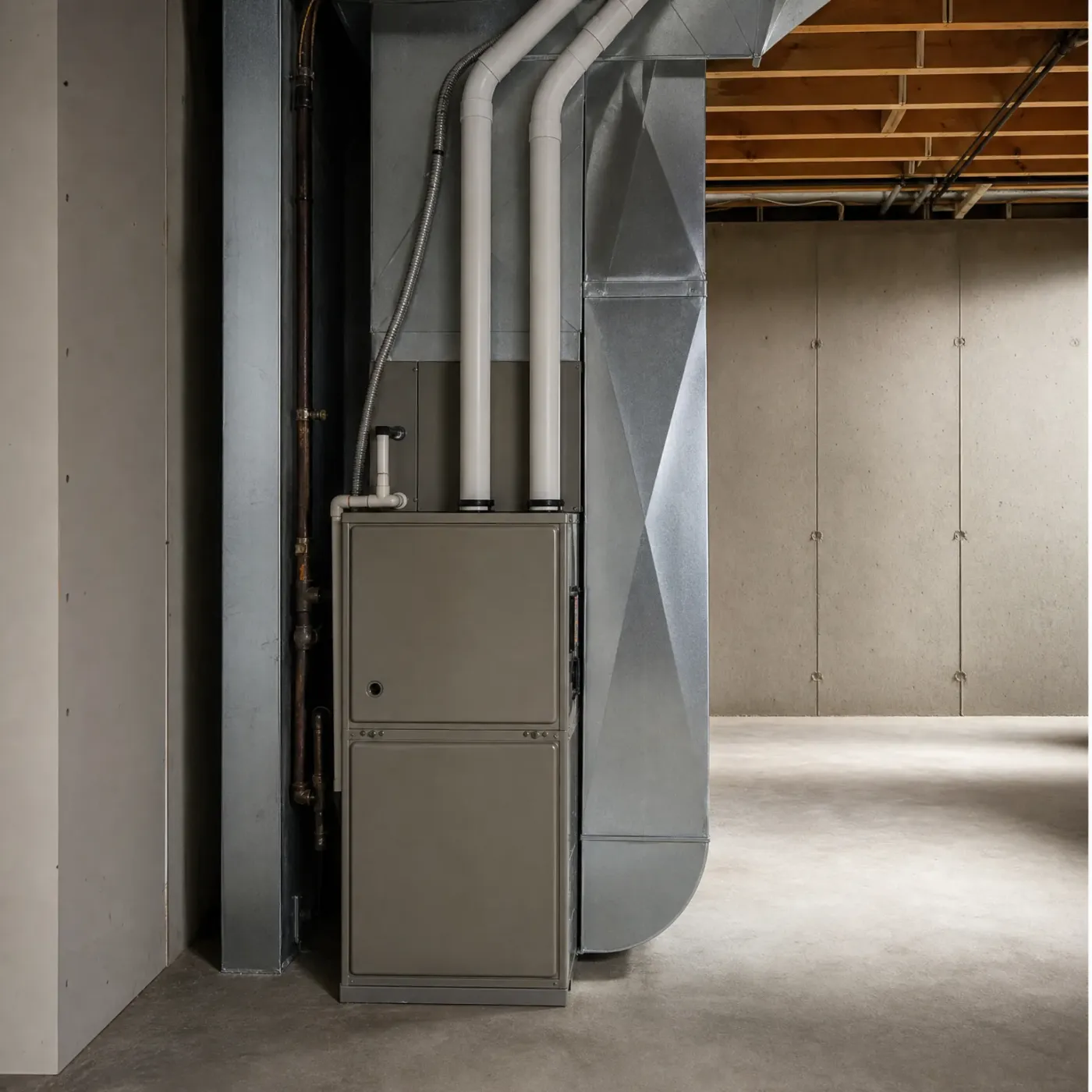
This is what a furnace looks like when it's not fighting itself. Air moves through the plenum the way it was designed to, the burners light on the first try, and the system shuts off again once the house is warm. Nothing here is working harder than it has to.
A furnace under strain
An older furnace like this one can still run fine, but it has less room for error. A dirty filter or a cycling igniter shows up faster in a cabinet like this than in a newer one. Left alone through a Utah winter, small problems like these turn into longer runtimes and higher bills.
You've seen what a furnace running clean looks like against one that's fighting itself all winter, and most houses in Utah fall somewhere in between. Finding out which side yours is on usually means calling around, explaining the same thing to three or four companies, and sorting through quotes that don't quite match up. That's the part worth skipping. Gas rates aren't going to change what you pay this winter, but a furnace that's been checked before the cold really sets in can. Submit your request here and it goes to one contractor who covers your area, not a stack of them competing for your attention. You still have a furnace drawing cold air through a dirty filter or an igniter that's starting to hesitate, and that doesn't fix itself by December. Getting someone out to look at it now is the straightforward part.
What a tune-up actually checks
A furnace tech checks static pressure to see if the blower is straining against a clog somewhere in the duct run.
Combustion analysis measures the exhaust to confirm the burners are getting the right mix of gas and air.
The flame sensor gets cleaned because a thin layer of carbon on it makes the furnace shut off seconds after it lights.
Blower wheel and motor get inspected since dust buildup there throws the airflow off even with a clean filter installed.
Gas pressure at the manifold gets checked against the manufacturer's spec, since too low or too high both waste fuel.
The condensate line and drain get cleared on high-efficiency furnaces so the system doesn't lock out mid-cycle.
A maintenance visit isn't someone glancing at the furnace and calling it fine. It's a set of checks that each catch a different way a furnace wastes gas or quits working. Static pressure tells a tech whether the blower is pushing air against resistance it shouldn't have to, which points to a clog somewhere past the filter. Combustion analysis reads the exhaust directly, so instead of guessing at the gas-to-air mix, there's a number to check against spec. The flame sensor is a small rod that tells the control board the burners are actually lit. Carbon builds up on it over time, thin enough you can't see it, and the furnace starts shutting itself off seconds after ignition because the sensor can't confirm a flame that's really there. The blower wheel collects dust on its own, separate from whatever the filter catches, and that buildup throws off airflow even when the filter is brand new. Gas pressure at the manifold has a spec from the manufacturer, and it drifts over years. Too low and the burners run cool and inefficient. Too high and the furnace burns more gas than the house needs. High-efficiency furnaces add one more part to check: a condensate line that drains the moisture the exhaust produces. If that line clogs, the furnace locks out mid-cycle and won't restart until it's cleared.
A furnace that runs a one hour cycle instead of forty minutes uses more gas every single day that stays cold outside.
Over a winter that runs December through February, that difference shows up on three or four gas bills, not just one.
Winter nights average 21°F statewide
At 21 degrees, your furnace isn't cycling on and off overnight, it's running long stretches just to hold the house steady. Weigh State climate data puts that overnight average across December, January and February. A furnace that's already strained somewhere has to work harder through nights that cold.
NOAA nClimDiv 1991-2020 county normals weighted by homes
A furnace that lights on the first try, moves air through a clean filter, and shuts off once the house is warm will cost you less every month from December through February than one that's straining through all of it. That's the whole answer. The static pressure check, the combustion analysis, the flame sensor cleaning, all of it exists to find out which one you've got before the cold settles in for good. What you don't know yet is whether your furnace is running the way it should, and finding that out yourself means calling a few contractors, telling each one the same thing about your system, waiting on quotes, and trying to judge which one actually knows what they're looking at. Getting matched with someone who services furnaces in your part of Utah skips that part. You still get a tech out to your house who looks at your ducts, your burners, your blower, and tells you straight what's driving the bill up. But you're not the one making four calls to find that person first.