
Why your AC vents are sweating in Utah
Why are my AC vents sweating?
You walk past a vent and feel damp carpet underneath, or you see water beading on the metal grille itself. It's not leaking from the ceiling, it's the vent that's wet. With Utah's dry heat outside, it seems backward that anything inside the house would be dripping with moisture, which is probably why it caught your attention in the first place.
Cold air hitting warm, humid air at the vent is causing condensation
The metal grille gets cold because of the air coming through it. When that cold metal meets warmer air in the room, moisture in that air turns to water right on the surface, the same way a glass of ice water sweats on a kitchen counter. This usually means the air coming out is colder than it should be, or there's too much humidity sitting right around that vent. In most Utah homes the air outside is dry, so vent sweating often points to something local to that room or that duct run rather than the whole house. Either way, water collecting on a vent over time can stain the ceiling or drywall around it, so it's worth having someone look at why that vent is running colder or wetter than the rest.




Just the Vent, or the Wall Too
Vent sweating alone
- The grille feels damp or you see beads of water on the metal, but the drywall around it stays dry and firm.
- This usually points to low airflow at that one vent, often a duct that was never insulated or a run that got crushed somewhere in the attic.
- A tech can check supply air temperature and duct insulation at that run without opening up ceiling or walls.
- If only one or two vents sweat while the rest stay dry, the fix is often local to that duct, not the whole system.
- Left alone, the moisture stays limited to that spot, but it will keep soaking the same patch of carpet or ceiling every time the AC runs.
Vent sweating with soft or stained drywall
- The ceiling or wall around the vent feels soft, sags, or shows a brown ring, which means water has been sitting in the material itself.
- This points to moisture that has been collecting for a while, not a one-time run of humid air through the ducts.
- A tech needs to check the duct, the insulation around it, and the condition of the framing and drywall behind it.
- Soft drywall around a vent can mean the moisture problem has outlasted one repair and is already affecting the structure.
- Waiting here risks the water spreading to insulation and framing nearby, which turns a duct fix into a larger repair.

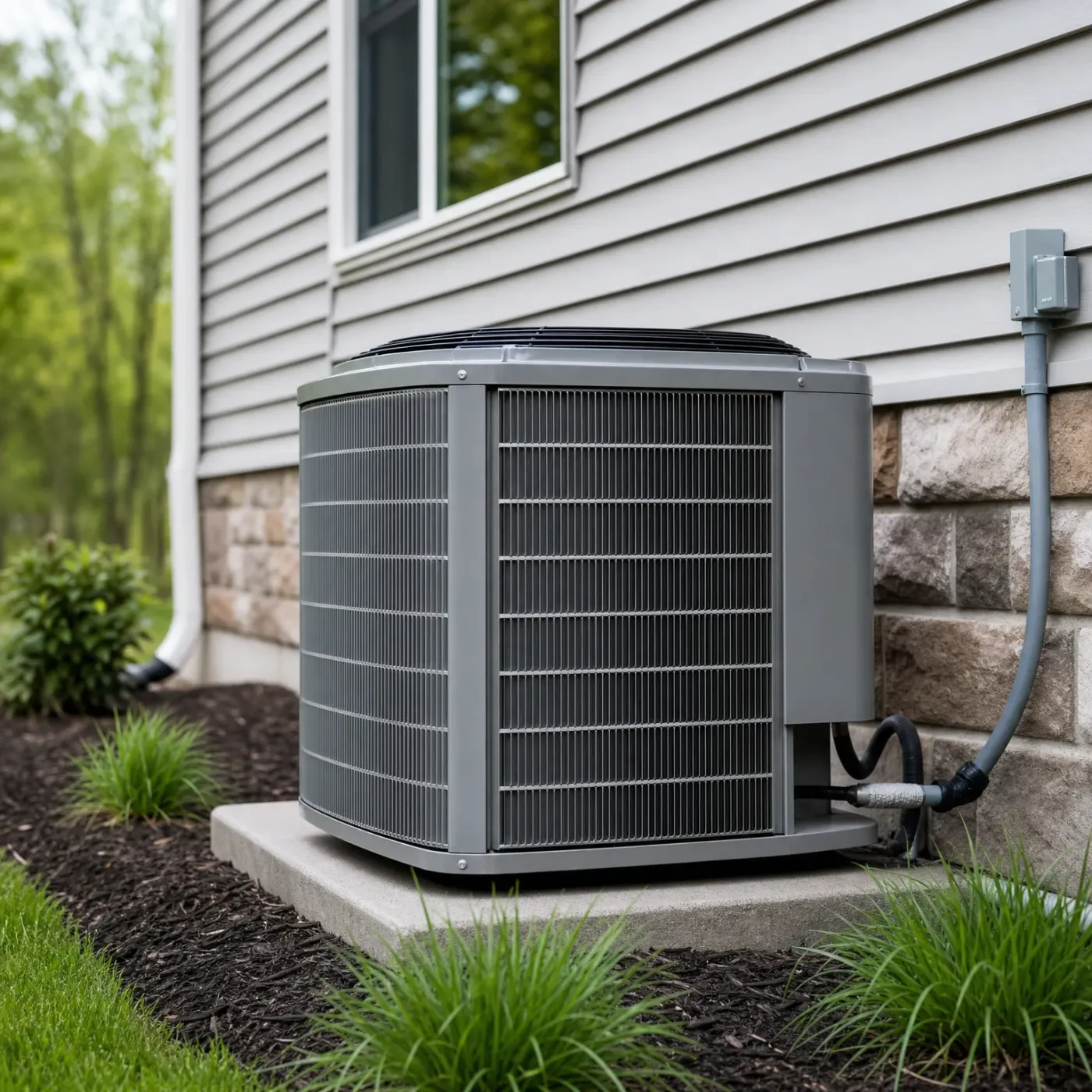
You're out back around eight, watering the last few feet of lawn before it gets too dark to see. The condenser sits against the fence, and you notice the fan isn't spinning. No hum, no air moving through the fins, just the cicadas and the hose running. You crouch down and feel warm air sitting in the unit instead of pushing out of it. Inside, the house has been getting warmer for the last hour, and now you know why. The sweating vents you noticed yesterday make more sense standing out here. Whatever's keeping air from moving through this system isn't a small thing anymore.
Is the moisture around your vent spreading?
Look at the vent closest to the one that's sweating, then check the ceiling or wall around it. A dark ring, a soft spot in the drywall, or paint starting to bubble means the moisture has been sitting there longer than a day or two. Peel back the carpet under a sweating floor vent and you may find the pad underneath already damp or starting to smell musty. If the vent sits near a closet, open it and check for the same musty smell on clothes or shelving. None of this happens overnight. A vent that's been sweating for a few weeks can soften the drywall enough that it needs to be cut out and replaced, not just dried off.


Hand off the air conditioner problem
Your request goes to one pro, not a list of companies.
After you send the request, you're done searching.
Sending the form costs nothing.



Utah air doesn't hold much moisture. Averaged across June, July and August, the dew point here runs about 41°F, a figure from NOAA climate data, and that's dry air by any measure. Your air conditioner wasn't built with that in mind. It's pulling cold refrigerant through the coil and ductwork regardless of how dry it is outside, and if a duct run near a vent lost its insulation or got crushed down to a narrow gap, that metal gets cold enough to sweat even when the air outdoors feels like a desert. The dryness doesn't stop it. It just means the moisture you're seeing at the vent came from inside your own house, not from the weather.
NASA POWER T2MDEW county cells weighted by homes


Cold air moves through your ducts well below the temperature of the air around it, and metal responds to that fast. At the vent itself, or in the plenum right above the air handler, the metal skin has almost nothing separating it from that cold airstream. If there's no wrap or insulation on that stretch of duct, the outside of the metal drops close to the air temperature inside it, often into the 50s. Room air hits that cold surface and gives up its moisture right there, the same way a glass of ice water beads on a humid day. Ducts that run through an attic or a crawlspace are worse, because the air around them outside the duct is warmer and holds more moisture than the conditioned room does. A duct wrapped in the right insulation keeps that metal skin closer to room temperature, so there's nothing cold enough to pull moisture out of the air. Once that wrap is gone, torn, or was never installed on a section, that spot becomes the one place in the house where the air meets metal cold enough to sweat.
Power costs 13.02 cents per kilowatt-hour statewide
At 13.02 cents a kilowatt-hour, running your air conditioner longer than it needs to shows up on the bill fast. A unit working to cool air around a dirty coil or a stuck fan draws more power the whole time it runs, not just while the vents sweat.
EIA-861 2025 statewide residential average
What the sweating tells you
- A sweating vent comes from warm, humid air meeting metal that's colder than the dew point around it, nothing more mysterious than that.
- Low airflow, a dirty coil, a failing fan or bare duct metal all lead to the same wet grille, so the fix depends on which one is happening in your house.
- A contractor who works on Utah systems all summer knows how often low airflow and duct sweating show up here, even with dry air outside.
- Letting it run shortens the list of what the moisture can touch before someone looks at it.
- One licensed, local contractor takes the call for your home, so you're not fielding quotes from three different companies while water sits on your drywall.
- Once you send the request, finding the right person for this stops being something you have to manage yourself.
A wet vent is warm air meeting metal that's colder than the dew point around it. That's the whole mechanism, whether it shows up as beads on the grille or damp carpet underneath. What causes the metal to get that cold varies. Sometimes it's a duct run that lost its insulation or got crushed in the attic. Sometimes it's a coil packed with dirt, holding cold air against the cabinet longer than it should. Sometimes the condenser fan outside has quit, and the system is running without the airflow it needs to work the way it was built to. Each of those needs a different repair, and guessing at it from the symptom alone usually means paying twice.
Someone who services air conditioners in Utah through the summer sees this pattern often enough to know where to look first. Dry air outside doesn't stop a duct from sweating if the airflow across it is wrong, and a local contractor who works these systems every season knows that better than a general search would tell you. Sending the request connects you with one licensed contractor for your home, not a handful of companies competing for the job while the moisture sits there. That's one call to make, one person to let in, and a problem that gets fewer places to spread the longer it waits.
Send one request and you're done looking
You're not committing to anything by asking.
A vent sweating today doesn't fix itself by tomorrow, and the drywall around it doesn't know to wait. Send the request and a licensed Utah contractor who works on these systems all summer takes it from here, so you're not the one tracking down who's free or sorting through a pile of callbacks.