Duct cleaning helps allergies when dust, pet dander, or pollen sitting in the ducts is part of what you're breathing. In Utah, that's a fair question to ask. Summers are hot and dry here, and dry air carries dust easily through a house. If your system has been running a lot, the ducts can hold on to a good amount of it.
It won't fix every allergy problem. If the dust is coming from somewhere else in the house, cleaning the ducts won't touch that. But if it's been a while since anyone looked inside your ductwork, or you've noticed more dust around the vents than you'd expect, it's worth finding out what's actually in there before you decide.
That's usually where this gets complicated. You start looking up duct cleaning companies, and you end up with a dozen tabs open, half of them with no real reviews, no way to tell who actually knows gas furnace systems like the ones most Utah homes run on. You call a few, explain the same thing each time, wait on quotes that come back different for reasons nobody explains. It takes an afternoon you didn't plan on spending this way.
Here, that part is handled differently. You're connected with one contractor, not a handful calling you back at once, someone local who works on duct systems through Utah's dry summers and cold winters and has a good sense of what usually turns up in them around here. You explain your situation once. No sorting through bids, no guessing which company actually shows up when they say they will.
From there, it's a straightforward conversation about what's in your ducts and whether cleaning them is going to make a real difference for your allergies.
Does duct cleaning help allergies in Utah
Dry air in Utah carries dust through a house easily, and if you deal with sneezing, itchy eyes, or a stuffed nose that gets worse indoors, it's natural to wonder if what's sitting in your ducts is making it worse. You want to know if cleaning them is actually going to change how you feel, not just make the house seem tidier.
It helps if dust and dander in the ducts are part of the problem, not the whole of it
Ducts collect dust, pet hair and pollen that blows through on the air your furnace and AC push around. Clean them out and you remove one source of what you're breathing, especially in a dry climate like Utah's where dust moves easily through a house all summer. But ducts are one source among several. Carpets, bedding and the air inside the rooms themselves hold allergens too, and a dirty filter will keep pulling dust back into clean ducts within weeks. If your system has sat with a clogged or old filter for a while, or you can see dust at the vents, cleaning is worth doing. If your main symptoms are year-round with no change after cleaning, something else in the house is likely the bigger source.
Ducts Moving Clean Air
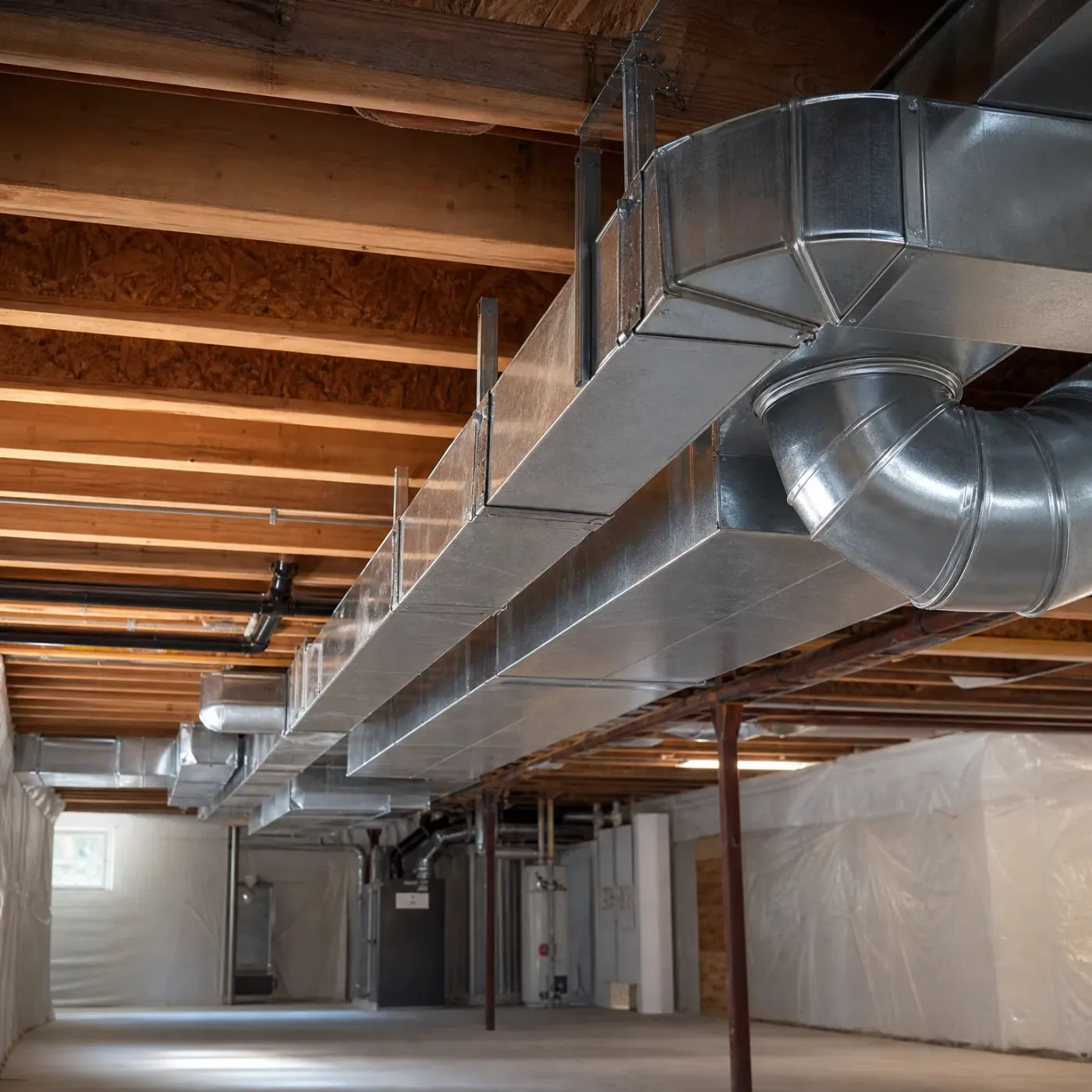
This is what a duct system looks like when it's not adding to the problem. Air moves through the metal and flex pipe without picking up dust along the way. The insulation along the walls stays dry, and nothing in the basement is feeding debris into the air you breathe upstairs.
Ducts Holding Onto Dust
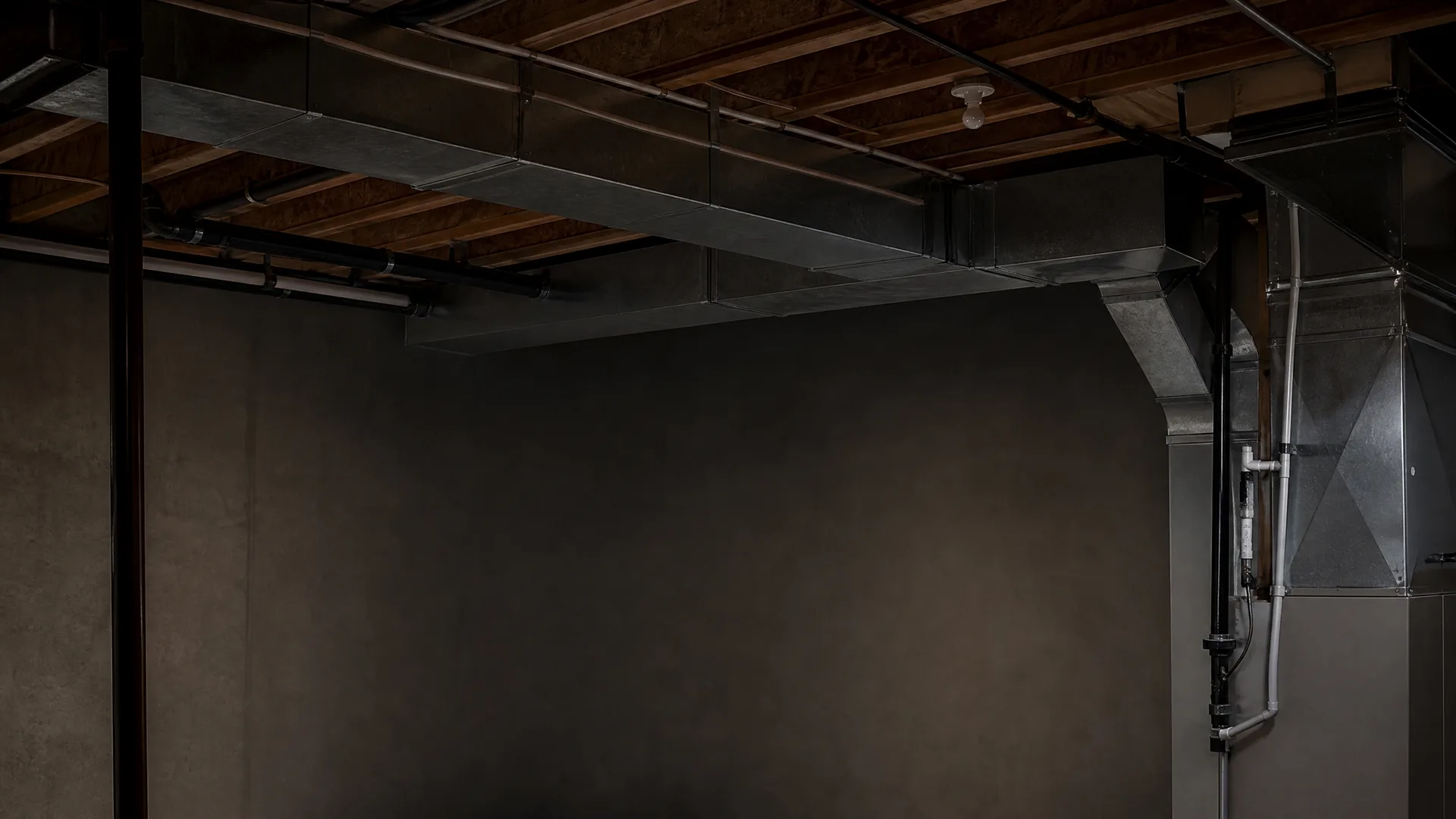
Bare concrete and exposed joists mean nothing is stopping dust from settling into the ductwork running overhead. Years of that buildup sit in the sheet metal, and every time the system kicks on, some of it moves through the house with the air. This is the setup worth a closer look.
Describe it once
Your request goes to one pro, not a list of companies.
Fill out one short form instead of calling around.
Asking costs nothing, and the choice to hire stays yours.
Air moves through clean metal duct and reaches every room without picking up dust on the way.
Standing water near the foundation can feed mold spores into nearby ductwork and send them through the house.
How a Duct Cleaning Actually Works
A duct cleaning crew runs a brush or whip through each branch line before a vacuum pulls the loosened dust back out.
The supply side carries dust and dander out to your rooms, while the return side pulls household air, and both get cleaned.
Negative pressure from the truck-mounted vacuum keeps dust from blowing back into the house while the brush works.
The furnace blower wheel and coil get wiped down too, since dust sitting on those spreads through every room it heats or cools.
A camera check of the main trunk line shows whether what's built up is dust or something wet growing on the metal.
Flex duct in a crawlspace or attic gets cleaned differently than metal trunk line, since it can't take a stiff brush the same way.
A crew works through the system one branch at a time, running a brush or an air whip down each line to knock dust loose from the metal before a vacuum draws it out. Both sides of your system get this treatment. The supply side is what delivers heated or cooled air to your rooms, and the return side is what pulls air back from the house to be filtered and conditioned again, so dust sitting in either one ends up in the air you breathe. While the brush is working, a truck-mounted vacuum holds negative pressure in the duct, so loosened dust gets pulled toward the vacuum instead of pushing out through your vents into the room. The furnace itself gets attention too. The blower wheel and the coil collect dust over time, and since every bit of air moving through your system crosses those parts, a crew wipes them down rather than stopping at the ductwork alone. Metal trunk line and flex duct don't get cleaned the same way. Flex duct, the kind often run through a crawlspace or attic, can't take a stiff brush without risking damage, so it calls for a gentler method. Some crews also run a camera through the main trunk line first. That shows whether what's built up is ordinary dust, which cleaning solves, or something wet growing on the metal, which points to a moisture problem that cleaning alone won't fix.
Before you get your ductwork cleaningAfter you get your ductwork cleaning
Dry climate, more dust in circulation
Utah's dry air keeps dust airborne longer instead of settling fast, so it has more chances to pass through your return vents and settle in the ducts themselves.
Power costs 13.02 cents per kilowatt-hour statewide
At 13.02 cents a kilowatt-hour, running the blower longer than it needs to run costs you something. Ducts clogged with dust make the furnace and AC work harder to push air through the house, and that extra runtime shows up on your bill.
EIA-861 2025 statewide residential average
Ducts Doing Their Job
A furnace like this sits on the basement pad and pushes air out through the sheet-metal plenum into round ducts running overhead. When the system is clear, air moves through that metal and flex pipe and reaches your rooms the way it left the furnace, without picking up dust along the way.
Ducts Sharing the Joist Space
These rectangular ducts run below the floor joists next to open wiring and across a bare concrete foundation wall. Nothing seals that space off from the duct runs. Dust from the joist bays and foundation can work its way into the duct seams and out through the register you see here.
Clean ducts won't cure allergies, but dirty ones can feed them
If dust and dander are sitting in your supply and return lines, a cleaning takes that source out of the air moving through your house. It won't touch pollen coming in through an open window or dander from a pet sleeping on the couch. What it does is stop your furnace and AC from pushing what's already built up in the metal and flex pipe back into every room, all winter and all summer.
You already know what it's like to deal with this on your own, checking reviews, calling a few companies, explaining the same thing about your ducts and your allergies to each one, then laying the quotes side by side to figure out who actually knows what they're doing. A local contractor who works on duct systems through Utah's dry summers and gas-heated winters has seen what usually collects in a basement furnace's ductwork and what it takes to clear it out. That's one call instead of several, and one answer instead of a pile of quotes to sort through.
One form, no calling around
Only one pro gets your request, so you hear from one company.