Mini Split Installation in Logan, UT
A new system here will heat from September through June and cool from July through July every year. Tell us about the house, and a licensed contractor who covers Cache County will get in touch.
Tell us about the job
It takes about a minute.
Logan asks a mini-split to heat far more than it cools
Winter nights here average 17°F from December through February, and homes need heat from September through June. That's 10 months of the year leaning on the heating side of the system. Cooling only matters in July, when afternoons average 78°F, mild enough that the compressor won't work hard to keep up.
A mini-split installed here has to be sized and chosen for that long, cold heating stretch, not the short cooling season. Any unit manufactured now has to clear 7.5 HSPF2 for heating and 14.3 SEER2 for cooling under the federal minimum, but a system that only meets the floor may struggle on the coldest nights. What it can put out at 17°F matters more than what it can do in July.
- 10 months
- September through June, your system heats
- 1 months
- July through July, it cools
- 17°F
- the average winter night it heats against
- 78°F
- the average summer afternoon it cools against
NOAA nClimDiv, 1991–2020 normals
Utah requires HVAC contractors to hold a state license.
The Division of Professional Licensing tests and keeps records on HVAC contractors across the state, and the license belongs to the contractor rather than to any single job. In Utah, work under $7,000 does not need a licensed contractor, so whether that license applies to your install depends on where the total lands.
Most cities and counties in Utah require a permit for a mini-split installation, with an inspection once the work is done. That inspection is what checks the completed work, separate from whatever the license itself covers.
Sources: Utah State Legislature · Utah Department of Commerce
- Is a mini split worth it?
- For most homes here, yes, since heat or cooling is needed 11 months of the year. A mini split heats and cools from the same unit, and it keeps working room by room even if part of the system needs service. Winters here get down to 17°F on average, and modern mini splits are built to keep producing heat at those temperatures. Since most homes here heat with gas, a mini split is usually added for a room that runs cold, gets too warm, or has no ductwork reaching it, rather than replacing the whole system.
- How many rooms can a mini split cover?
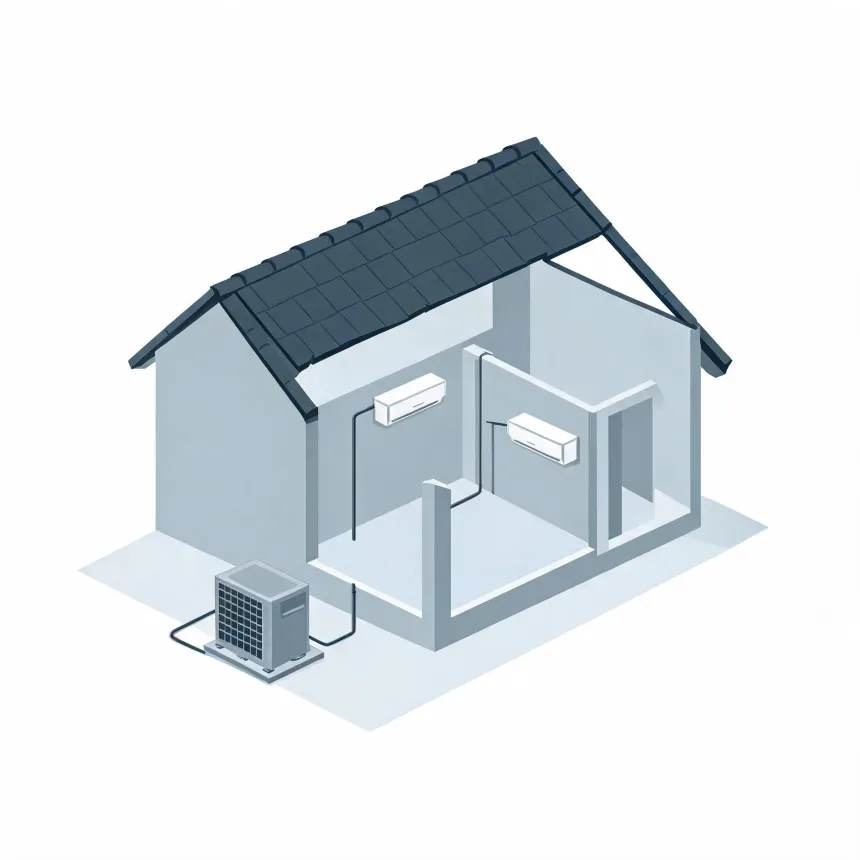
- A single outdoor unit can run one indoor head or several, depending on which system a contractor installs. A single-zone system covers one room or open area. A multi-zone system can run multiple indoor heads off one outdoor unit, with each head controlled on its own. How many rooms make sense on one outdoor unit depends on the size of each room and how the house is laid out, so a contractor sizing the job will look at the house before recommending a setup.
- Can a mini split heat a whole house?
- It can, but it takes the right number of indoor heads placed in the right rooms, planned around how the house is laid out. A single head warms the room it's in and whatever space is open to it, not the rooms behind closed doors down the hall. Most homes here already heat with gas furnaces, so a mini split is more often installed to cover specific rooms than to replace the whole heating system. Whether one is right for whole-house heating in a given house is something a contractor can work out after seeing the layout.